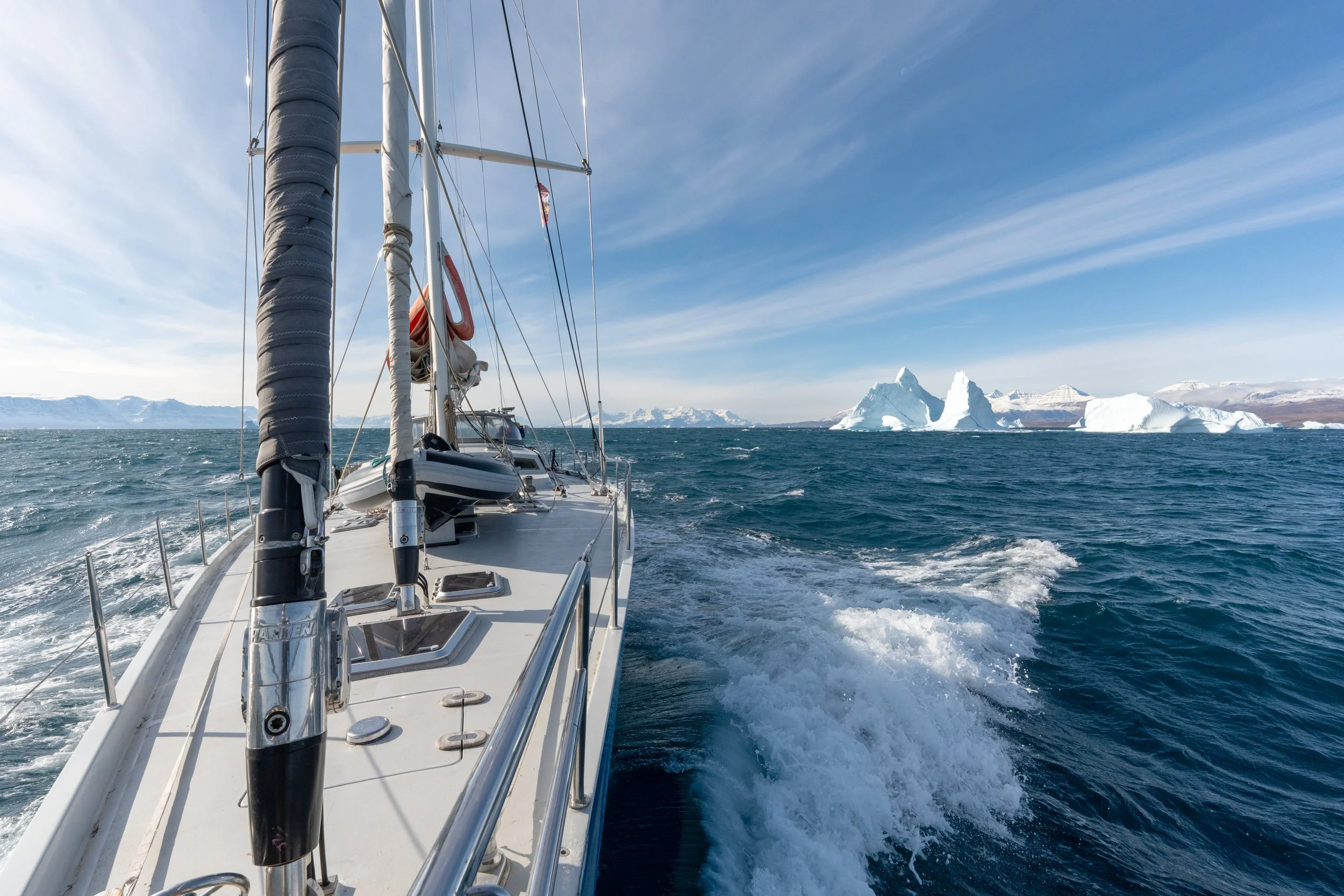
Malizia Explorer returns from Greenland research mission
The Malizia Explorer has touched the dock once again, marking the end of a research mission with scientists from the Alfred Wegener Institute (AWI). After 11 days working in the Kangertittivaq fjord system on the east coast of Greenland, the five researchers have disembarked and are now returning to their labs with large quantities of data on incoming Atlantic Water and underwater noise in the fjord.
After a bumpy start to the expedition, with technical difficulties and rough seas, the team reached the opening of the fjord on the 3rd of September. Ahead lay almost two weeks of constant sampling, weather permitting, as a large number of stations needed to be reached to collect the data required for both research objectives.
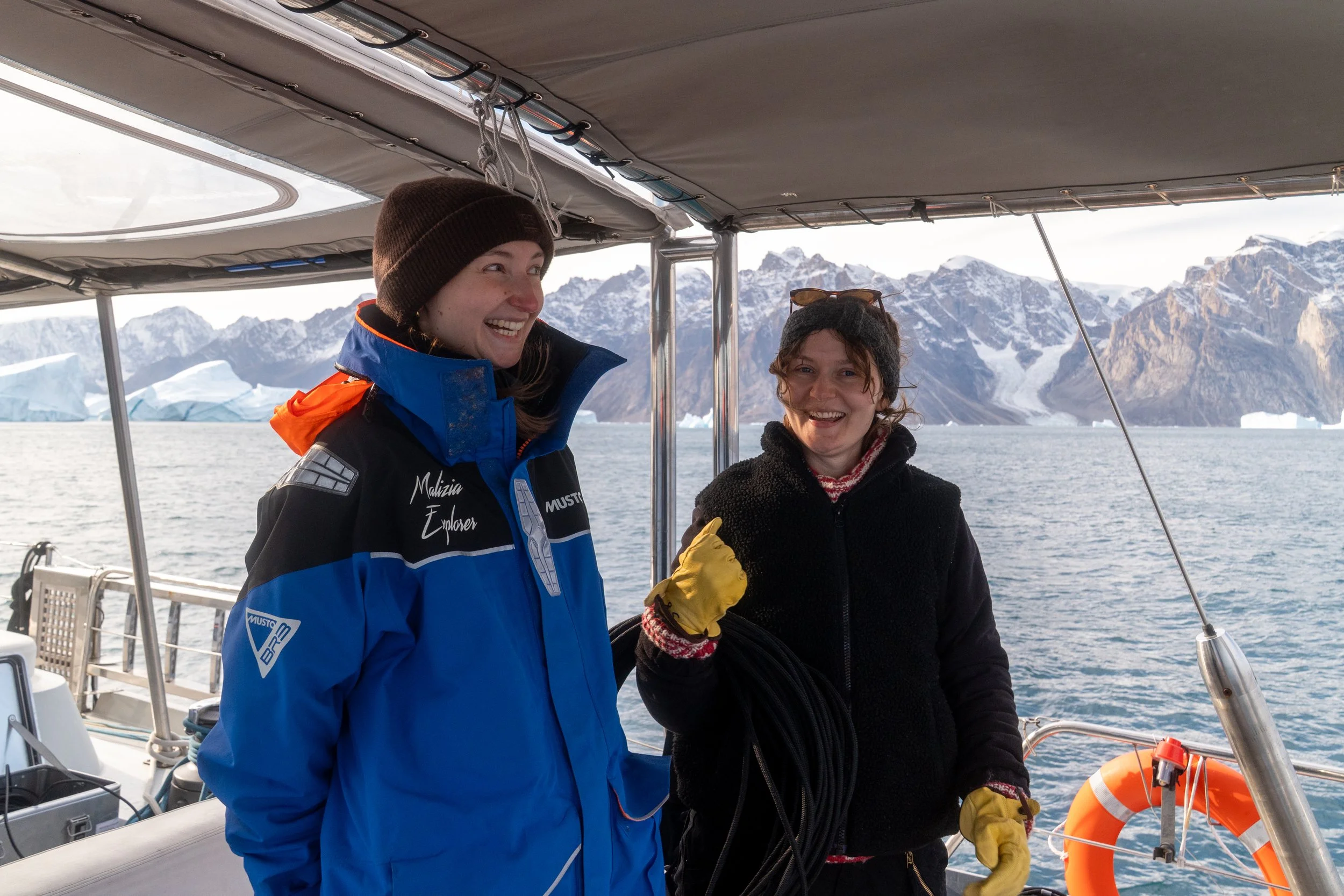
Svenja Wöhle and Marlene Meister in between sampling © Flore Hartout / Team Malizia
The acoustics team, made up of expedition co-lead Svenja Wöhle and Marlene Meister, both postdoctoral researchers at the Alfred Wegener Institute, had 12 set sampling stations planned, with additional opportunistic sampling also factored into the expedition. The two marine biologists, well versed in the sounds of whales and other cetaceans, were listening deep below the surface for “acoustic data both in the absence of cruise vessels and during encounters with different types of cruise vessels,” explains Svenja Wöhle.
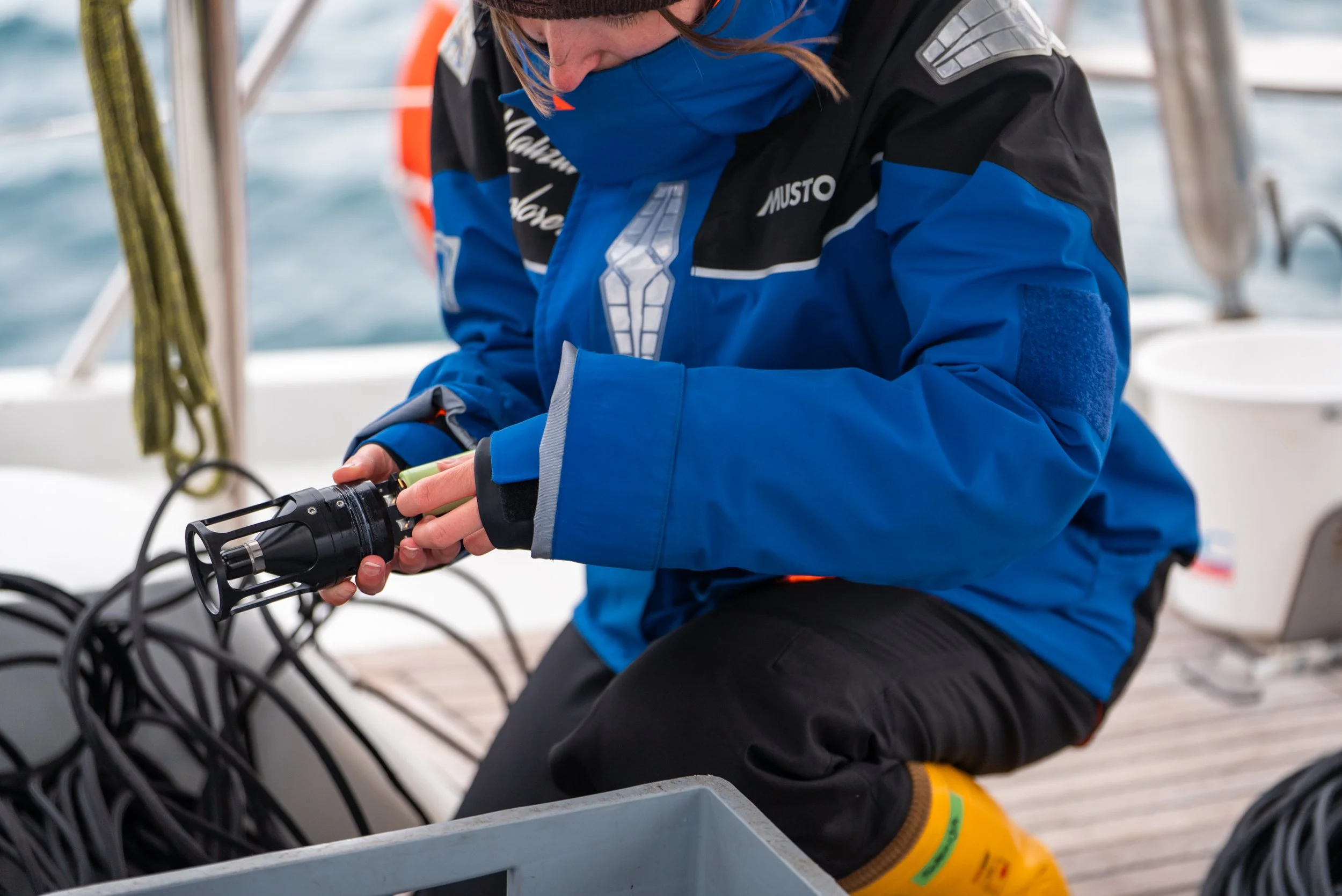
Using a sound recorder lowered to different depths, the researchers collected data on the underwater soundscape of the fjord. Sound in the marine environment can come from natural sources, but human activities are increasingly reaching even remote and seemingly pristine environments. Combined with available Automatic Identification System (AIS) data, the recordings will allow the researchers to link observed sound levels to vessel presence, type, distance and operational mode. This can help them understand how tourism-related vessel traffic contributes to changes in the underwater soundscape across the fjord system.
“This data will be used to have ground-truth data to validate shipping noise models, so how the ship noise in certain areas is propagating through the water,” says Wöhle. In the future, this kind of data could also help inform scientifically based policy measures, such as speed restrictions or protected areas designed to reduce disturbance to wildlife.
The second research team, consisting of climate modelers Martina Zapponini, Mirjam Bourgett and oceanographer Nils Niebaum, focused on the physical properties of the water, measuring conductivity, temperature and depth at different points throughout the fjord.
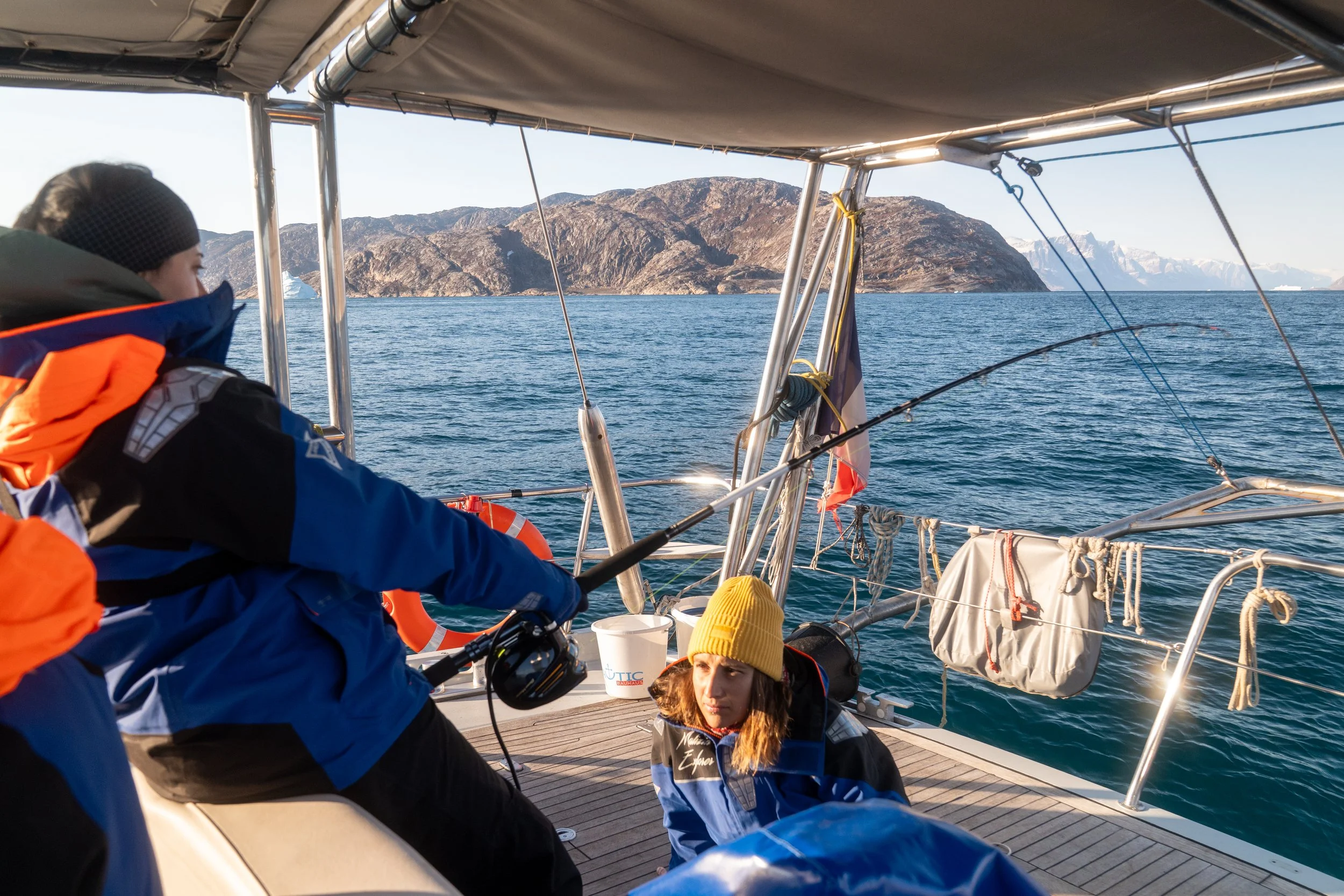
Mirjam Bourgett and Martina Zapponini lowering their CTD instrument © Flore Hartout / Malizia Explorer
“On the large scale of things, this fjord is, like many regions in the inner polar regions, not extremely well known and not very frequently explored. So the more data we collect, the better it is to exactly understand what is happening in these regions and control or try to prevent it. But most of all, it is to increase the knowledge on how the polar regions are changing and what is the effect on the rest of the globe,” says Martina Zapponini.
The data collected during this expedition will now be taken back to the researchers’ respective laboratories, where oceanographers and climate modellers will begin analysing it in more detail, as well as eventually be made available through the Open Pangea platform, allowing researchers to collaborate on scientific research and data.
“Then we can see exactly if we can find a trend in a specific part of the fjord, or we can just see exactly how the ocean circulation is changing in time,” explains Mirjam Bourgett.
After 11 days of sampling in the fjord, the research team has now disembarked and the Malizia Explorer is beginning her journey home towards the waters of Brittany via Scottland, where she will undergo a refit. The Greenland mission marks another chapter in a busy 2026 for the research vessel, following two Antarctic missions, a transatlantic crossing and missions in the Baltic.