

more than just a boat!
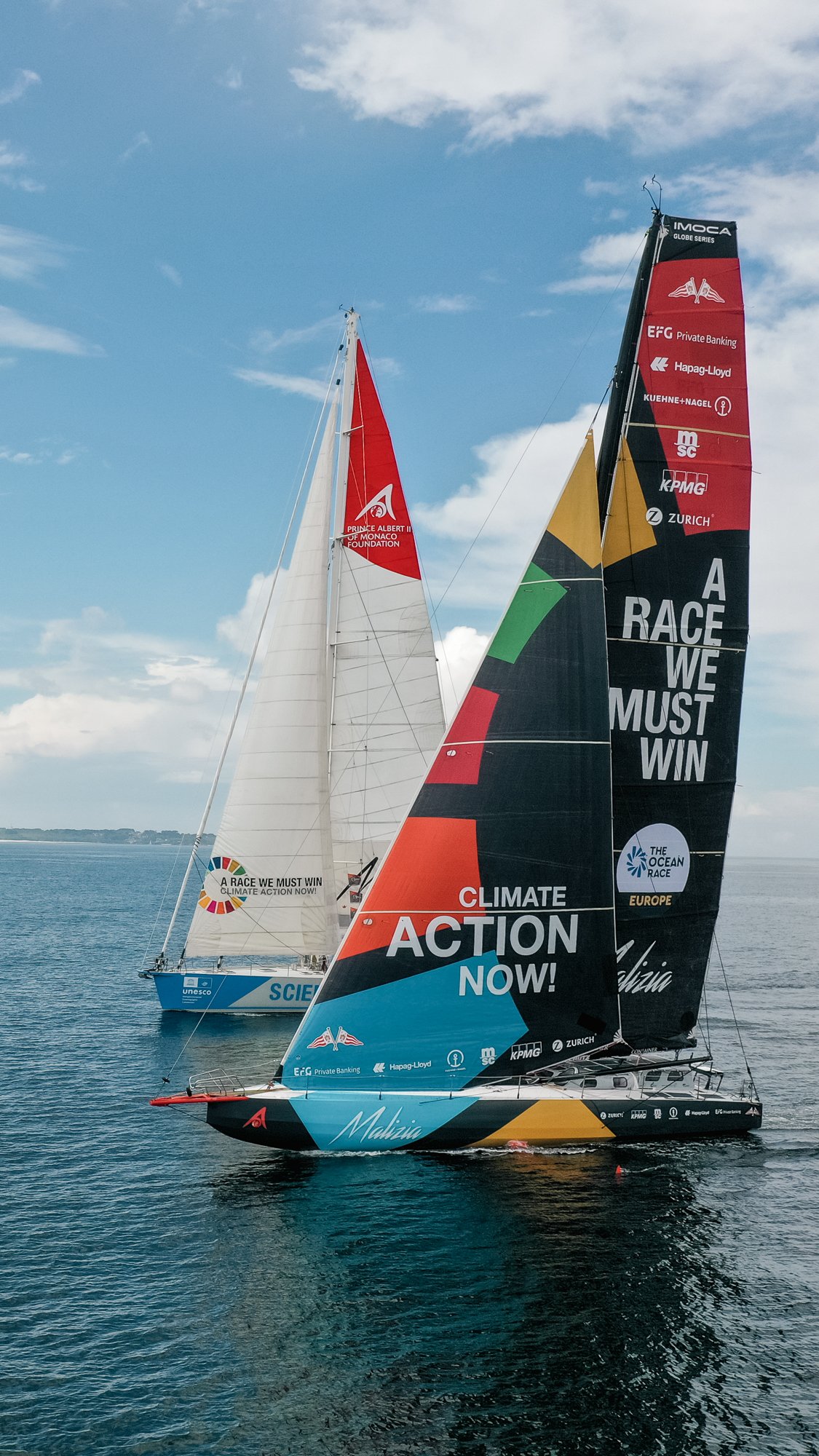
Malizia Explorer is a step towards uniting sailors, scientists, and creatives to give the Ocean a voice.
It all begins with an idea.
Since 2018, we at Team Malizia have raced across the world’s Ocean with our "A Race We Must Win - Climate Action Now!," campaign, collecting vital Ocean data and using the power of sport to engage people on the climate crisis. More recently, we felt the urge of pushing this mission one step further by having a dedicated science vessel designed to give the Ocean a voice.
The Malizia Explorer is not just a boat but a platform for science, storytelling and climate action. Built to bridge the gap between science and society, it represents our belief that understanding the Ocean is the key to protecting it.
OUr mission
Unlike traditional research ships, Malizia Explorer is agile, fast to deploy, produces far less emissions, costs less to operate, and is capable of reaching shallow and remote areas that are scarcely researched. From polar regions to tropical coasts, this vessel will access hard-to-reach places, deepen our understanding of the Ocean’s role in the climate system and bring global audiences along for the journey.
Equipped with a flexible suite of scientific tools, including a CTD rosette, an OceanPack system and sensors for temperature, salinity, turbidity, oxygen and chlorophyll, the boat is ready to support research in biology, chemistry, and physical oceanography, supporting scientists on expeditions. Scientists are also welcome to bring their own instruments and use the vessel to deploy Argo floats, buoys, and more.
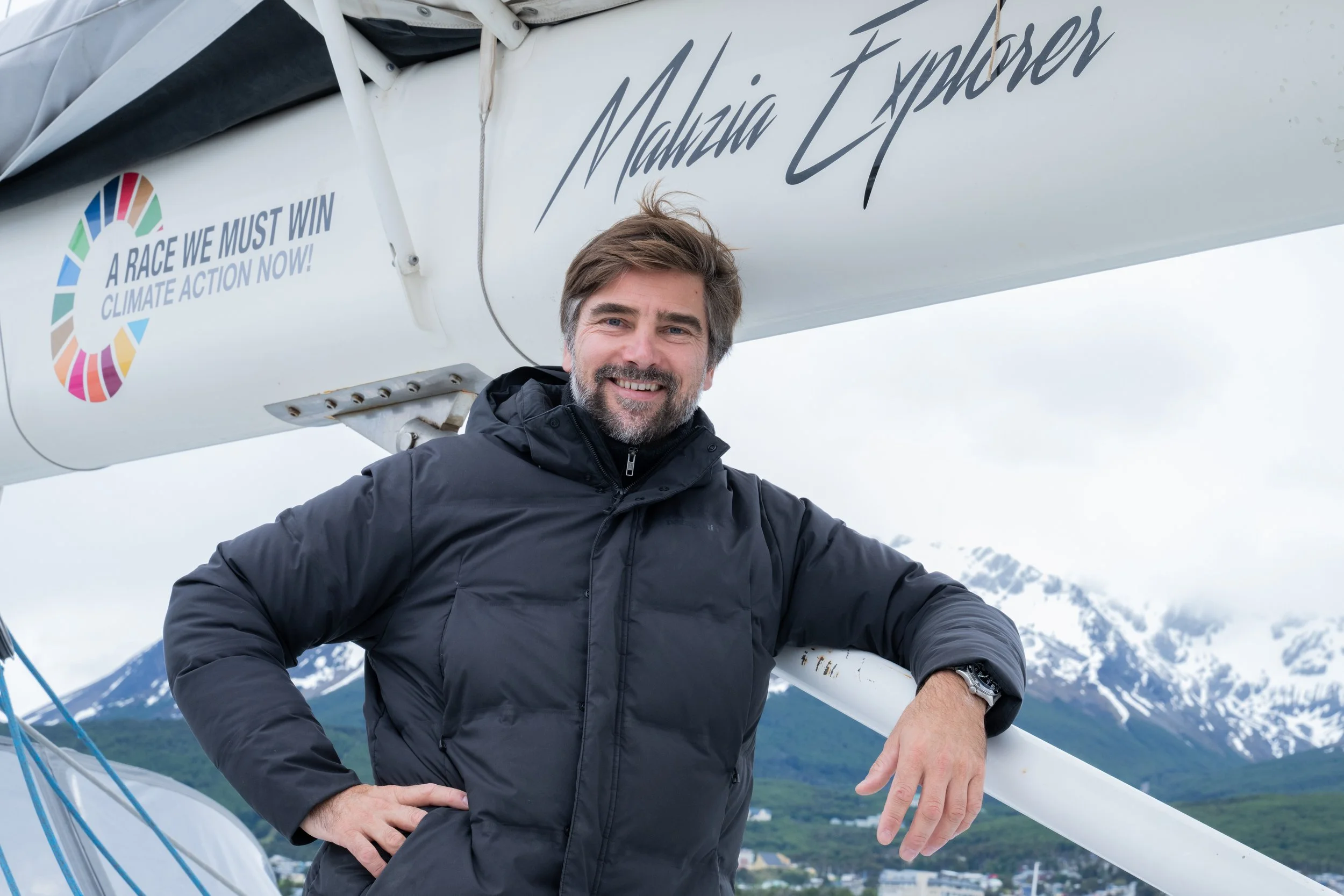
Onboard will be scientists, educators, filmmakers and communicators, all united by the goal to explore, share and act. The data we collect is transferred directly to institutions such as GEOMAR, Alfred Wegener Institute and the Max Planck Institute for Meteorology and uploaded to global platforms like SOCAT, contributing to open-access knowledge and international cooperation.
Over the next ten years, Malizia Explorer will serve as a low-cost, low-emission research and advocacy platform for the global science and Ocean community. Just within the vessels first year operating as a research vessel, she sailed to Antarctica 3 times and has since completed various further missions, exploring some of the most remote and climate-critical regions on Earth. In collaboration with research teams, we aim to co-design and combine several scientific missions on board and host political advocacy and education events along the route, proving that science doesn’t just belong in labs but in everyday discussions and decisions.
“Our mission has always been about raising awareness around climate change and the Ocean, This research vessel is a natural evolution of our team’s mission which allows us to expand our impact, venturing to new regions, collaborating with scientists, and communicating the urgent message about Ocean health and climate change. We want to not only collect data but also bring the story of what’s happening beneath the surface to life.”
Boris Herrmann
Scientific Infrastructure
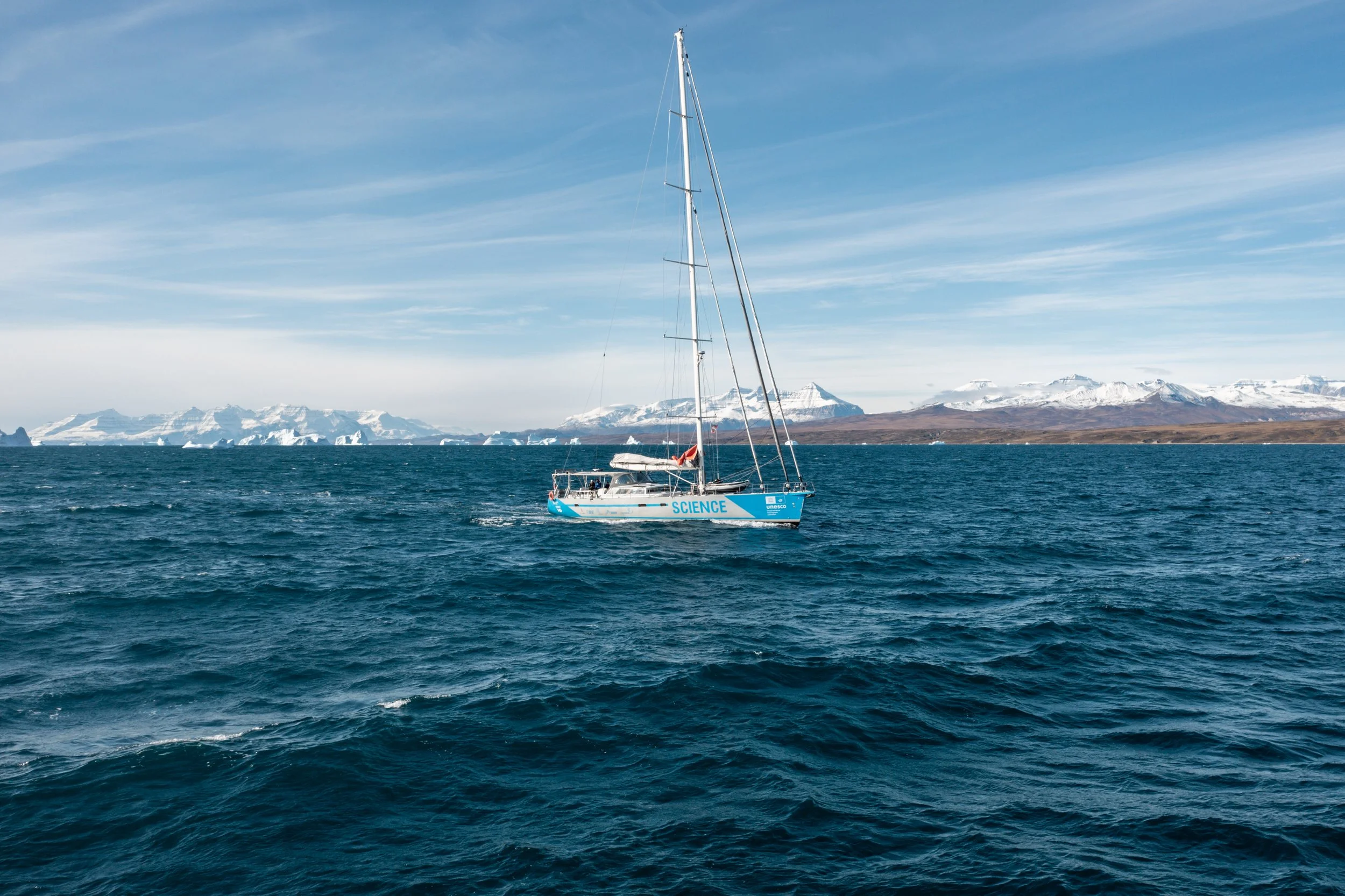
The Malizia Explorer is a robust 85-foot sailing yacht, purpose-built for long-range, low-emission Ocean expeditions. Originally designed for leisure, the aluminum-hulled vessel proved its seaworthiness during a full circumnavigation before undergoing a major refit in Lorient, France, in April 2025. Since its transformation into a fully functioning research and outreach vessel, it now carries the A Race We Must Win - Climate Action Now! logo on its sails, symbolising its mission to bring climate science and Ocean protection to life. Designed to operate with a professional sailing crew of three and accommodate up to eight scientists, the Malizia Explorer provides a functional and flexible environment for multidisciplinary oceanographic research. The focus of the research vessel’s expeditions is on remote and hard-to-reach regions of the planet’s ocean, naturally taking it toward the poles, not not limiting itself to them.
The boat
The scientific infrastructure onboard includes an OceanPack system, a fully automated laboratory that continuously measures surface CO₂, temperature, and salinity. This data is transmitted in real time via satellite to leading institutions such as the Max Planck Institute for Meteorology and GEOMAR Helmholtz Centre for Ocean Research, before being uploaded to SOCAT, the global Surface Ocean CO₂ Atlas, where it becomes part of an international open-access database.
the ocean pack


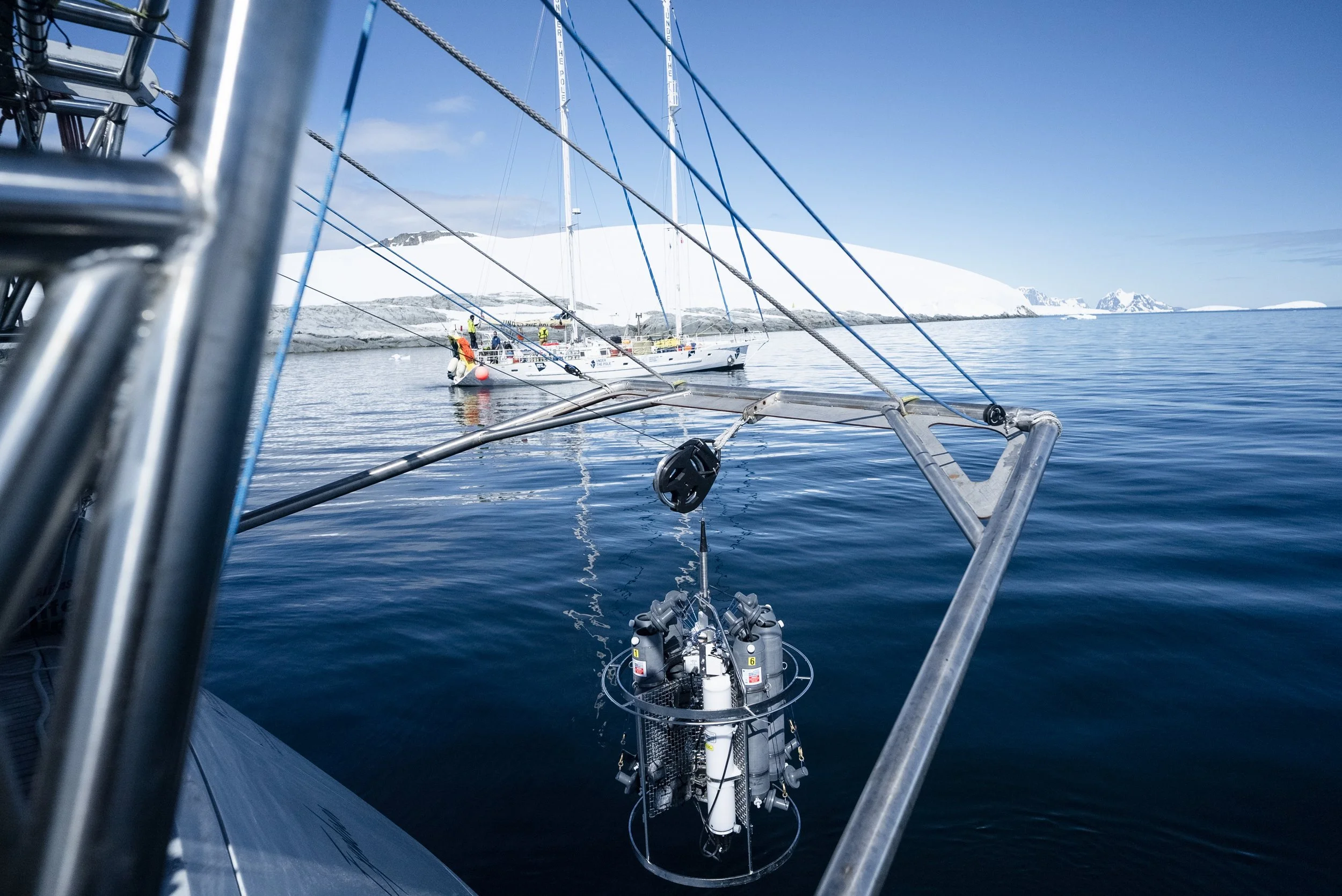
The CTD rosette
In addition to the OceanPack, the vessel is fitted with a CTD rosette for vertical water profiling and sampling down to 500 metres. This system includes six four-litre collection bottles and records vital parameters including temperature, salinity, oxygen, turbidity and chlorophyll-a.
Additionally, scientists are encouraged to bring their own instruments for additional research needs, including the deployment of Argo floats, buoys and other autonomous devices.
The Malizia Explorer also provides practical infrastructure to support scientific work at sea, including a large aft garage (4x3x1m) for storing gear and samples, a deck-mounted crane for deploying and retrieving instruments, a dinghy for coastal access and nearshore sampling, and a reliable satellite internet connection to enable data transfer and remote collaboration throughout each expedition.
Boat basics:
-
![Malizia Explorer research vessel sailing under Monaco Flag.]()
Aluminium hull
-
![A group of people on a Malizia Explorer with visibility of the ocean and cliffs in the background, and the sailboat has UNESCO and other logos on its side.]()
Can accommodate up to 14 people
-
![An aerial view of Malizia Explorer sailboat sailing on the open ocean, with visible waves and sunlight reflecting on the water.]()
Mast height: 36m
-
![Malizia Explorer sailing yacht on the ocean with a large sail displaying a climate change awareness message. The yacht has the word 'SCIENCE' and the UNESCO logo on its side.]()
Width: 7m
-
![A large elephant seal lying on a snowy beach with an icy and mountainous landscape in the background, including Malizia Explorer on the water in Antarctica.]()
Length: 26,33m
-
![An aerial view of Malizia Explorer sailing yacht with white and red sails on calm blue ocean waters.]()
Draft: 2,5 - 4,2m


