
The Arctic Is Getting Louder - Interview with Svenja Wöhle
Svenja is a marine biologist researching marine mammals and ocean acoustics, with a focus on baleen whales in Antarctica. During this mission onboard the Malizia Explorer to the Kangertittivaq fjord system, Svenja is focussing on anthopogenic (or human-made) noise, created by ships, to understand how loud the fjord system is in different places, since this can impact marine life.
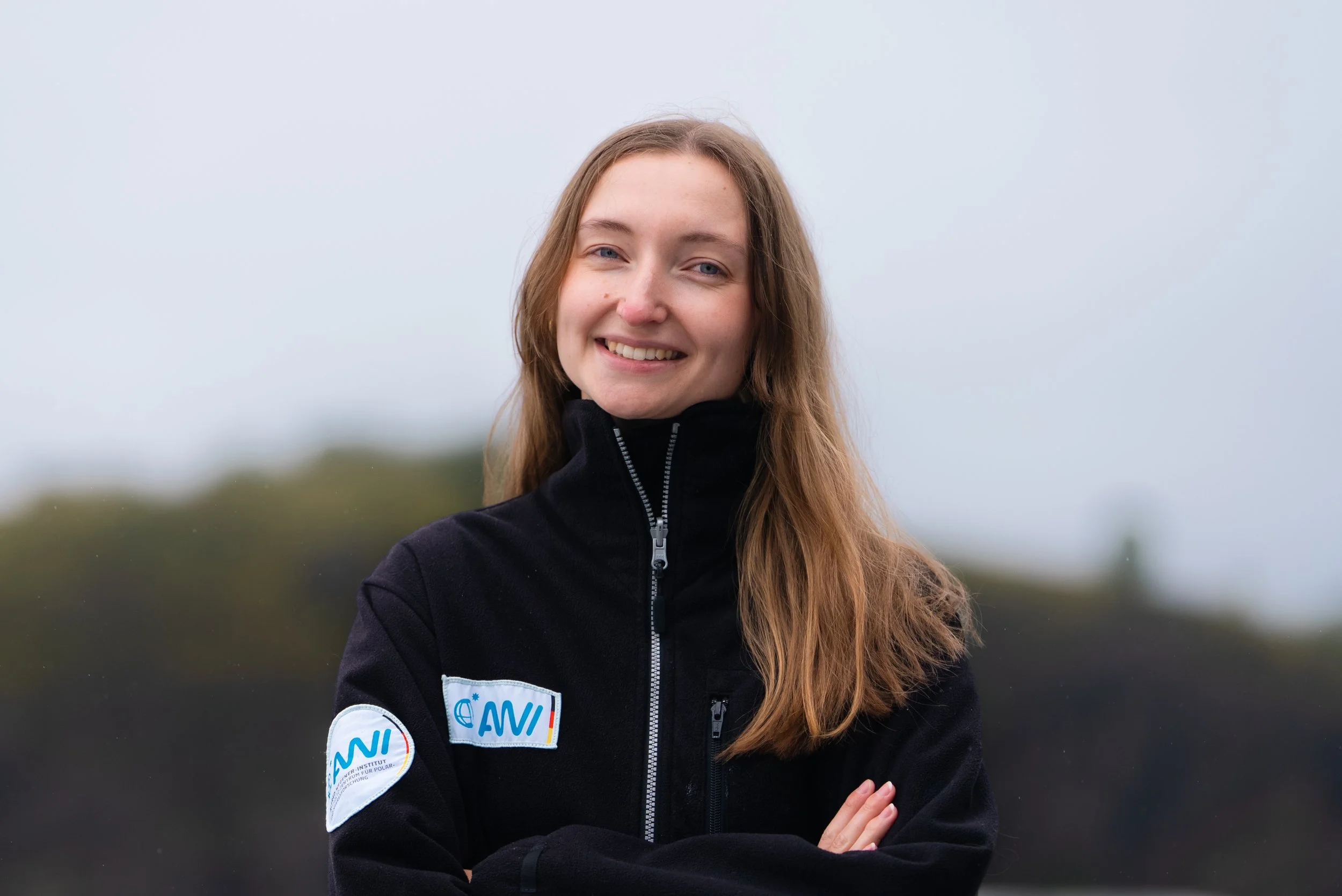
Svenja Wöhle, marine biologist for the Alfred Wegener Institute. © Flore Hartout / Team Malizia
Speaking of sound pollution, what is this in the marine context and what can it stem from?
Sound pollution in the ocean is human-made sound that changes the natural underwater soundscape. That is the important part: the ocean was never silent. There has always been sound from wind, waves, ice and the animals themselves. What we add on top of that is the pollution. And as the name says, it comes from us, or more precisely from all the activities we carry out at sea: shipping, seismic surveys, or the construction of offshore installations. Every one of these produces noise, although each produces a different kind.
Shipping as a whole, container ships, cruise ships or fishing vessels for example, creates a kind of low-frequency continuous hum. This comes mainly from what is called cavitation at the propeller blades. Those are vapour bubbles that form at the blade tips, where the pressure drops sharply, and that collapse again immediately afterwards. On top of that there are the machinery sounds from the hull. As a result, the background level of entire ocean regions has risen over the past decades, and taken as a whole this is something we can hardly switch off. Then there are seismic surveys, where so-called airguns are fired from ships every few seconds. These are impulsive, very loud signals, used to map the seafloor and the layers of soil and rock beneath it, for example when prospecting for raw materials. Airguns also carry over long distances, but locally they are much stronger than shipping. Pile driving, when foundations are driven into the seafloor during the construction of offshore installations, is similarly impulsive, although more confined in space. And then there are military activities and sonar, as well as recreational boat traffic close to the coast.
What makes all of this a problem, rather than just noise, is that sound travels much further underwater than it does in air. It propagates about 4.5 times faster in water than in air, but above all it is attenuated far less. That means low frequencies, which is where most of the noise sits, can reach hundreds of kilometres.
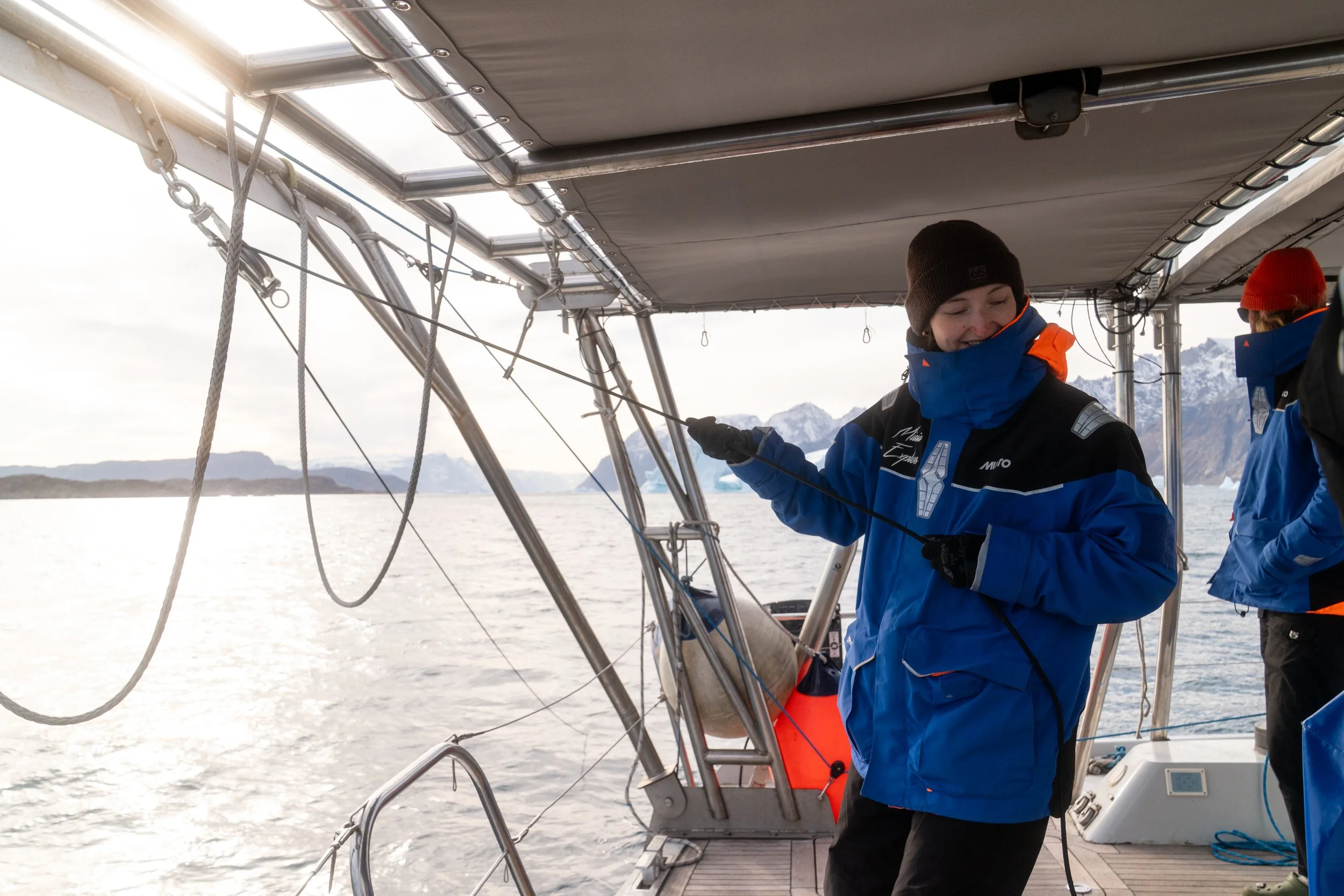
Svenja Wöhle lowering the recording device to hear the sounds below the surface © Flore Hartout / Team Malizia
Going on from this question, what role does sound play for marine living species?
For marine species, such as marine mammals, sound is the main sense in the ocean. Below a certain depth it is dark, and even near the surface you cannot see far, but sound works. As mentioned before, sound travels very well and much (4.5 times) faster in water than in air, serving as an efficient medium for acoustic perception and communication. Accordingly, marine animals heavily rely on hearing and sound production for environmental sensing, navigation, communication and mating.
Whales, baleen and toothed whales, produce a diverse repertoire of acoustic signals, ranging from pulsed sounds to tonal vocalisations, which can cover a wide spectrum of functions. These calls are often used for communication among the animals, for example between mother and calf pairs, over long distances, or to coordinate group feeding events. Toothed whales like sperm whales, orcas or dolphins also use the so-called echolocation, which is the use of self-generated sounds and returning echoes to sense the environment and to find their prey. But also seals call to communicate, defend their territories, or find mates. Even fish and some invertebrates produce and respond to sound.
So, one could say that the biological sounds in the ocean are not only background noise, but it is information that marine life depends on.
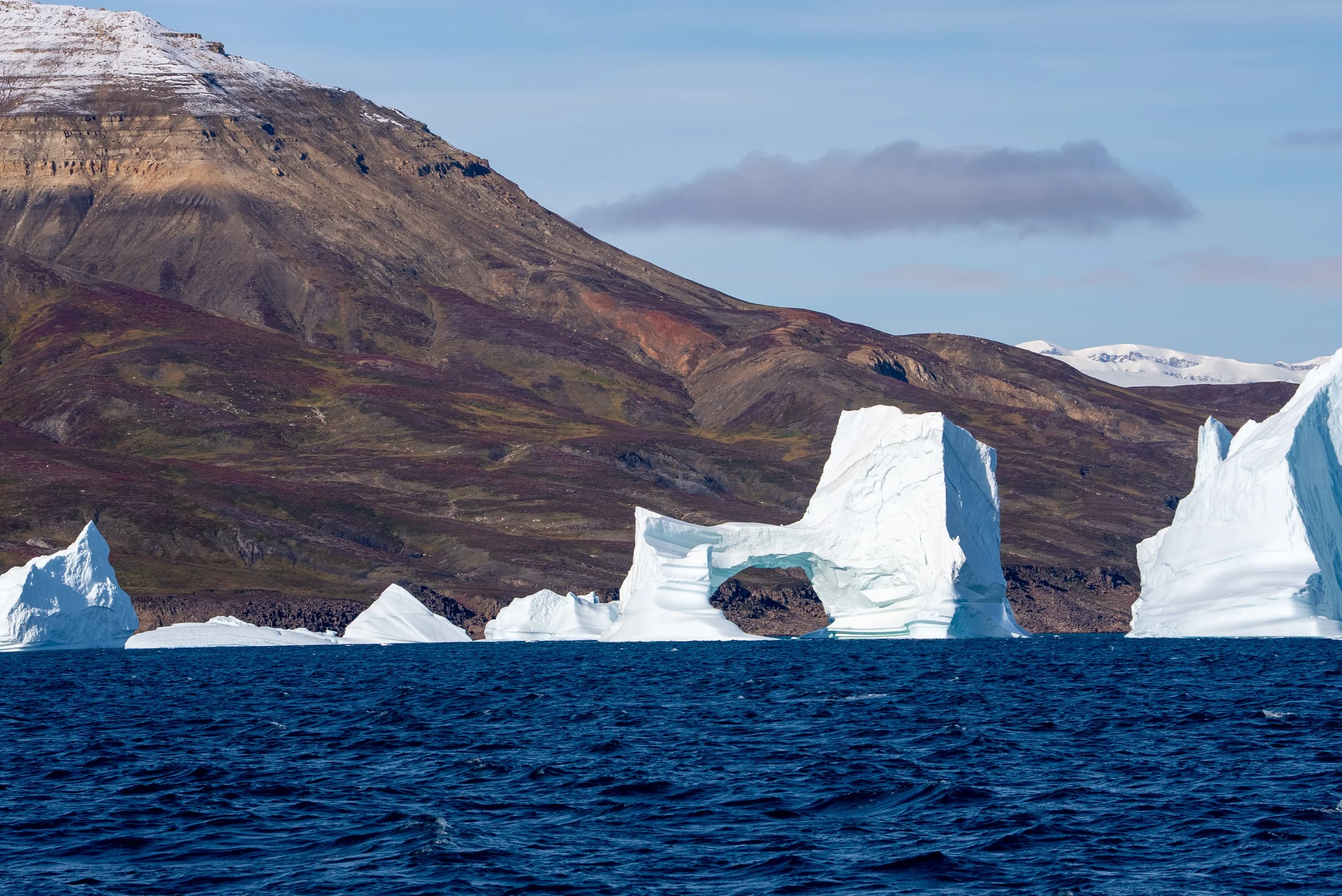
The Ocean is not a silent place, with icebergs crashing, for example, being a normal occurrence. Anthropogenic noice has however shifted register of this soundscape © Flore Hartout / Team Malizia
What would changes to the soundscape therefore mean for the marine environment?
Maybe we should think about what the term soundscape means in the first place. A soundscape are all the sounds that describe a moment in time and space, so it is made up from biological sounds (so animals producing them), geological sounds (e.g., icebergs breaking off, wind noise, wave noise,…) and anthropogenic noise (e.g., ship noise). A soundscape often varies between seasons or even day and night, or water depth, meaning that there are also natural changes. One environment where we can see such patterns is for example Antarctica, since there the biological and geological sounds still mainly characterize the soundscapes. However, here in the Arctic the soundscapes are now mainly characterised by anthropogenic noise and the seasonal changes are barely present. This change, or better increase in anthropogenic noise not only fully changes the soundscape, but masks the biological sounds. This means that the animals’ sounds are covered by noise, possibly preventing the animals from communication with other individuals, orientation and finding prey.
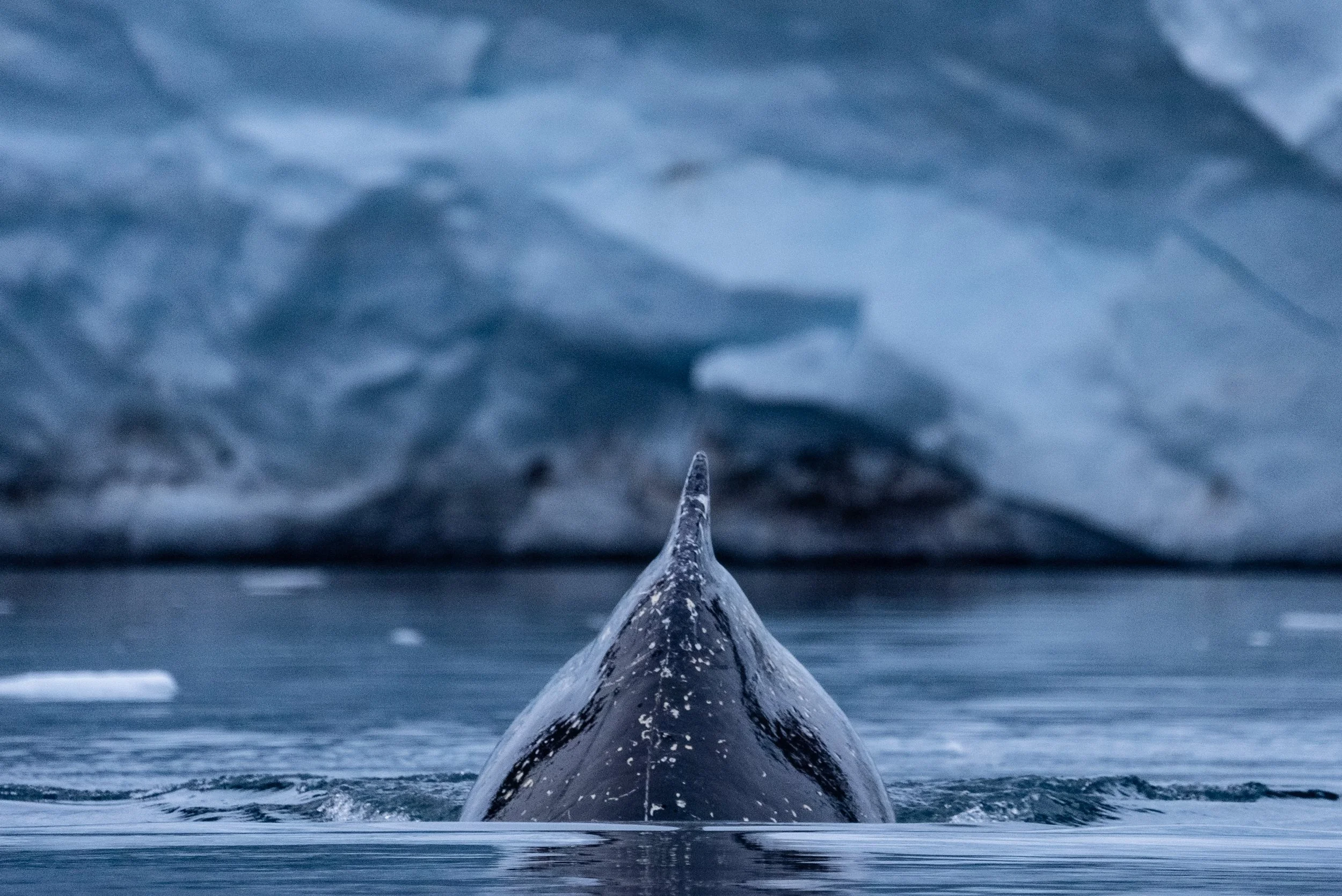
Animals are responding to a changing habitat and sound pollution at high costs (this image was taken in Antarctica) © Marin Le Roux / PolaRYSE / Team Malizia
Are there any ways in which marine animals are already adapting or changing their behavior?
I would be careful with the word adaptation. It makes it sound as if the animals are finding a solution. What we see worldwide are responses, and those responses almost always come at a high cost. A solution in the real sense is not usually what the animals arrive at. And there is no general answer to the question of which responses occur. The same animal can react in completely different ways depending on the situation, and even age, sex and the time of year can play a role. Ocean noise is now recognised as a global problem, with documented effects across very different animal groups, although I guess the responses of marine mammals are so far the best studied. How badly an animal is affected depends above all on mobility. A mobile animal can move out of the way. A sessile animal, one that is fixed in place on the seafloor, cannot, and is exposed permanently.
Here are a few more specific examples:
In fish and invertebrates, we measure a higher ventilation rate and higher oxygen consumption under noise. Both point to a raised metabolism, and stress. At the same time, they show the typical escape response to their attacker less often. So the animal is using more energy and is less well protected at the same time.
For whales, and for fish as well, the masking of their vocalisations is a big problem. Dolphins and sperm whales use echolocation clicks to orient themselves and to hunt. What gets masked is not so much the outgoing click but the returning echo, because the echo is weaker and quieter than the click itself. This can result in the animals no longer being able to orient themselves, or that they miss their prey. A single missed catch does not matter, but systematically lower hunting success over weeks of course does. Some whale species shift their calls to higher frequencies while calling louder at the same time, to overcome the noise, which is called the Lombard effect, and you know it from your own experience. In a crowded room you automatically raise your volume and your pitch when you want to have a conversation, and we all know how tiring that can be. The difference here is the duration. For animals in heavily affected areas this is not a state that lasts for only hours, but for months or even years. Other animals stop calling, and stop communicating, altogether.
Then there is sonar, which works quite differently from ship noise. Ship noise is a constant background that never really goes away. Sonar is short, intense and localised, but it can be extremely loud. Military sonar triggers strong reactions in some whale species. They stop feeding, swim away from the source, or go into a deep dive. In some cases this leads to mass strandings, because that is then the only way for the animals to escape the noise.
In the end, noise rarely causes just one single response. It is more of a chain reaction, which can affect the animals' survival.
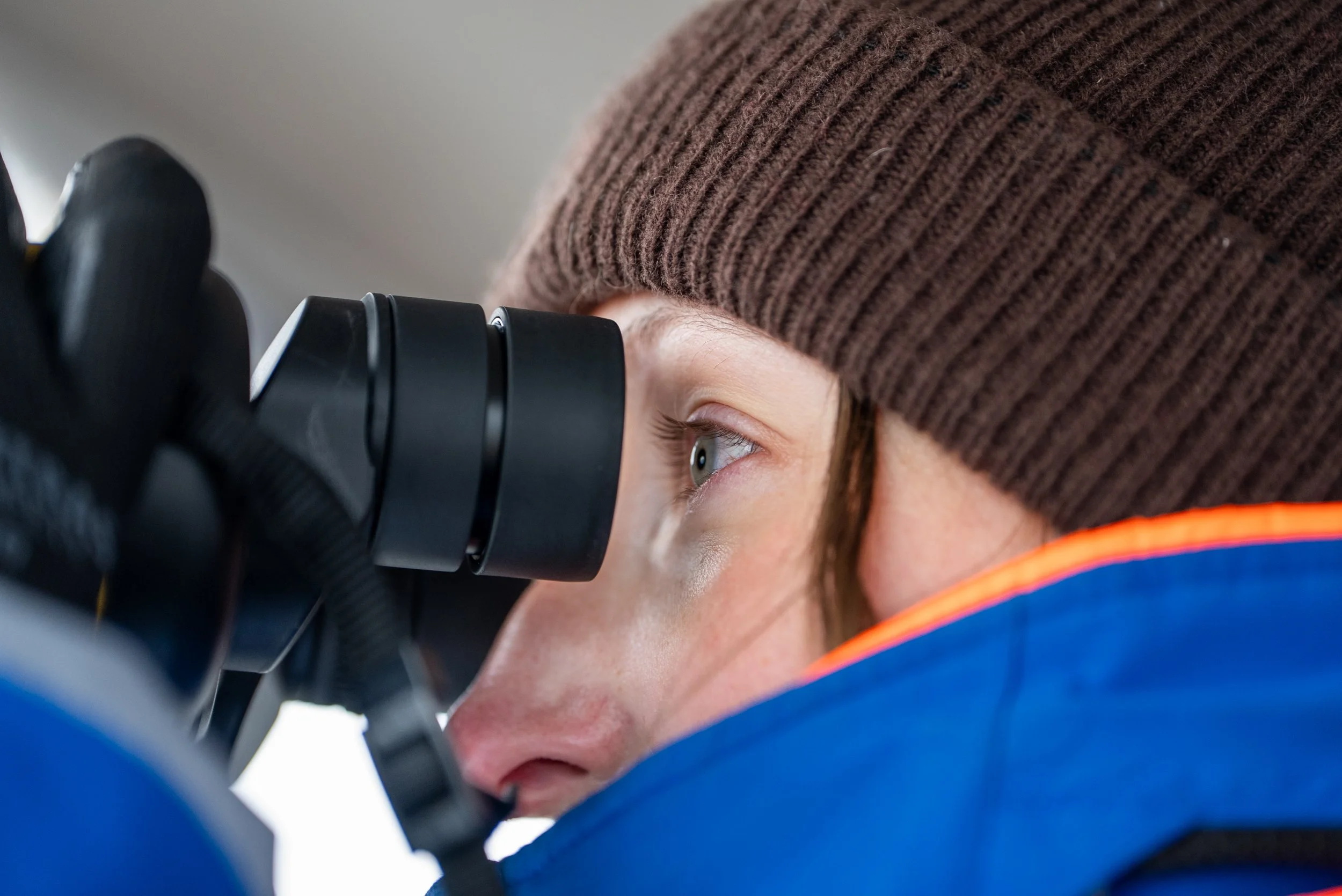
Looking for the cause and effect of sound in the fjord system © Flore Hartout / Team Malizia
We have heard from some of your crew mates that vessel traffic within the fjord system is not particularly high, yet this is where you are studying soundscapes. Why are you studying this in the Kangertittivaq fjord system?
Kangertittivaq is the largest fjord system in the world, and it is an important summer habitat for narwhals. That alone makes it special, but for our work it is special for another reason as well. It is a place in the Arctic where cruise tourism does happen, but still on a fairly small scale. For that one needs to know that shipping in the Arctic is increasing overall, and cruise tourism along with it. As the ice melts, more and more areas become navigable, and of course we humans make use of that. So the Arctic is getting louder.
In Kangertittivaq there are smaller conventional cruise ships during the season, and sail-assisted tourist vessels, but there are also plenty of times when no ship is in sight. That means we can compare different vessel scenarios and propulsion types under the same conditions: the same fjord, the same season, the same bathymetry and water column, but different noise situations. Comparisons like that are rare.

Scientific observations should be used to inform policy © Flore Hartout / Team Malizia
Marine traffic is comparatively low here in Kangertittivaq Fjord System. How much of a problem is this worldwide for marine life?
Globally it is a serious problem, and probably the most underestimated form of ocean pollution. That is starting to change. Ocean noise is now recognised as a global issue by several major international bodies, including the United Nations. Human-made noise has grown enormously over the last decades, and with it the low-frequency background level across the ocean. As the sea ice retreats, like here in the Arctic, more of the ocean becomes accessible to us, which we definitely make use of, and so we bring noise into areas where it was not prominent before. The best thing would be to reduce our activities at sea, because that is what would actually reduce the noise. More realistically, we need to find ways to make each activity quieter. Quieter propellers, better hull design, slower speeds. The techniques exist, but the problem is that hardly any of it is required. The international guidelines for reducing ship noise are voluntary, and uptake is still very low.

BluEcho is an interdisciplinary research project on continuous anthropogenic underwater noise. It develops noise mitigation measures for ships and combines them into predictive sound maps that weigh up both the ecological and the economic side of different scenarios. Svenja Wöhle is a postdoctoral researcher in the Ocean Acoustics Group at the Alfred Wegener Institute and is responsible for outreach and dissemination in BluEcho. On this expedition she leads the underwater sound recordings