
“Hello, hello, little update. Yes, it’s day four in the Scoresby Fjord and things are going really well.” says Flore Hartout, onboard reporter on the Malizia Explorer in between CTD casts, ice bergs and the tireless search for ships in one of the remote places on earth.
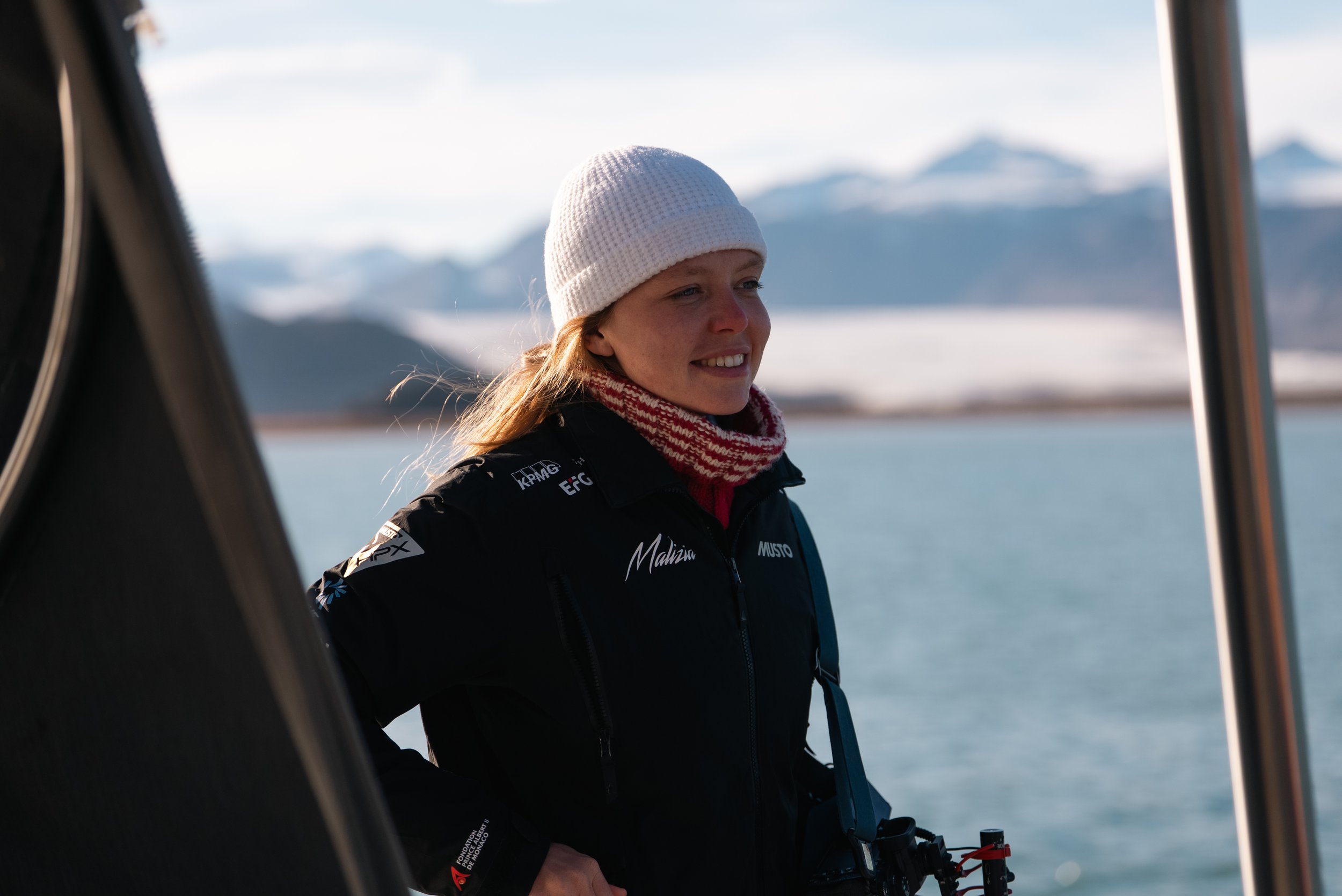
Flore Hartout, onboard reporter on the Malizia Explorer
After less than a week in Greenland’s Kangertittivaq fjord system, the team onboard Malizia Explorer has settled into a rhythm of early mornings, scientific sampling, sailing between stations and, whenever possible, taking in the spectacular landscape surrounding them.
For the scientists from the Alfred Wegener Institute (AWI), the days are packed. “Our days basically revolve around getting up, having breakfast, setting off from the anchorage and going to the sampling stations,” explains onboard reporter Flore Hartout.
“At each station, we ideally do three or four samples and then we sail from one sampling station to another. During that time, the scientists look at the data, while I look at my camera footage and edit it.”
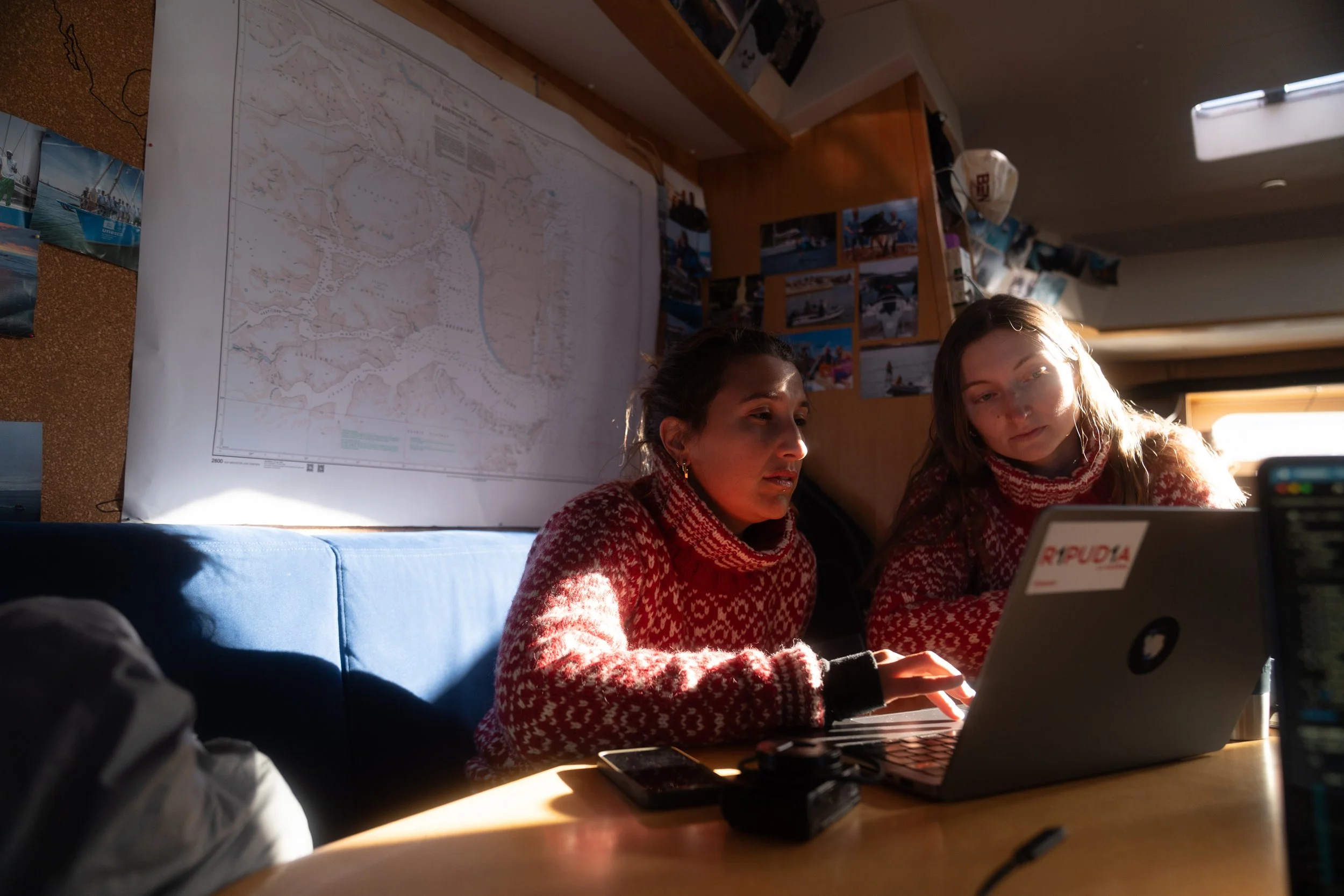
In between casts the scientists evaluate their collected data © Flore Hartout / Team Malizia
For the past few days, this routine has repeated itself: reach a station, take measurements, study the results and then move on to the next location.
The scientific team is investigating several aspects of the fjord system. On the oceanographic side, AWI researchers are using a CTD to study the water column, measuring conductivity, temperature and depth as they lower the instrument through the fjord. The measurements help the researchers understand the different water masses moving through Kangertittivaq, including the interaction between ocean water and the freshwater entering the fjord from melting glaciers.
But carrying out this research in such a vast and dynamic environment is not always straightforward, with wind and currents making it difficult at times to keep the vessel in position. And for some of the research, the boat needs to be as quiet and still as possible:
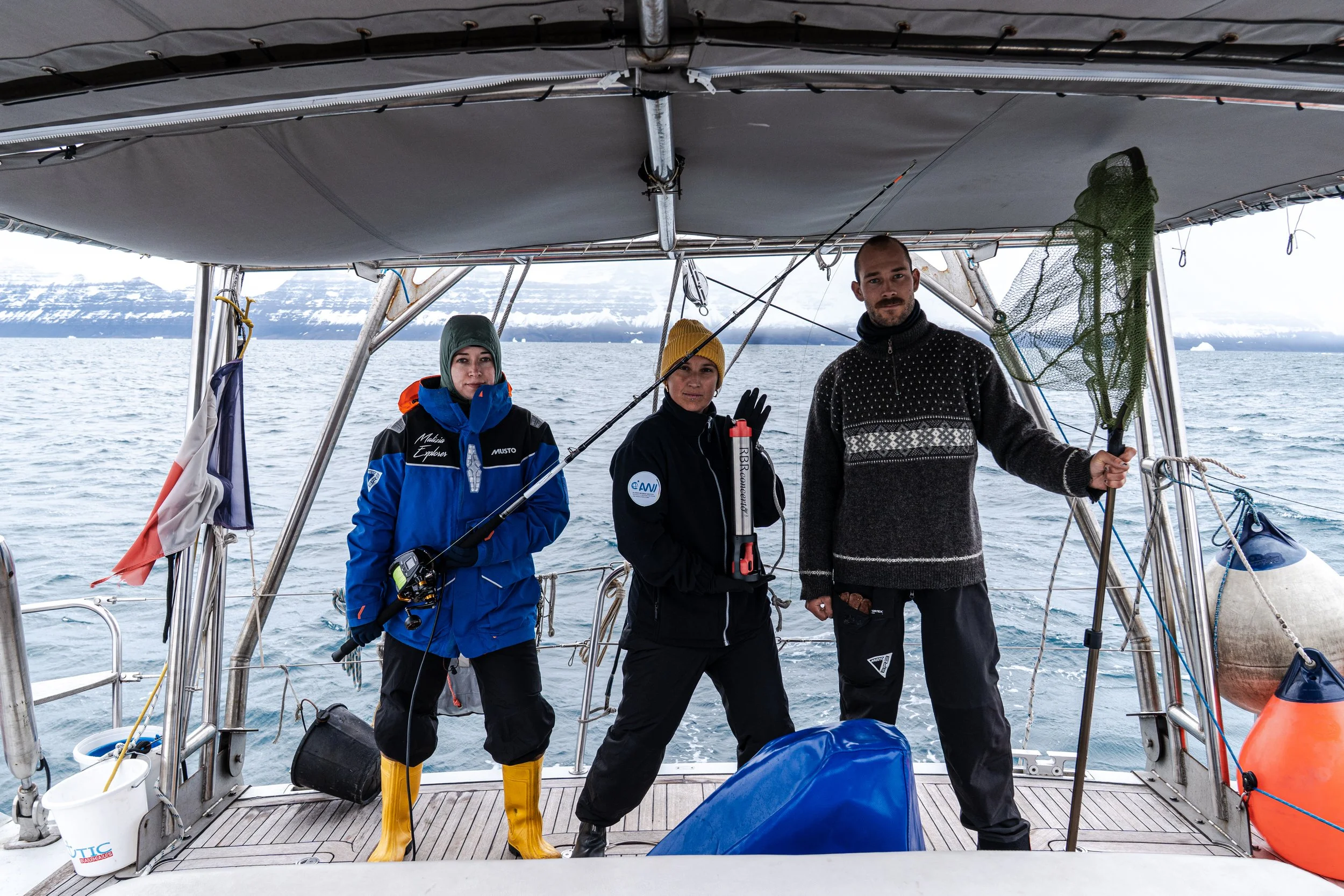
The scientists gear up for their data collection © Flore Hartout / Team Malizia
Alongside the oceanographic measurements, the team is recording the underwater soundscape of the fjord using hydrophones. These instruments allow researchers to listen to what is happening beneath the surface, including the sounds produced by marine life and passing vessels. That means that, during acoustic measurements, Malizia Explorer’s engine has to be switched off. Instead of using the motor to maintain the boat’s position, the vessel therefore has to drift with the wind and currents.
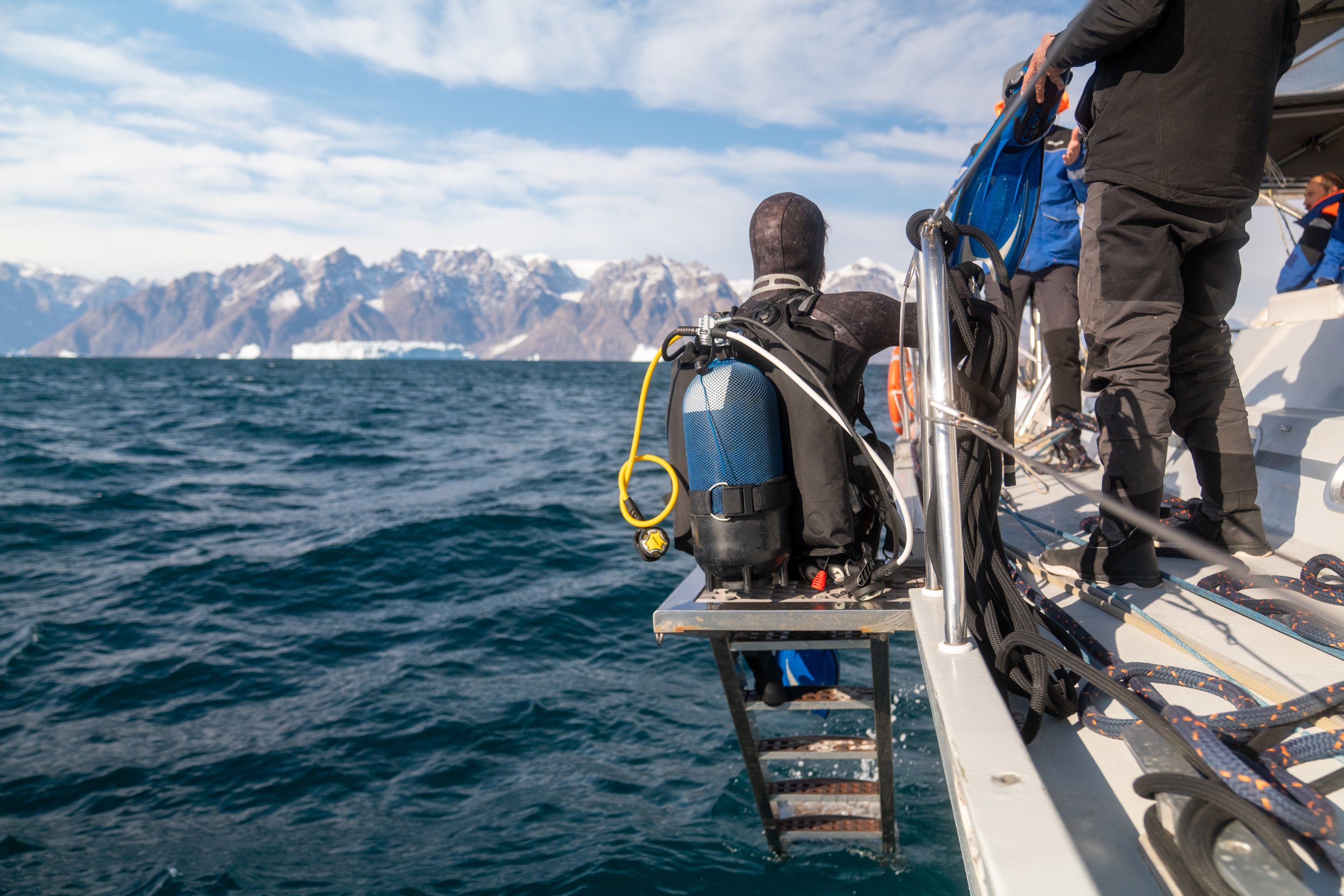
Marin Moreau going into the water to untangle the CTD from the Keel © Flore Hartout / Team Malizia
Recently, those currents created a particularly challenging moment: while an AWI team was carrying out a CTD cast, lowering the instrument to several hundred metres below the surface, the movement of the vessel caused the equipment to become tangled around the keel. Reacting fast, First Mate Marin Moreau quickly put on a diving suit and breathing equipment and entered the icy water to free the measuring equipment. After a few minutes below the surface and the boat, he came up for air having untangled the device and was rewarded with a brownie baked by Tefi, the onboard cook and moral food support!
The acoustic research has presented another unexpected challenge: finding ships.The researchers are documenting vessel traffic and underwater noise in the fjord to better understand the impact of human activity and noise pollution on the marine environment and its wildlife, however, with only a handful of vessels moving through this enormous fjord system at any given time, finding them is not as easy as it might sound.
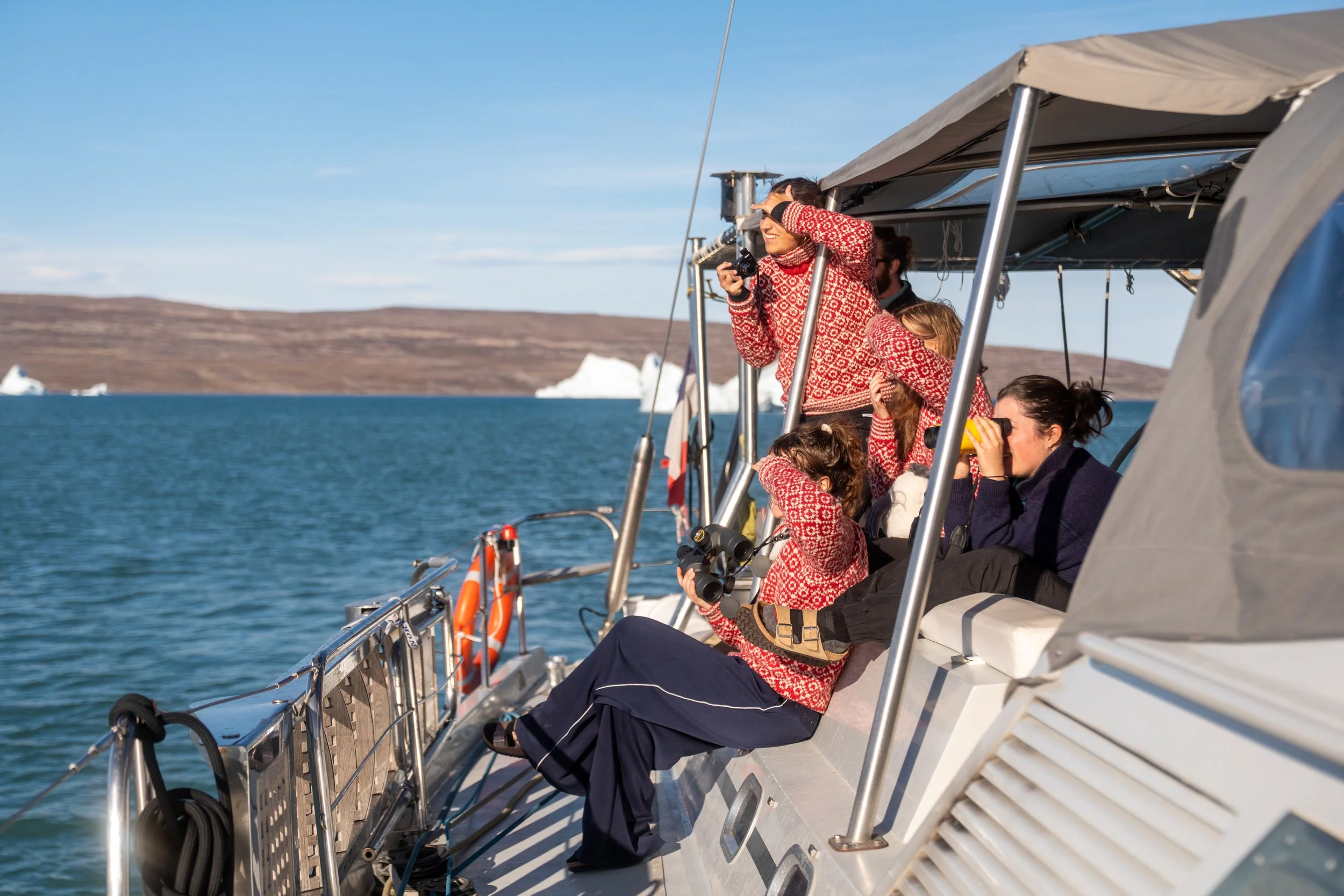
Looking and listening for ships and wildlife © Flore Hartout / Team Malizia
“It’s actually been a bit of up and down of excitement and nervousness about the science,” Flore explains. “We saw boats and a couple of ships when we arrived into Scoresby Fjord on the very first day, but since then we hadn’t seen a single one. It was really hard to find them on AIS because the AIS was delayed.”
The team therefore found themselves playing a kind of “cat and mouse” with the ships.
“There are like three in total in the entire fjord at one given time, for example, and so we were kind of chasing after them. We still had to record their noise at specific, already established stations, and sometimes it was opportunistic sampling, so it was a little bit tricky.”
Then, after several days of waiting, their luck changed, with the sighting of a ship and “since then, we’ve seen quite a few ships.”
The researchers from AWI could hardly believe the sudden change, noting “‘Well, that’s crazy how the table turns,’ because actually one day you can’t hear ships and all you want to do is hear ships, and then the next day you have ships kind of all the time!”
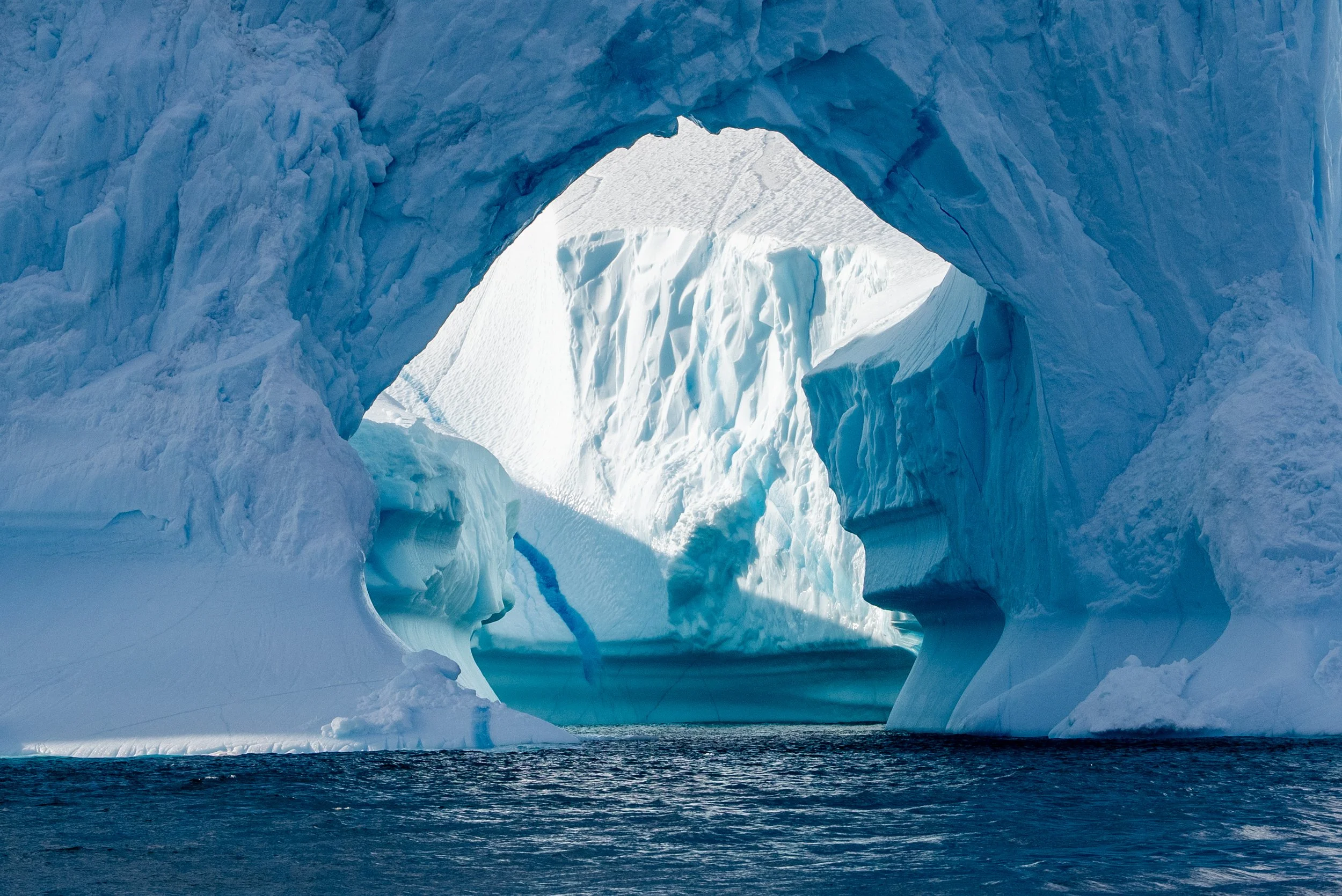
Cathedrals of ice © Flore Hartout / Team Malizia
While the scientists are busy trying to collect as much data as possible, Flore has another challenge: documenting it all. “The schedule is really full on and they have so many stations. It’s kind of a race against time, so the scientists have to be really efficient.”
For Flore, working from onboard Malizia Explorer means constantly balancing the scientific mission with the need to document what is happening around her. “It’s quite hard to get laptop work done down below and to do the editing. I feel like I’m missing out sometimes on what’s going on outside.” This careful balancing act is made even harder by the fact that “the landscapes have been really amazing and there are so many icebergs, so many shapes. I still haven't really got used to it,” she says.
It is an understandable dilemma. Outside the laptop, the fjord is constantly changing, with icebergs drifting past the boat and towering mountains and glaciers surrounding the team.
However, in between CTD casts, acoustic measurements and keeping an eye out for ships, there is also time to enjoy life onboard.
“Life onboard is just wonderful. We eat wonderful food cooked by Tefi.” And, just like anywhere else, life onboard also includes special occasions. During the mission, a birthday called for a cake, adding a small celebration to the middle of a busy scientific expedition.
For now, however, there is little time to slow down. The team still has stations to reach, measurements to collect and a fjord full of questions to investigate.
As Flore puts it, the days are essentially a cycle of sampling, sailing, studying and listening.
And in Kangertittivaq, there is certainly plenty to listen to.