
The Malizia Explorer is back in France after more than a year of sailing around the world. Having covered thousands of nautical miles and completed a series of missions, the vessel is now in Lorient for a period of maintenance, repairs and upgrades. There is plenty to keep the team busy over the coming months, with the refit scheduled to continue until March next year.
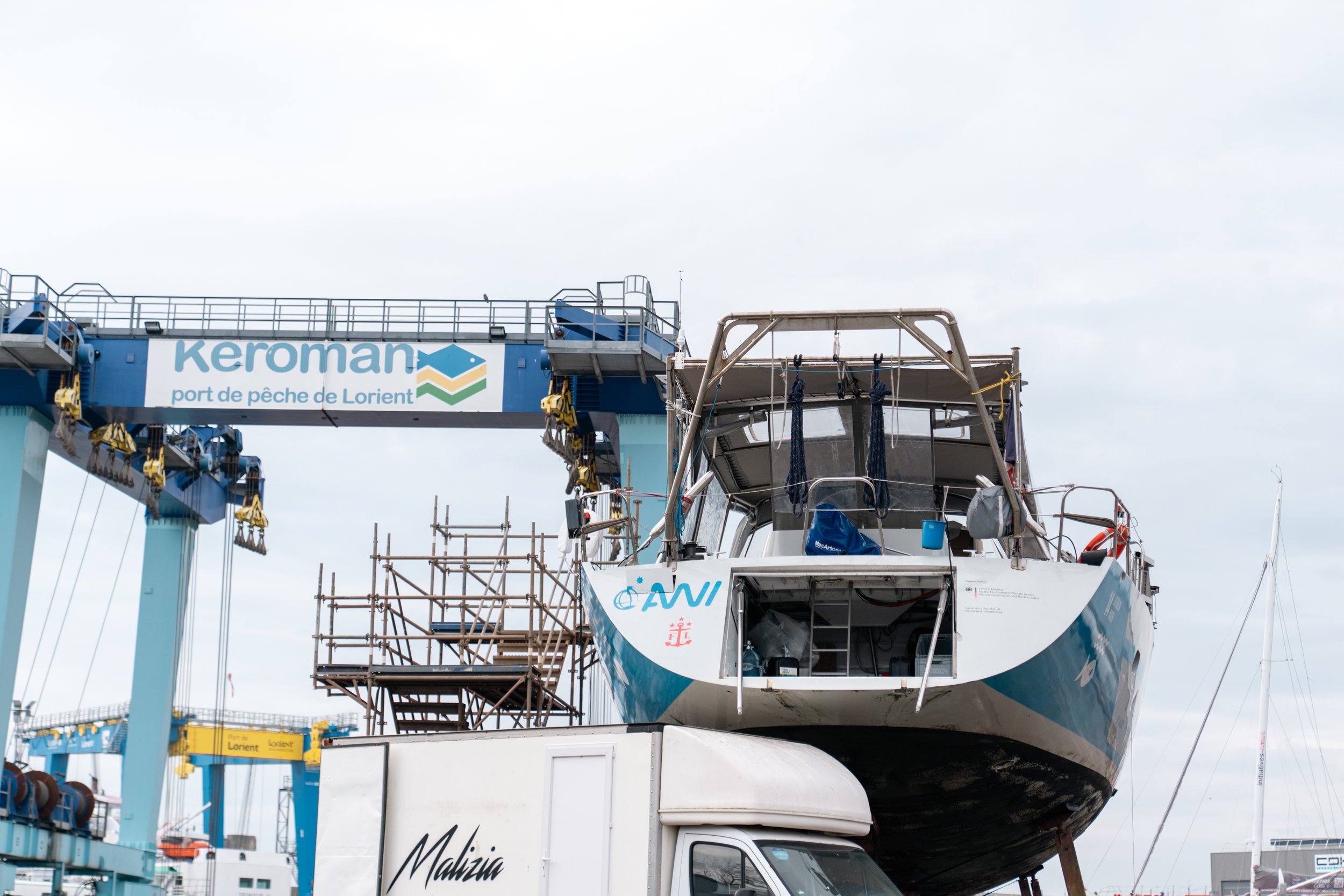
The boat is now in the boat yard for a refit © Flore Hartout / Team Malizia
For Malizia Explorer Director Oona Layolle, having the boat back in Lorient is a welcome moment after a particularly busy season. Over the past year, the Malizia Explorer has completed almost back-to-back missions spanning Cabo Verde, Brazil, Antarctica and Greenland. Oona is one of the people working behind the scenes to make these expeditions happen. Often sitting behind her laptop in France, she coordinates the many moving parts on land, developing plans and coordinating expeditions from concept to execution and generally making sure that everything is in place before it meets reality onboard and must be executed!
“It’s incredible to see how much we dared to dream and how much we managed to achieve. We had big ambitions, and the challenges were many”, said Oona, reflecting on the first year and its journeys to both polar regions. “Making it all happen took determination, hard work, resilience, and above all, an extraordinary team of people who believed in the project. It wasn’t always easy, but this first year has proven that where there is a will, there is a way.”
Now, with the boat safely back home, carrying a few bumps and scratches as souvenirs of a life well lived, it is time for Oona's plans and the crew’s long list of improvements to take shape. The work will cover several areas, starting with the vessel's essential systems. Hydraulics and mechanical components will undergo checks and maintenance, while the rig will receive a full inspection and adjustments to the mast. The mainsail will also be replaced.
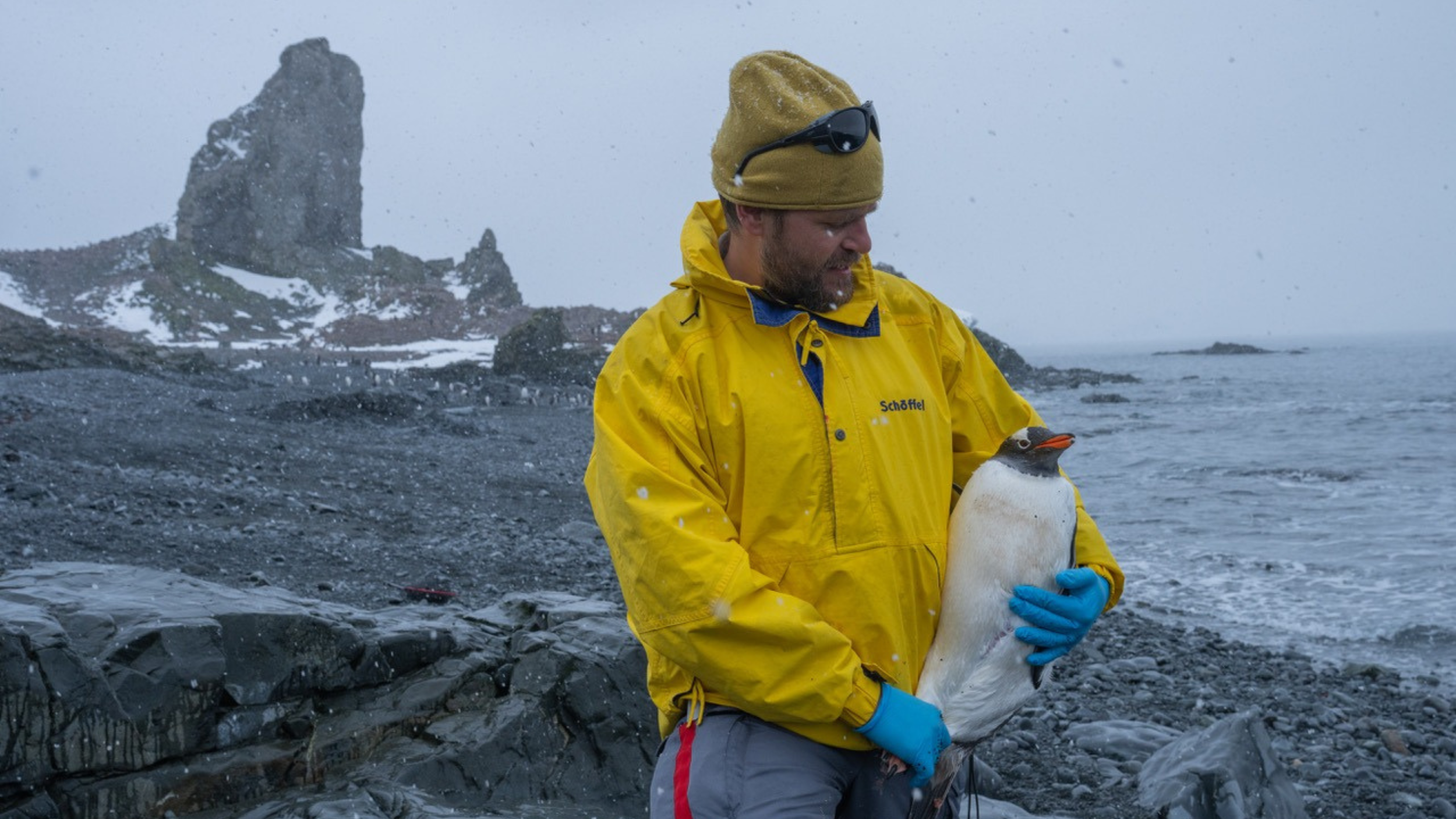
AWI researcher Simeon Lisovski in Antarctica © Esther Horvath
Looking further ahead, the Malizia Explorer is already preparing for a return to Antarctica next year as part of an international research initiative, and to make life onboard more comfortable in the challenging conditions further south, a much-welcomed new heating system will be installed. The fresh water systems will also be upgraded, with a focus on improving efficiency and sustainability. Further exterior work will include repainting, addressing leaks and replacing sections of teak on deck.
“Simon is leading the refit as our yard coordinator, overseeing and coordinating the different works. But this is very much a team effort. Jo, our captain, and Lucas, our first mate, play an essential role in managing the refit alongside him. Their extensive knowledge of the vessel, its systems, and its day-to-day operations is invaluable in making the right technical decisions and ensuring that every improvement meets the boat’s operational needs. Together, they make a strong team to guide Malizia Explorer through this important next chapter.”
Some of the most exciting upgrades, however, are happening beneath the surface: For our research activities, the vessel will receive a new bathymetry system, allowing researchers to map underwater depths and better understand the shape and structure of the seafloor. This will open up further possibilities for studying the underwater landscapes the Malizia Explorer encounters on her missions.
The CTD rosette will also receive additional sensors. This piece of scientific equipment measures conductivity, temperature and depth, while allowing researchers to collect water samples from different depths, reaching down to 480 metres. The additional sensors will further expand its capabilities as a research platform, offering scientists more opportunities to collect valuable data about the ocean.
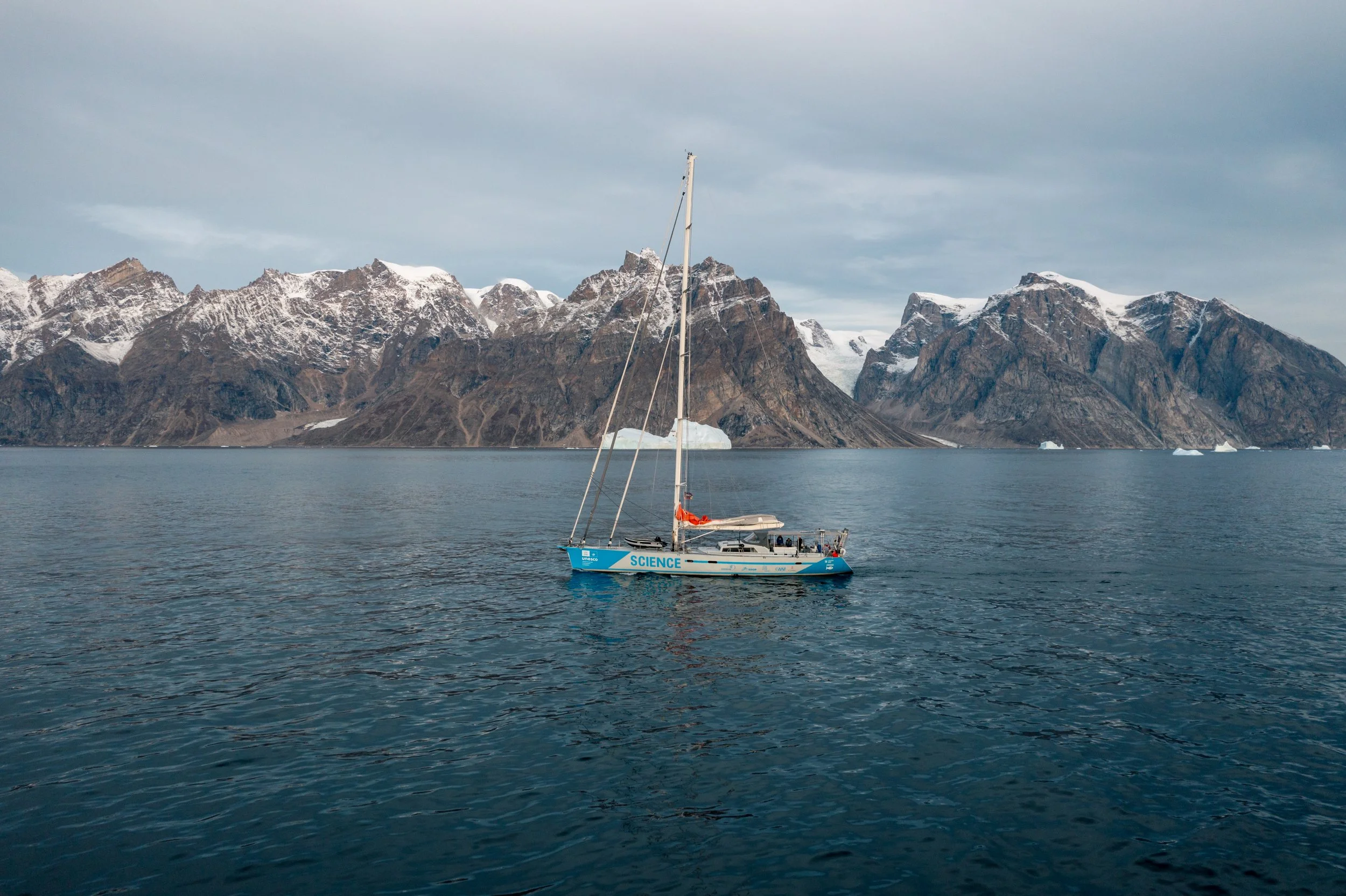
Malizia Explorer sailing in Greenland on a mission with AWI © Flore Hartout / Malizia Explorer
The CTD rosette was most recently used during our Greenland expedition, where researchers investigated the influence of Atlantic waters and glacial melt on ocean circulation in Kangertittivaq, the world's largest fjord system.
And if all of that wasn't enough, there are further plans in the pipeline: subject to feasibility, the team is also looking into reinforcing the bow and integrating a wet lab on the stern deck, providing additional space and facilities for research activities at sea.
When we first set sail with the Malizia Explorer in May 2025, the vessel and the project were still very much an ambitious idea in their early stages. We wanted to demonstrate what a sailing scientific and outreach vessel could achieve: supporting researchers and institutions in gathering knowledge about the ocean, contributing to its protection, and bringing people around the world closer to the marine environment and its influence on biodiversity, climate and our everyday lives.
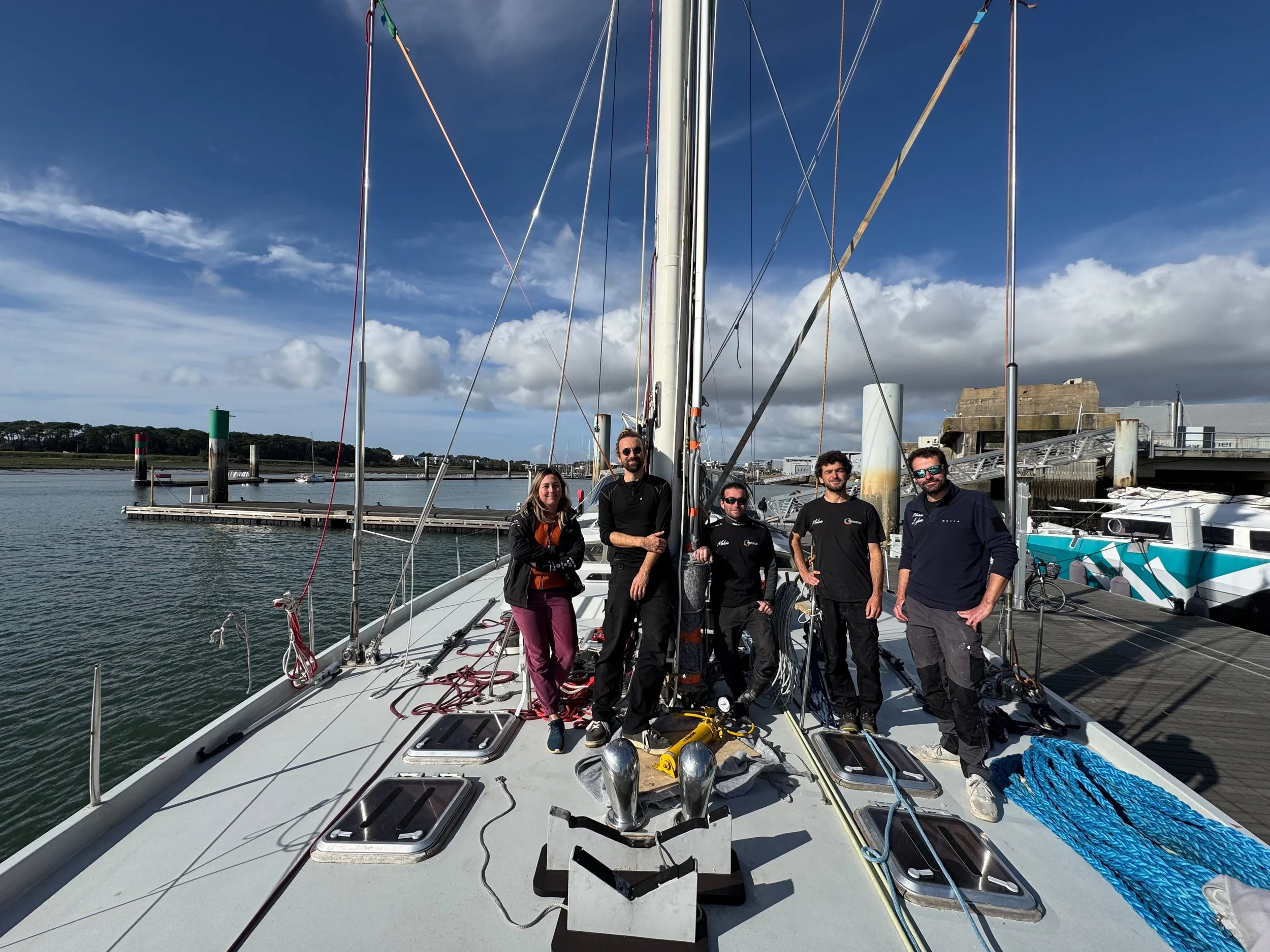
The team ready to tackle a winter refit © Malizia Explorer
A year and a half later, we have a lot more than an idea. We have missions completed, research conducted, people reached and proof that this ambitious idea works. Of course, there have been a few hiccups along the way, and there is still plenty to learn and improve, but the first year has shown us what is possible when people bring their knowledge, commitment and passion together.
With the boat back in home waters, Oona concludes: “We are incredibly proud of what we have accomplished for science and ocean conservation in such a record time, and excited for what lies ahead.”