
Captain’s reflections on sailing in Antarctica
Jonathan is the captain onboard the Malizia Explorer and sailed the boat to Antarctica for the third and final leg of the mission to Antarctica in February. On the way back, as we were sailing through the Beagle Channel back to Ushuaia, we sat down on deck and enjoyed a chat, surrounded by a few whales and albatross seabirds.
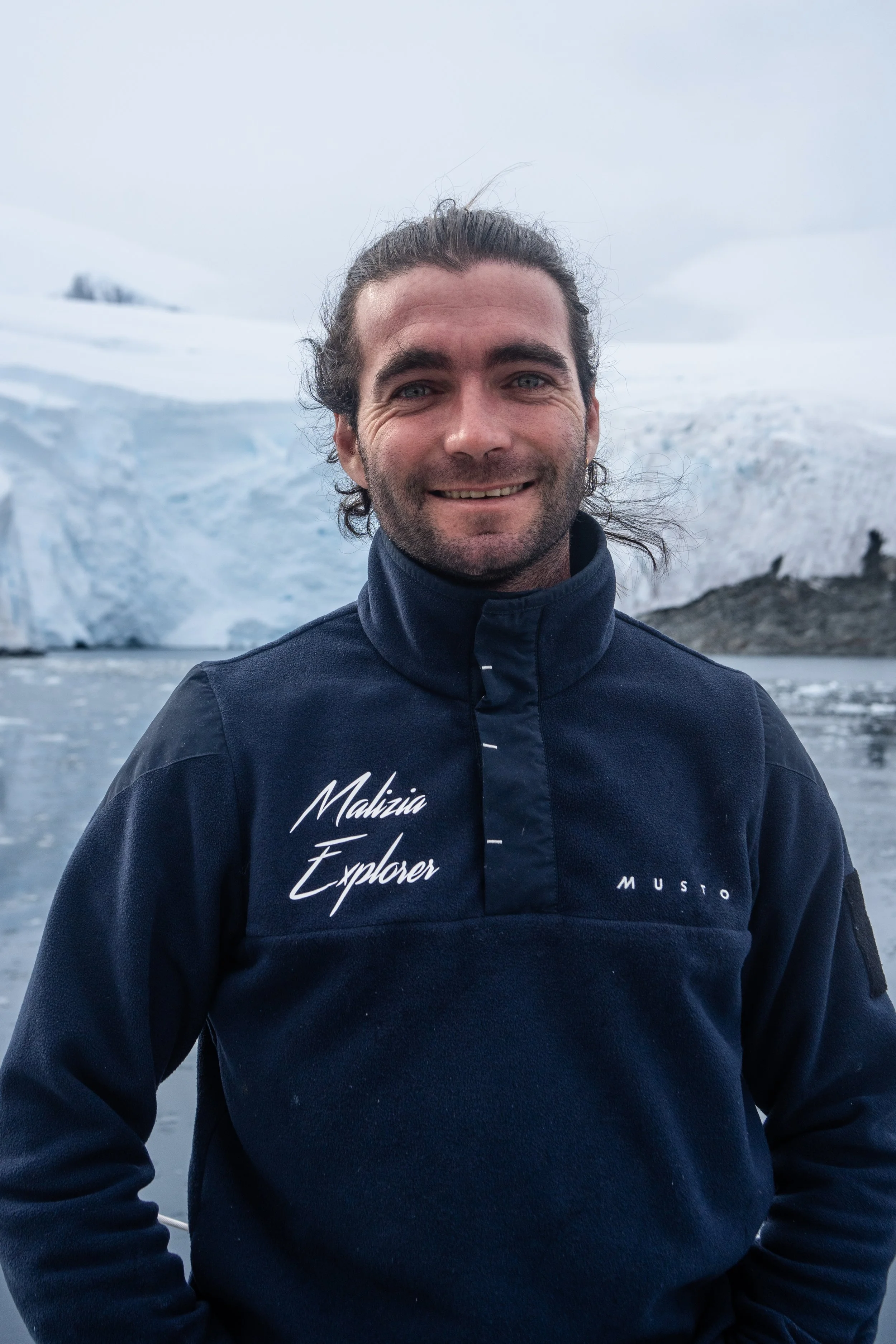
You’re the captain of this boat, and you’ve taken us on a wonderful trip down to Antarctica, very safely, to meet Under The Pole for the joint scientific mission. And now we’re on our way back to Ushuaia. You joined the team pretty much a year ago now. Looking back, what word would you use to describe your year with Malizia Explorer?
Intense, but in a good way.
I joined the boat in April last year. The boat was still out of the water, with the mast off and the keel out. Oona was still in charge of the maintenance and the big refit. I arrived in Lorient, and yeah, how was the year? It was intense. We did a lot of stuff. A lot of things happened on the boat. And there were also things that weren’t really expected at the beginning.
For example, Antarctica. We were talking about it, but it felt like a distant plan. Six or seven months after launching a scientific vessel, going to Antarctica…that’s a big idea.
But in the end, the boat was in the water, Boris was there, and we started talking more seriously about it. Boris pushed everything, and it all worked out. And here we are, just one year later and we’ve done a few trips to Antarctica!
And what I also like is that it wasn’t just Antarctica. Antarctica was a big thing, yes, but the whole trip down was really nice as well. We did a lot of missions along the way, which were very interesting and very diverse.
So yes, it was intense in a good way, because there was a lot of change, a lot happening. The boat needed to get ready in a very short time for a very big mission. And at the same time, we were doing missions along the way and covering a lot of distance.
This boat brings together scientists, activists, media, sailors, cooks and politicians. It’s not your usual mix on a boat. How is that?
It’s interesting. Everyone is very different, with different backgrounds, but they all come here with a similar goal. They’re here because of Malizia and the mission behind it.
Everyone has their own angle, but the general purpose is the same: to help, to make something better for the planet. So people get along well. Everyone brings their little seed, their own input, and each trip grows from that.
Take Tomas, the cook on the current mission, as an example. Tomas has a background in marine biology. His job onboard was to cook, and he did a great job, but he was also genuinely interested in what was happening scientifically. He wanted to understand. He wasn’t just here to cook. That’s what brings everyone together.
You were not captain for the first two of the three missions to Antarctica, but you had a little break and joined again as captain for this February leg. Looking back now, as it’s pretty much over and we can nearly see Ushuaia, how was it to sail in Antarctica for the first time?
Funny enough, I was a little bit stressed, but not too much. That’s thanks to Lucas, who replaced me for two months on the first two Antarctic missions. He has a lot of experience and was the one who took the boat for the first two missions. He’s a great guy. Having him bring the boat down to Antarctica for those earlier missions gave me confidence. He knew the boat. He told me what to do, what not to do, what works and what doesn’t. So part of the stress was taken away because I wasn’t the first person bringing this boat down here. And secondly, I was very well surrounded on this trip. I had people there keeping an eye out. Everyone was doing their part. In the end, it’s a whole community working together, which makes everything feel safe.
Do you have a favourite moment from Antarctica?
When Blaise, my second, locked Hans, another sailor in the engine room!
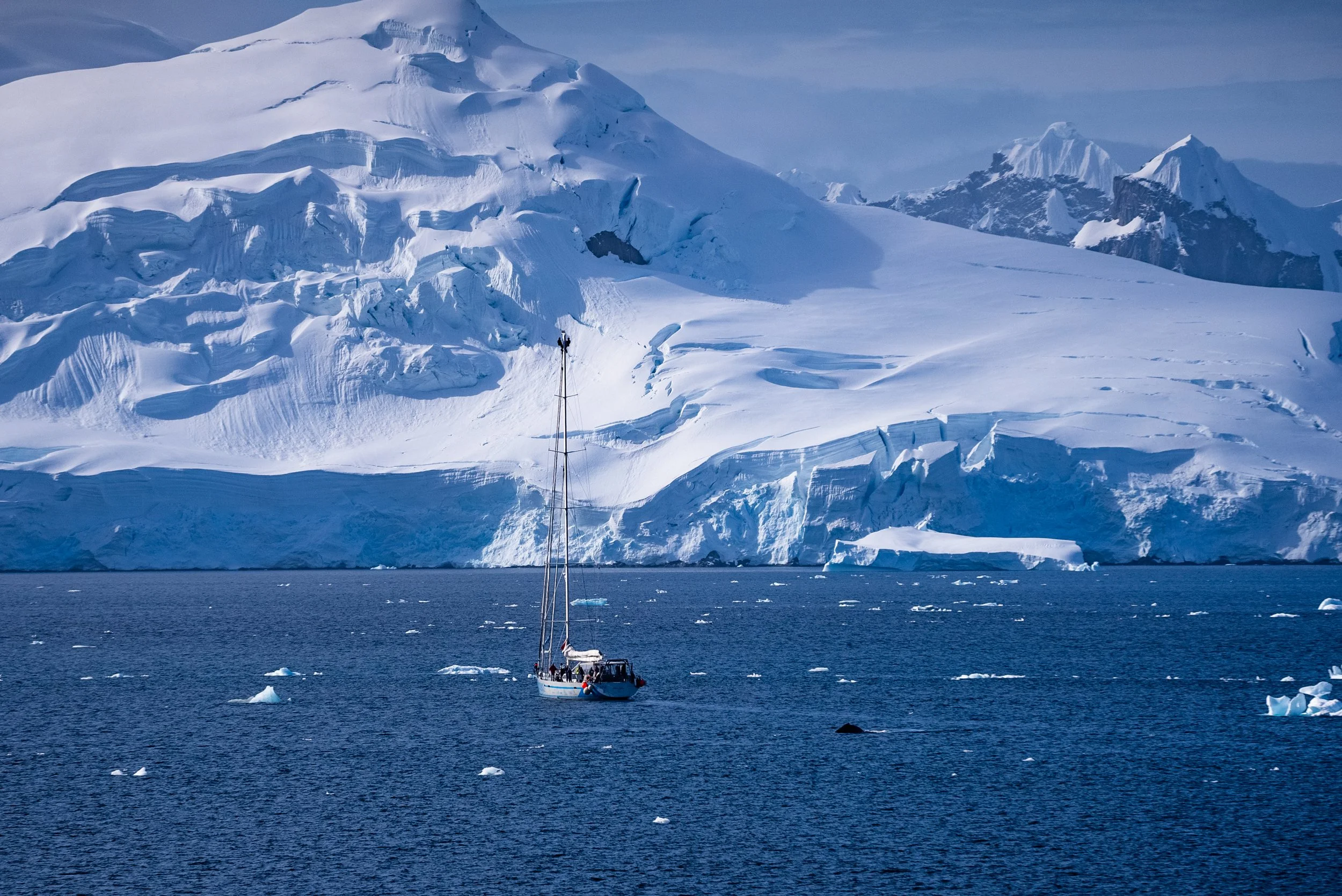
But actually, I think my favourite moment was when we were up the mast, watching the whales on our way to Paradise Bay. At first, I didn’t want to go up. I wanted to stay down on deck. But then Blaise asked me if i wanted to go up, so I came to get you and we went up together.
It was nice up there, as we were out of the engine noise. We could hear the icebergs cracking…even though we were high up, we could hear them nearly even more clearly. It felt like they were right next to us.
We saw whales coming up and diving down, their tails and bodies visible. There were seals on the icebergs and penguins swimming around the stern.
And we ended up having philosophical discussions up there. I thought we had only been up there for one hour. But when we came down, people on deck said, “You’ve been up there three hours.”
What else stands out?
The first day we arrived.
It was my first time in Antarctica. Discovering all that ice and those mountains, I didn’t realise they were so high, so tall.
It will take time, as we’re still in motion, still on the trip. Once we arrive and stop, sit down, and rest, it will take time to process and realise: we’ve been to Antarctica.
Looking back at the photos will be interesting.