
A Day Aboard the Malizia Explorer
The day begins together around 7:30 am, though some join later, as even in Antarctica, night owls stay night owls, and the morning grouch remains grouchy. With the sun already up or barely having set at all, depending on how you count it, the team is quickly thrust into the day.
After breakfast, either in the cabin or on deck for those who enjoy shivering first thing in the morning, the Malizia Explorer starts preparing for a day always full of action, as soon, the group will split up, as the expedition unfolds in multiple directions at once, each with its own rhythm, purpose and points of action.
Education and Activism
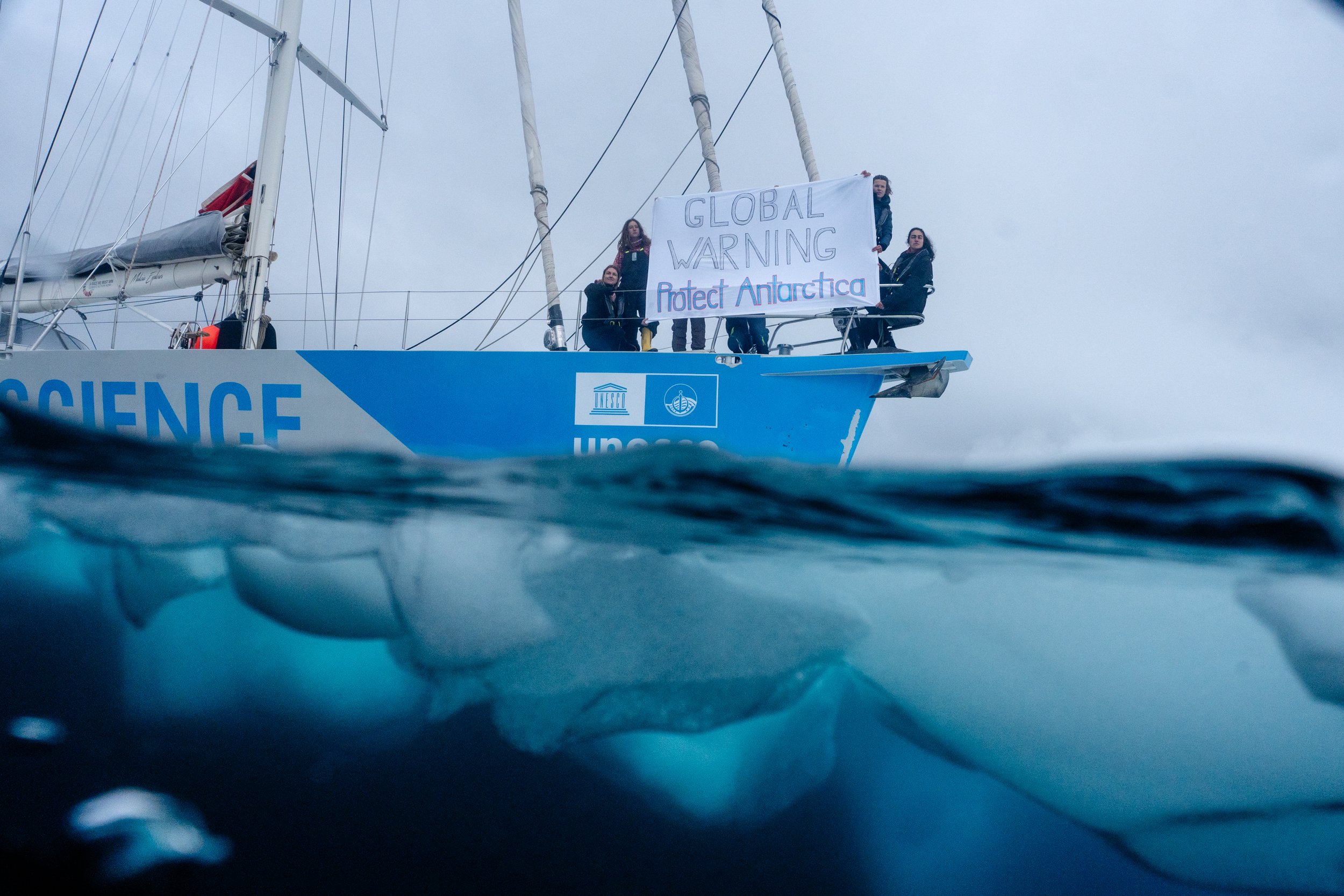
While some are still finishing breakfast, others are already engaging in climate and Ocean education, inviting children, students, and curious minds to experience Antarctica and life onboard the Malizia Explorer. Through a satellite connection, the My Ocean Challenge, which is Team Malizia’s education programme, and climate activist Luisa Neubauer engage with students thousands of kilometers away. In one event, they actually had 33 thousand children “sitting in their classroom” at once. Read more about that here.
Once these outreach activities have concluded, the activists and scientists onboard dive even deeper into their work. One product of their work is this petition to help establish a marine protected area: Domain 1. Read more about it here.
Across the Bay: Under the Ice
Meanwhile, on The Why, Under The Pole’s research vessel (the team with which we have joined forces for this mission), divers prepare for their icy descents. Their morning starts similarly to the Malizia Explorer’s, with one big difference being that one crew member rises extra early for a deck workout, a ritual most of the team politely avoids.
After some of the Malizia Explorer crew have been transferred to The Why and preparation for the dive is concluded, the divers coordinate with the support crews and descend into the frigid water to explore “marine animal forests”, which are complex underwater ecosystems largely unseen by the outside world and newly emerging as key research sites in need of protection. Encased in protective suits, the divers say goodbye to the icy white mountains above and descend through a short, turbid water layer until the full spectrum of underwater life appears: forests teeming with vibrant color and motion.
In extreme environments like Antarctica, every dive is methodical, and scientific success relies on the support of the crew above water, who ensure safety, communication and logistics.
Science on the Move
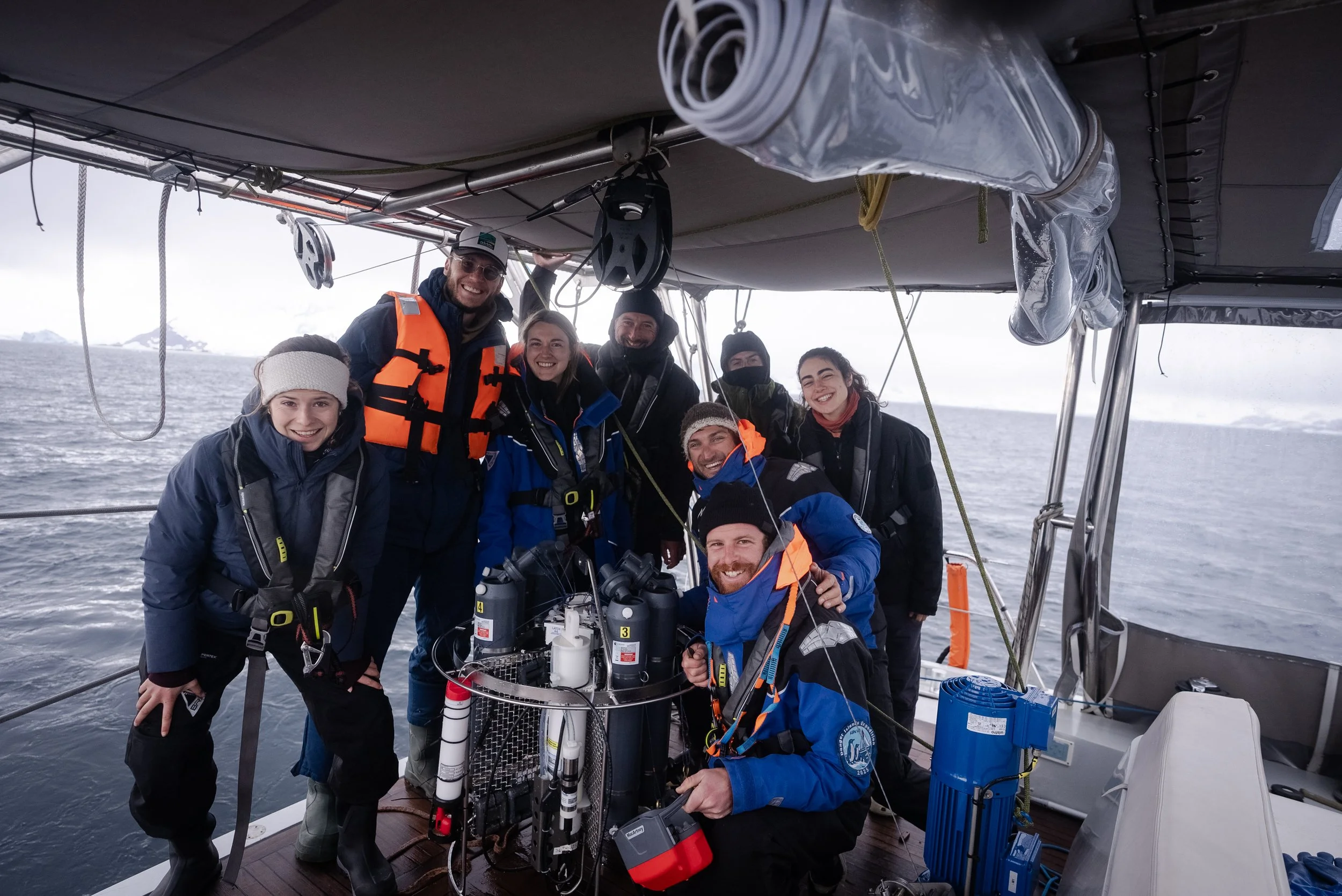
Whilst the divers are engaged under the water, elsewhere, the Malizia Explorer sails to specific points in the region, where Dr. Lea Olivier, from the Alfred Wegener Institute, oversees CTD rosette casts. With the CDT Rosette, a key scientific device, the team collects water samples and measures Ocean parameters, such as temperature, salinity and depth.
This scientific work focuses on linking physical Ocean structure, biological activity and carbon fluxes across coastal-to-open-ocean gradients and aims to close key data gaps and improve understanding of Ocean-climate interactions in the Western Antarctic Peninsula.
The Constant Backbone
Throughout it all, Estefanía keeps the team fed and cared for. She prepares meals, checks that everyone is comfortable, and quietly ensures the day’s activities run smoothly. From early morning through late evening, her presence ties all the threads together. And while the ship hosts incredible people and vital missions, many would argue her role is the most essential :)
Evening on Board
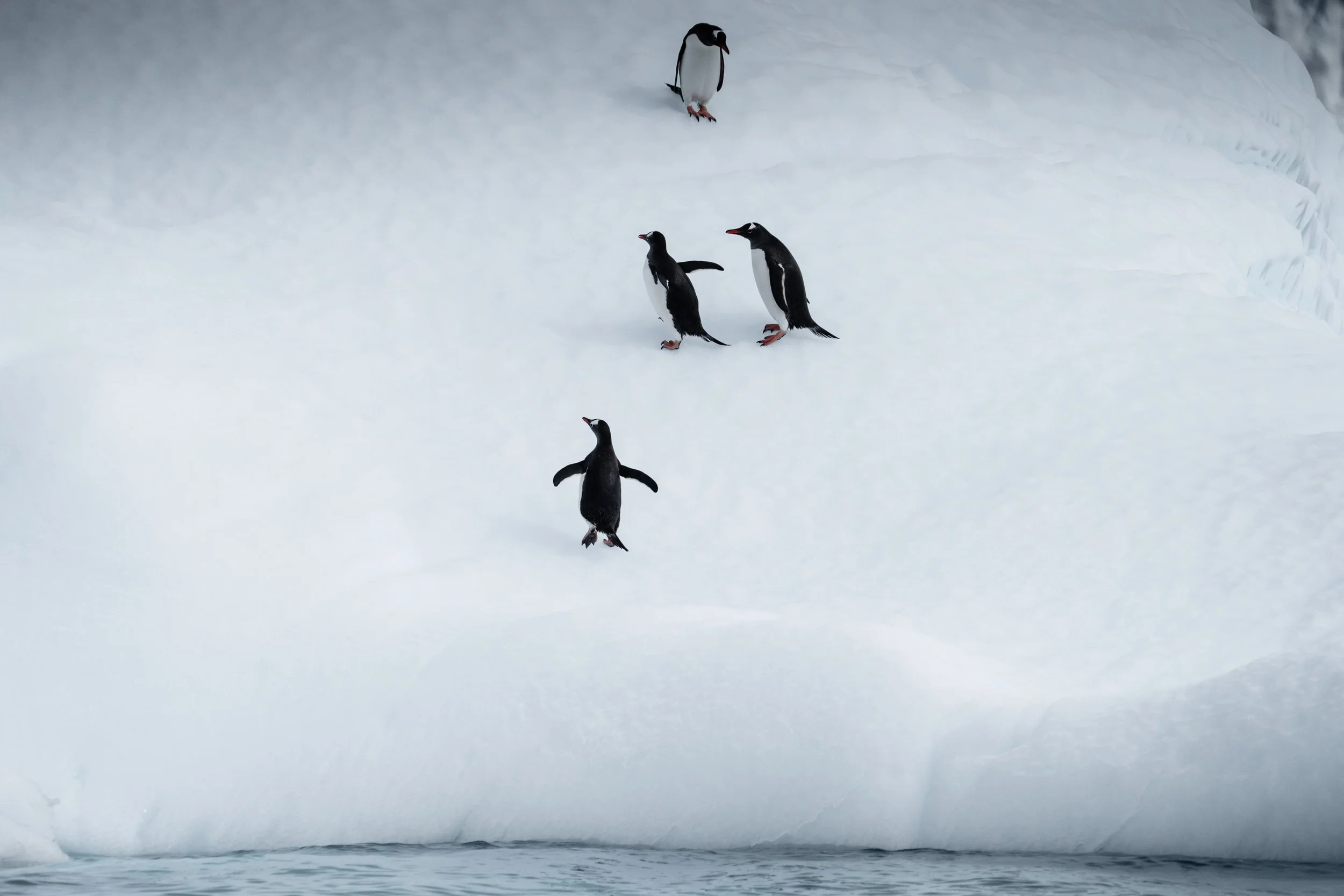
By evening, the boats reconvene and crew members, who swapped boats before, head back to their “home boat,”. Together on the Malizia Explorer, the team will enjoy dinner, sometimes playing cards, however often unfocussed, as outside, wildlife provides a living backdrop: whales bubble-feeding nearby and penguins hopping along the ice.
A day on the Malizia Explorer is never linear. It begins together, splinters into multiple missions, and reconverges: scientists on deck, explorers beneath the surface, educators on video calls, activists organizing protection efforts.
…And when everyone finally goes to bed, you can still hear onboard reporter Marin Le Roux’s tip-tap-tapping on the keyboard as he edits and archives the day’s impressions, sending them to land so you, too, can witness Antarctica and the world that needs our protection.
