
Over 30 000 Children in the Same Boat During a Lesson from Antarctica
Only a few people can say they have been to the end of the world. For one hour, however, over 30 000 children were able to virtually come on board the Malizia Explorer and travel from their schools all the way to Antarctica as the My Ocean Challenge hosted a classroom in the ice in cooperation with Luisa Neubauer. Moderated by German TV reporter Tobi Krell, also known as Checker Tobi, the live lesson introduced students to Antarctica through the perspectives of climate activist Luisa Neubauer, offshore sailor Boris Herrmann, and marine researcher and journalist Lea Wowra. The session focused on what makes Antarctica unique, why it matters for the global climate, and how it can still be a place of hope.
At 12 o’clock sharp on the 14th of January 2026, German speaking schools around the world from Hamburg to Nairobi gathered in their classrooms and turned their attention to a screen that was connected not to a studio, but to a sailing vessel in the Southern Ocean. The Malizia Explorer sailing research vessel, anchored in a bay surrounded by icebergs off the Western Antarctic Peninsula, became the classroom for an hour-long session which took place as part of the established format of My Ocean Challenge’s virtual classrooms. On board were Luisa Neubauer and Lea Wowra, acting as the eyes and ears for more than 30 000 children watching live. The event was introducted by Team Malizia education and communication officer Remy Johannsen, and moderated by Checker Tobi.
For many people, Antarctica remains a distant and abstract place. It is far away, rarely visited, and often not even shown on maps, despite being an entire continent. Unlike the Arctic at the North Pole, which consists of frozen Ocean, Antarctica is land covered by ice and has no permanent human population, apart from scientists working at research stations. The session therefore began by laying these foundations: Antarctica lies in the far south, its wildlife differs fundamentally from that of the North Pole, and while polar bears live in the Arctic, Antarctica is home to penguins. In addition, much of its biodiversity, Lea Wowra explained, is hidden beneath the Ocean’s surface, where rich marine ecosystems thrive in the cold waters.
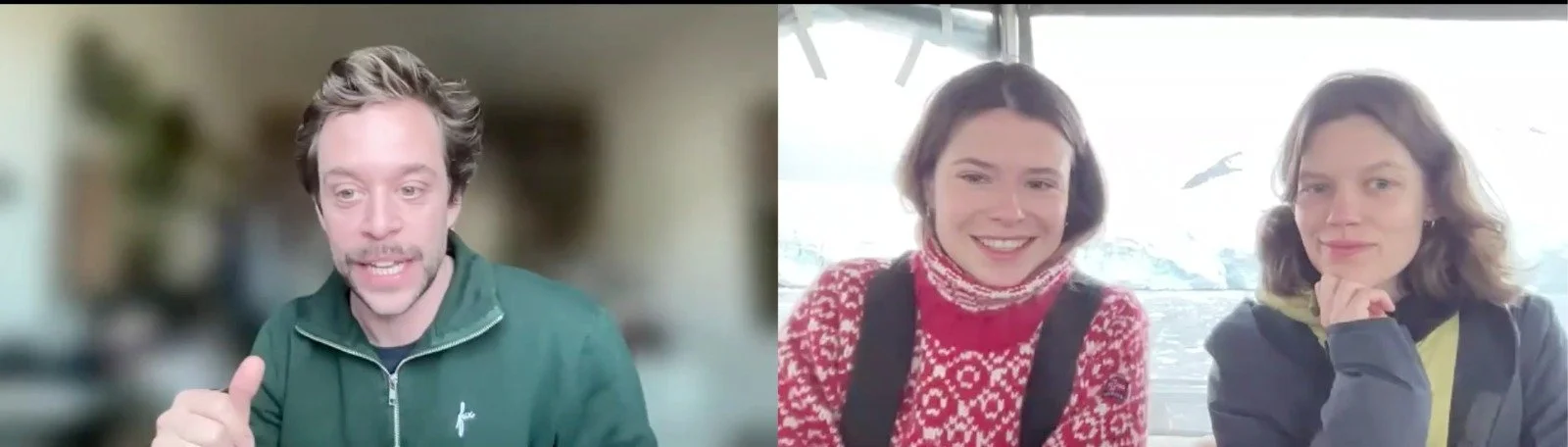
Tobias Krell alias Checker Tobi speaking together with Luisa Neubauer and Lea Wowra.
The backdrop behind Luisa and Lea already showed how impressive the landscape is, with high glaciers, rocky outcrops, and penguins lining the shoreline, however they also shared stories from everyday life on board the ship, talking about eating soup while waves caused bowls to slide off tables, ice breaking away from glaciers, and penguins making sounds that resemble donkeys, which helped make the experience more tangible for the children watching from their classrooms.
The goal of the call was not only to bring the distant continent closer, but also to create a personal connection and a deeper understanding of why Antarctica needs protection, following the idea that we only protect what we love.
The Need For Protection
Polar regions are warming faster than any other areas on Earth, and the consequences affect the entire planet. Rising temperatures lead to melting ice, rising sea levels, and large amounts of freshwater entering the Oceans, which can disrupt major Ocean currents, such as the Atlantic Meridional Overturning Circulation, which plays an important role in regulating Europe’s climate. Luisa and Lea also spoke about the importance of Antarctic biodiversity and how scientific research supports the creation of marine protected areas. This was demonstrated through the work currently being carried out in Antarctica in collaboration with Under The Pole during this mission.
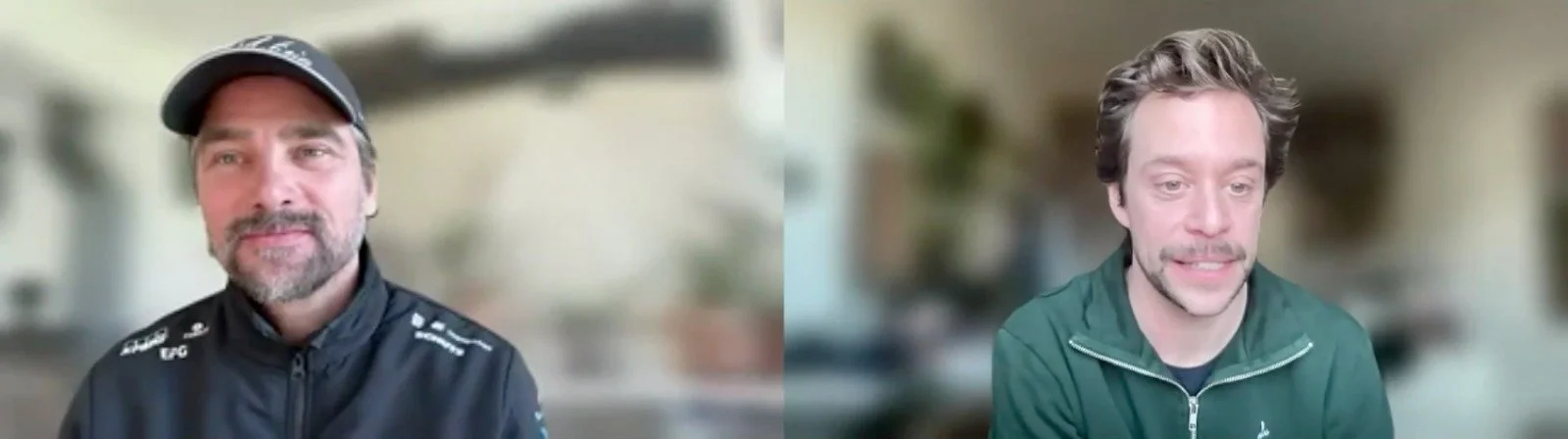
The excitement continued when Boris Herrmann joined the call. The offshore sailor and owner of the vessel had recently returned from Antarctica, having sailed there on the Malizia Explorer during its first research voyage to the region. Reflecting on his past experiences, he shared the moment when he personally became aware of climate change, when in 2011, a year which Checker Tobi pointed out many of the children listening had not yet been born, Boris was taking part in a crewed round the world race. There he noticed that the race took much longer than expected because weather forecasts and models were no longer accurate. For him, this was a defining moment that strongly influenced his commitment to climate issues and marked the beginning of his long standing engagement with climate action.
Following this personal statement, Birte Lorenzen-Herrmann, founder of the My Ocean Challenge educational programme, then spoke about how the children could turn what they had learned today into action. She explained that climate action can take many different forms, as demonstrated by the speakers involved in the call: Luisa Neubauer works as an activist, Lea Wowra as a journalist, Boris Herrmann as a sailor, and Birte as an educator. Many other roles are also needed to make such a mission come to life, including people working in media, logistics, or catering, showing that whatever interests or skills someone has, they can be used to contribute to the greater good!
Luisa Neubauer closed the session by sharing her personal impression of Antarctica. She said that she had first expected to see the continent and feel very sad, but to her surprise it had made her feel more hopeful than ever! Antarctica, she explained, “shows how powerful nature is and that places heavily affected by humans can recover if given time and space.” Ending on a high note, seeing how beautiful the world is gives her an even stronger reason to continue working to protect it.
This call marked the beginning of a series of live sessions aimed at reaching as many children and young people as possible to share insights into this remarkable part of the world. Further sessions by Luisa Neubauer and her “Globales Klassenzimmer” are planned and can be found on her website. Events by the My Ocean Challenge in English and French taking place on 19th and 20th of January 2026 can be found here.
