The Whale’s Tail - Thoughts on Intrinsic Value
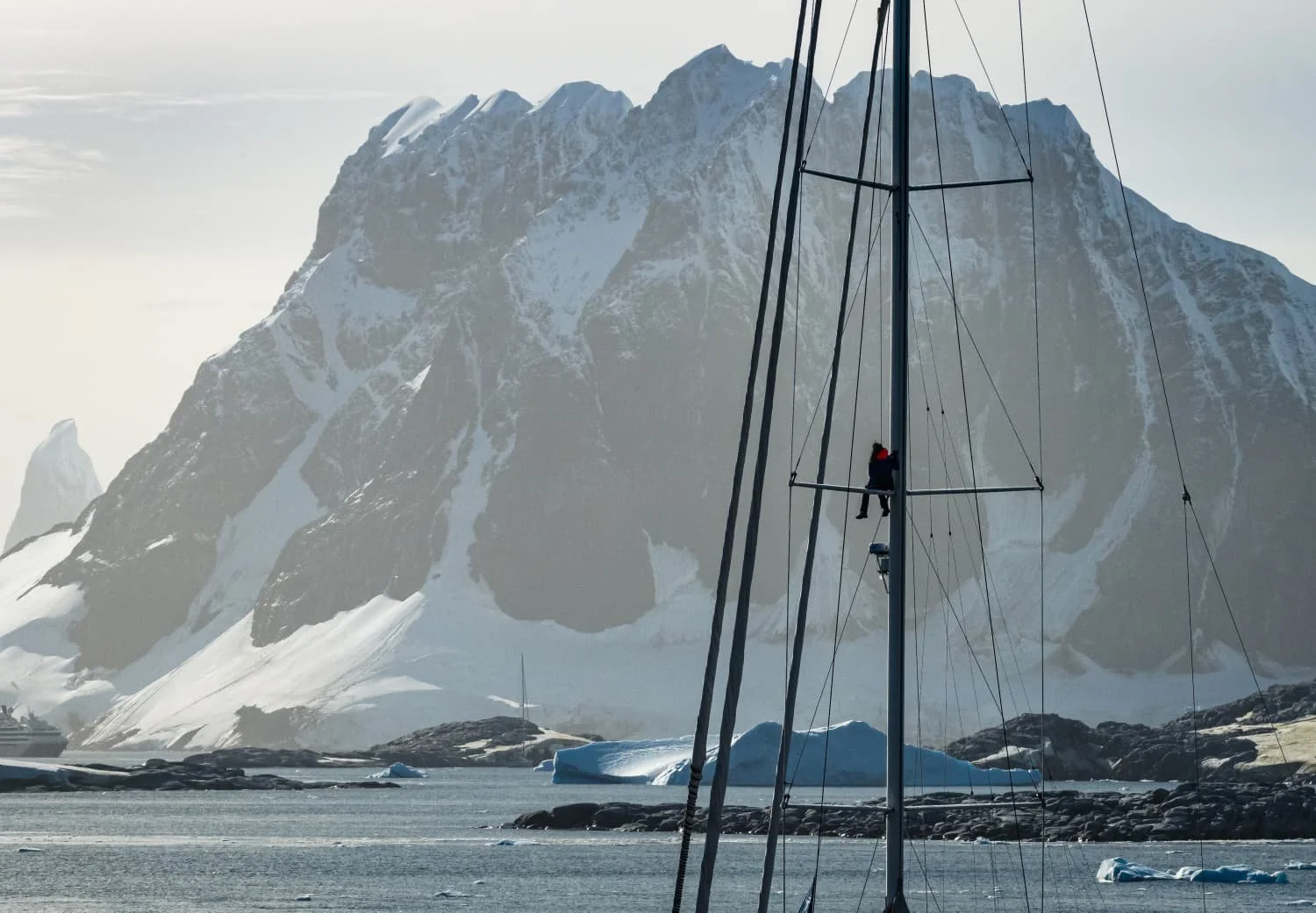
We stand on the deck of the Malizia Explorer, binoculars pressed against cold faces, scanning the horizon for the smallest thread of vapor. We close our eyes to hear better.
Somewhere out there, a sudden exhale splits the air. It is hard to tell where it comes from. Perhaps from within a blue cathedral of ice, where pieces formed over millennia fracture and fall into the sea. Perhaps from the Ocean itself, shifting and sighing. Our heads turn frantically, chasing the sound. Eyes wide, searching for proof. For origin. For meaning.
And then we see it. Not the whale itself, not yet. Only vapor. A fleeting plume suspended above the surface five nautical miles away. Little more than breath against sky.
But when we find what we heard, we fall silent.
Something shifts among us.
Even at that distance, when all we can truly see is mist, we stand in awe. Cold toes, as some of us remain in socks, unwilling to step away for boots lest we miss the next breath.
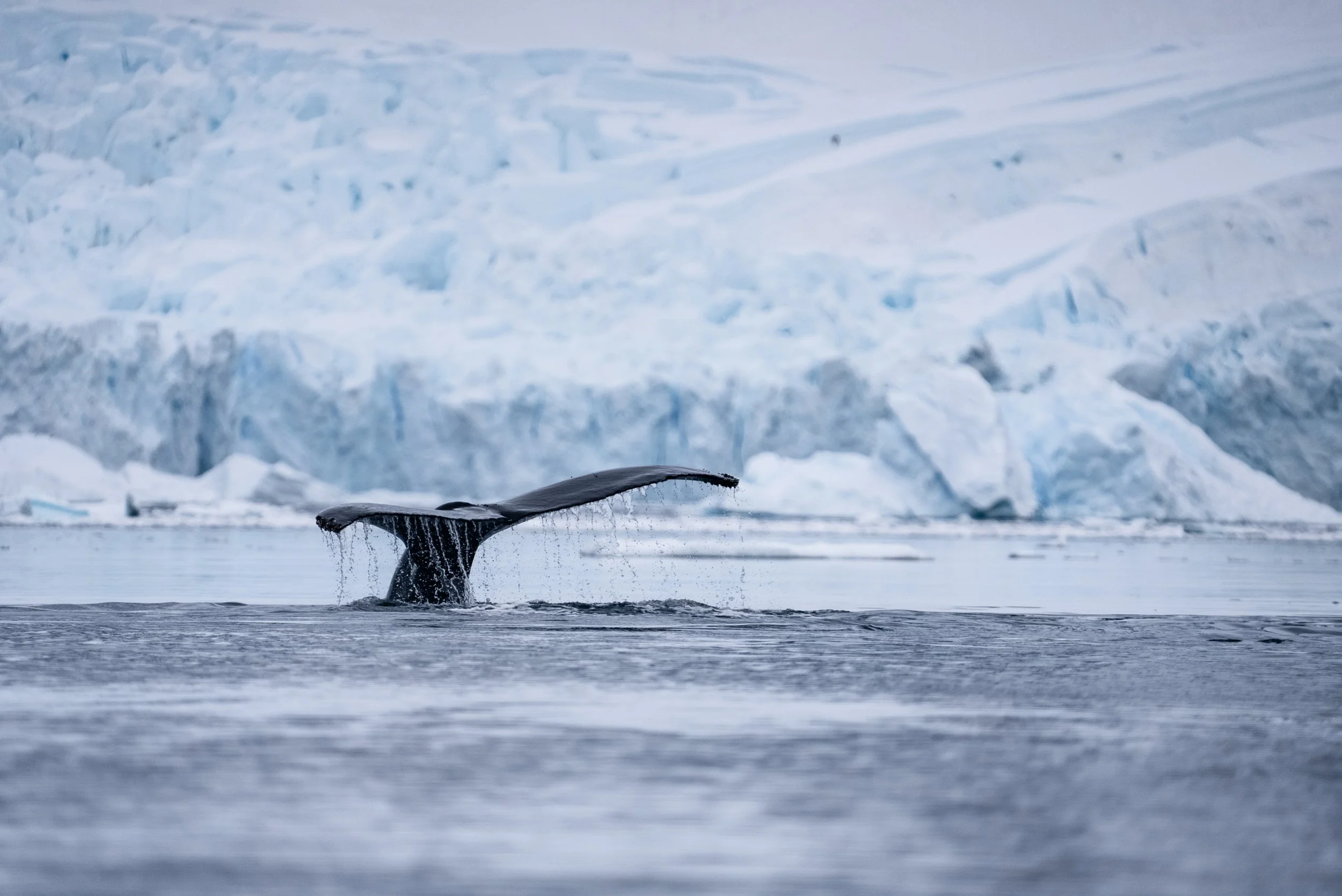
All this, for vapor. With our eyes, we see only breath. With our minds, we see the whale. We imagine the immense body moving through dark water. The slow arc of its back. The silent power of its tail. An ancient intelligence rising to meet the air before disappearing again into depth.
The mere knowledge that it is there, alive, moving and being, fills us with joy.
What is amazing, is that we do not even need to see it clearly, and yet it is enough that it exists.
Its value does not begin when we see it.
It was there before our binoculars found it.
It remains when we turn away.
A parallel train of thought opens, as I think of Antarctica.
Yes, this continent is essential. It stores nearly seventy percent of our planet’s fresh water; the Southern Ocean surrounding it absorbs around forty percent of the Ocean’s uptake of the carbon dioxide we release; it shapes weather systems far beyond its icy borders and helps sustain the air we breathe.
From a human perspective, protecting it, protects us.
But its worth does not begin there.
Standing here now, I realize something quietly humbling: to value Antarctica, you do not need to stand upon its ice. You do not need to measure its glaciers or count its species to feel its significance.
For me, the magic of this place was felt long before arriving. The reverence existed in imagination. In maps edged with white, in the simple knowledge that at the bottom of our planet lies a frozen continent and ocean that are vast, icy, and alive.
Like the whale five nautical miles away, Antarctica does not require our presence to be magnificent. It does not need to be seen to be real. Its ice forms and fractures. Its ocean pulsates with color beneath the surface. Its winds move across distances we can barely comprehend.
We, a group of fourteen on this scientific expedition, are fortunate enough to witness it.
And science matters deeply here. Through research and discovery, we gather the evidence needed to protect this place. We document its biodiversity. We identify endemic species. We measure change. We build the case, in data and detail, that Antarctica is worth safeguarding. This is essential work.
But science does not manufacture value, but merely reveals it.
While one way to speak about Antarctica is through ecosystem services, carbon storage, freshwater reserves, and biodiversity thresholds, another truth exists alongside it: this place holds worth beyond what it provides us.
Its existence is not justified by the size of a sponge, the number of species recorded, or the scale of its climate regulation. Its existence is enough.
And perhaps that is what moves us most: not that we stand here, but that it stands here. That it endures. That somewhere beyond our sight, ice meets ocean, whales rise and exhale, and the world continues in a quiet, ancient rhythm.
So yes, we value what Antarctica does for us. We advocate for its protection because of the vital ecological services it provides and the stability it lends to life on Earth.
But separate from that and equally real is another form of value.
A value not rooted in utility, not dependent on measurement and not contingent on benefit.
A value that lives simply in the knowledge of its being and its existence.