
“floating, explorative classroom” - words from expedition leader LEa Wowra
The OKEANOS Kelp-Can! expedition with young changemakers seeking professions in and around the Ocean is currently underway and onboard is expedition leader, journalist and marine scientist Lea Wowra to share with us some insights into the expedition, its aim and why having multiple perspectives from different disciplines and stakeholders is so valuable.
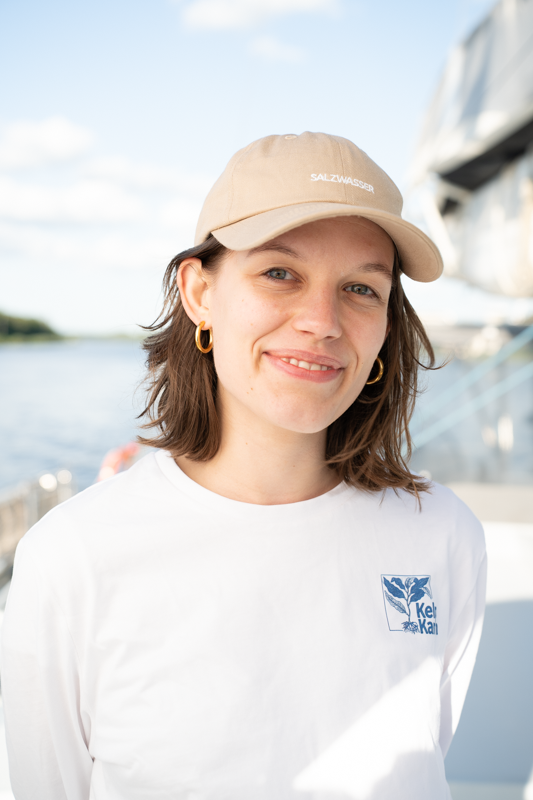
Lea Wowra is expedition leader on this expedition with Okeanos - Stiftung für das Meer © Paula Baierlein
Can you explain in your own words what this expedition is all about?
I would describe this expedition as a “floating, explorative classroom.” The participants are a diverse group of young people, studying marine science, biology, filmmaking, science journalism, and ocean law, and together we had three months to design our own expedition from Kiel to Northern Norway aboard the Malizia Explorer. We decided to focus on kelp forests, the incredible underwater jungles of the North Atlantic, formed by large brown algae called kelp. Our journey is centred around the motto “Kelp Can” and with our diverse disciplines and skills, we want to explore what kelp can do. For example, it can provide a habitat for countless species, store carbon, inspire art, and be tasty as well. And along the way, we want to find ways to communicate our experiences.
You have been on board Malizia Explorer before, during the Antarctic expedition. What is it like to now return as expedition leader and lead a group of young ocean changemakers?
It is very exciting, but also a bit daunting, because I know which responsibilities come with the role. We are quite a few people in a relatively small space, and everyone has a lot of plans and ideas, so it can get a bit crowded at times, and we will need to make sure everyone gets equal room to do what they need to do! On a completely different note, I am really looking forward to not only be onboard as an ocean journalist this time, but to be using all the scientific instruments we have onboard and to be working with the participants on their different projects along our route, whether that’s science, media projects, or something else. It will be different from my usual, journalistic mode of work, and give me more of a chance to be in the moment with everybody, which is very exciting!
The participants come from very different backgrounds and have different levels of experience. What can this diversity bring to a mission like this one, and why is it valuable when tackling ocean challenges?
We are not treating the planet we live and rely on very well and a big part of that is the ocean. It is absolutely crucial to our survival on earth, but, because we are terrestrial animals, it can be quite hard to connect to at times – which is why we don’t really give it the attention it deserves. This is why we not only need biologists that can provide us with the hard facts of what the ocean does and how we are impacting it, but also communicators that translate these things to a wider audience and the artists that enable that emotional connection to the ocean. On top of that, we need social scientists that know how to improve policy or how to engage with coastal stakeholders. The list goes on. All these skills are important to tackle ocean challenges – and, in a way, our little group reflects a lot of these perspectives needed to find solutions for a sustainable future ocean. And, it is great that, through this expedition, we all are becoming ever more aware of that.
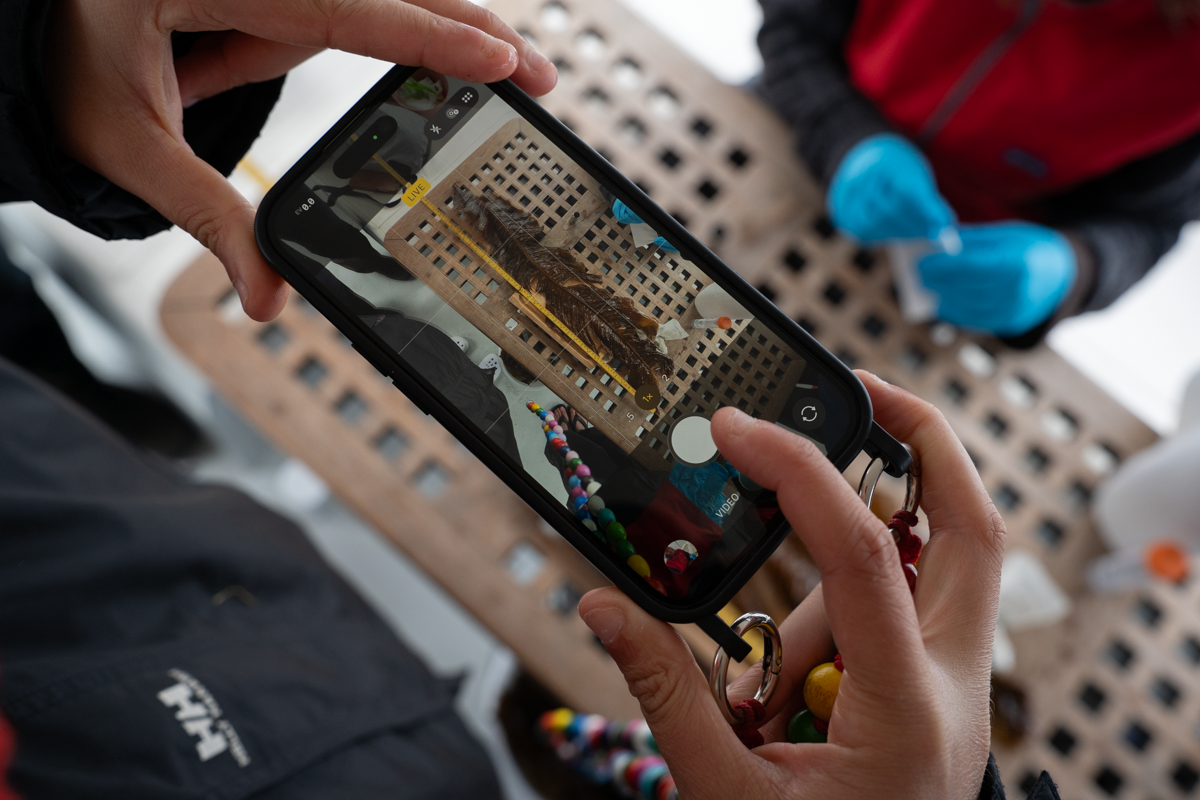
Kelp studies © Paula Baierlein
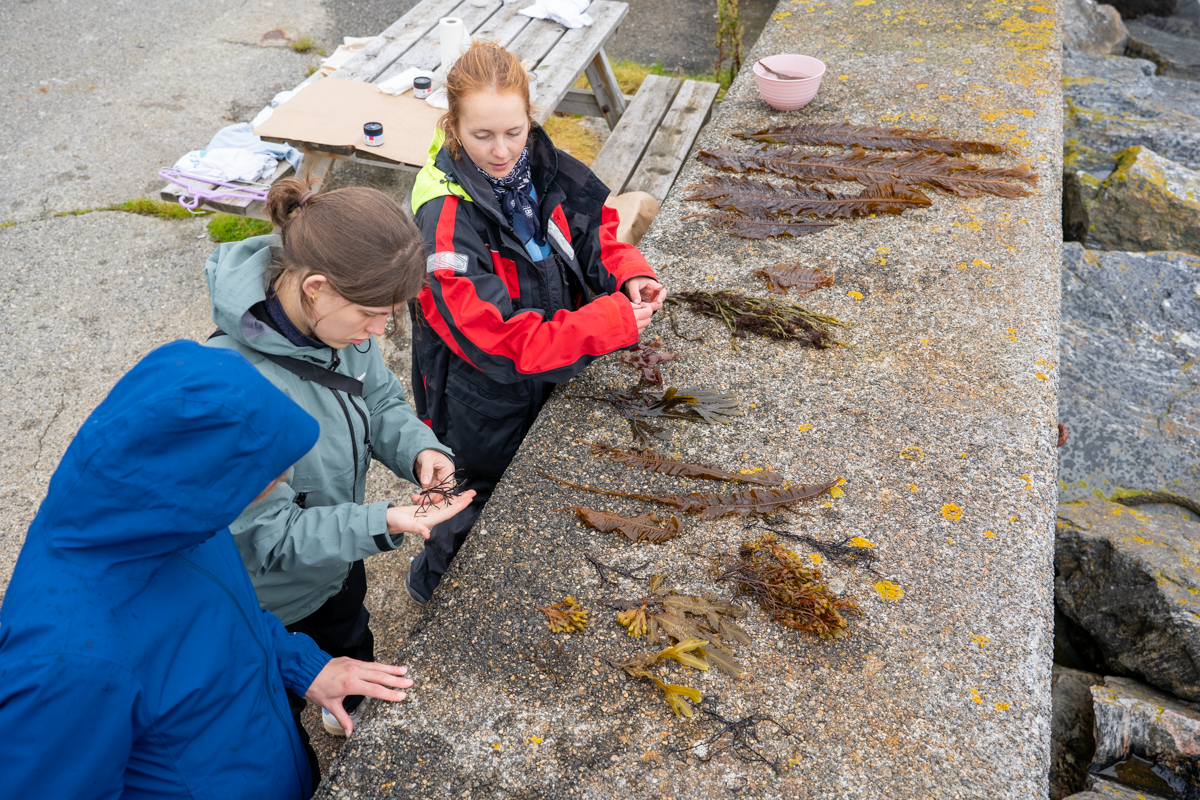
Kelp studies after dives © Paula Baierlein
Kelp forests are the central theme of this expedition. Why kelp, and what do you think people should know about these remarkable underwater forests?
Lea: Kelp forests are thecoastal ecosystems of the North Atlantic and at least as important as our terrestrial forests. They are incredibly important, but also increasingly threatened by climate change, nutrient pollution, and overfishing. At the same time, there seems to be less awareness for them as for coral reefs or other prominent marine ecosystems like seagrass meadows. So, the participants decided they wanted to change this. If there is one more thing people should know about kelp forests, I think it is that healthy kelp looks just marvellous – like underwater trees waving at you from below, swaying in the current, with fish that look like they belong in tropical waters peeking out between the “leaves” on which, in turn, sit the tiniest sea stars, shiny or colourful snails, and colonies of microscopically small organisms that look like flowers with beautifully swung petals.
The participants will be conducting their own research and citizen science projects. What will they actually be doing on board and along the Norwegian coast?
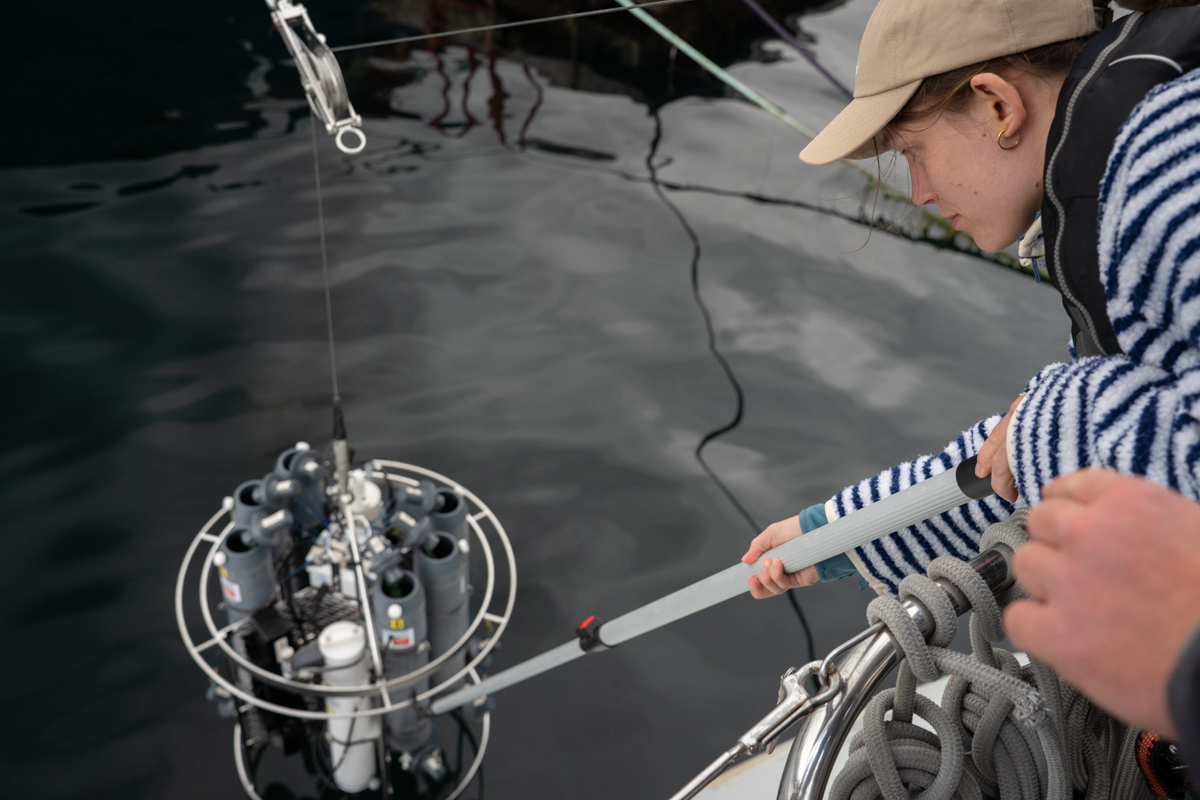
CTD - Rosette deployed onboard Malizia Explorer © Paula Baierlein
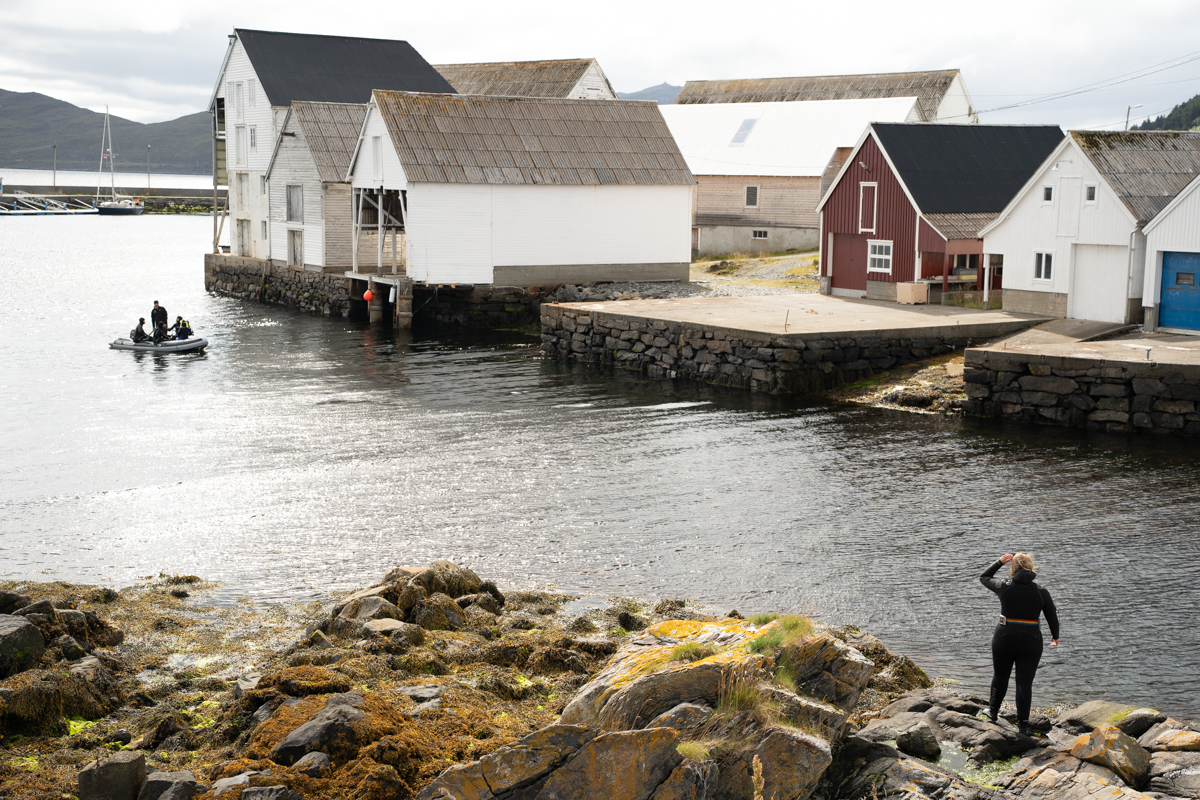
The group of young students also visit communities to learn their perspectives © Paula Baierlein
Some participants are looking at how phytoplankton communities (the microscopic organisms floating in the ocean) in kelp forests change as we go further north. Others are exploring the tiny organisms that live in and on the kelp – they always identify more than 30 different species (snails, mussels, worms…) per single “plant”! One participant, who is studying to become a marine geoscientist, brought her own instrument to look at the influence of kelp forests on the nearby seafloor. Towards the end of our journey around the Lofoten, we expect to encounter so-called sea urchin barrens, which are areas where thousands of sea urchins have eaten away entire kelp forests. This can happen when there are fewer fish to keep sea urchin populations in check. In these places, we want to collect data on the density and biomass of the urchin populations and share our findings with the Norwegian NGO RISSA that will use this data to identify sites for kelp restoration projects.
You will also be meeting scientists, fishers and local communities along the way. Why is it important to bring these different voices into the conversation about kelp?
Kelp is valuable in many different ways, which also creates potential conflicts of interest. For some, it supports fisheries and livelihoods; for others, it is an important habitat to protect, a renewable resource for food or fertiliser, or part of the solution to the climate crisis. I think it’s important to engage with all these different perspectives when addressing, communicating or studying environmental challenges, like the loss of kelp forests. It is easy to make the mistake of looking at an ecosystem from the outside and decide what is going wrong and should change. But when you talk to people who interact with these ecosystems daily, such as fishers who depend on them for their livelihoods, you may see the situation very differently. Those perspectives need to be part of the conversation if we want to find solutions to environmental problems that actually work.
After 20 days on board, what do you hope the participants will take away from this experience?
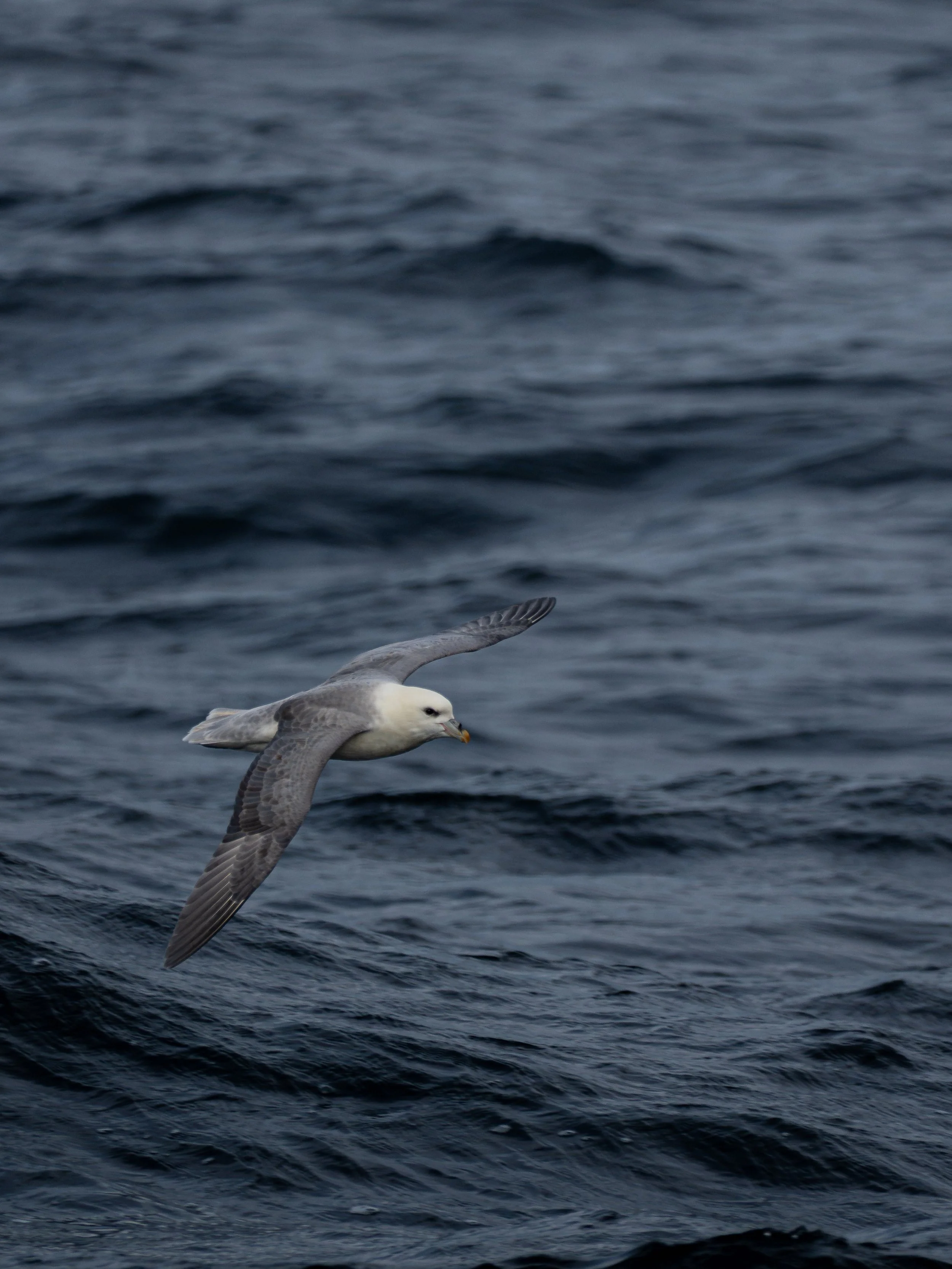
Lea Wowras view from on deck © Lea Wowra
I hope they will be inspired to use their new knowledge and skills in whatever they do – whether that’s science, storytelling, art, or policy work. And I am sure the journey will reinforce their motivation to work with the ocean and that, in itself, is a valuable outcome.
And finally, how does the sea up here compare with the Drake Passage?
I am currently sitting on deck, sipping a cup of coffee while the boat is getting closer to the Lofoten archipelago in Northern Norway. And what can I say – on the Drake Passage, my body was miles away from craving this lovely acidic beverage and my stomach even further away from being able to handle it. So, although I have been seasick on a few occasions during this trip, I feel the Drake has given me a strong pair of sea legs eventually.
However, it does get rough out here, and the crew is also doing an amazing job of catching the perfect weather windows for us. We had this one day on which the boat felt like a tiny nutshell on a stormy open ocean, and for one night, I felt catapulted back to the Drake, where I spent most of the night not lying on the mattress but on the wall right next to it.