
TEachings from below the surface - Mirjam Bourgett (AWI)

Mirjam Bourgett collected data together with her colleagues on the inflow of Atlantic Water in the fjord system © Flore Hartout / Team Malizia
Mirjam Bourgett is a physicist currently finishing her doctorate on climate model development, with a particular focus on sea-ice modelling. She recently spent nearly a month onboard the Malizia Explorer alongside colleagues and researchers from the Alfred Wegener Institute, studying how Atlantic Water spreads through the Kangertittivaq fjord system on the east coast of Greenland.
You spent the past month onboard the Malizia Explorer studying Atlantic Water in the Kangertittivaq fjord system. What exactly were you looking for, and how do you study it?
From previous expeditions and ocean models we knew that the inflow of Atlantic Water changes over the years. There are periods of warmer and colder Atlantic Water inflow. The inflow enters from the North Atlantic below 100 m depth. We used CTD measurements to gather temperature and salinity profiles and a current meter to establish whether the Atlantic inflow was currently in a cold or warm phase.
Why is understanding how Atlantic Water moves through the fjord system so important? What can it tell us about Greenland’s changing Arctic environment?
The Atlantic Water is warmer than the water in the fjord and therefore has the ability to melt glacier outflows from below. In the Kangertittiva fjord system, as well as in other fjords, the glaciers reach subsurface sea levels and can be melted by the water. So on the one hand Greenland’s glaciers are retreating in part because of the subsurface melt and on the other hand, the meltwater spreads across the sea surface from the glacier fronts out toward the fjord mouths, potentially affecting larger scale ocean circulations.
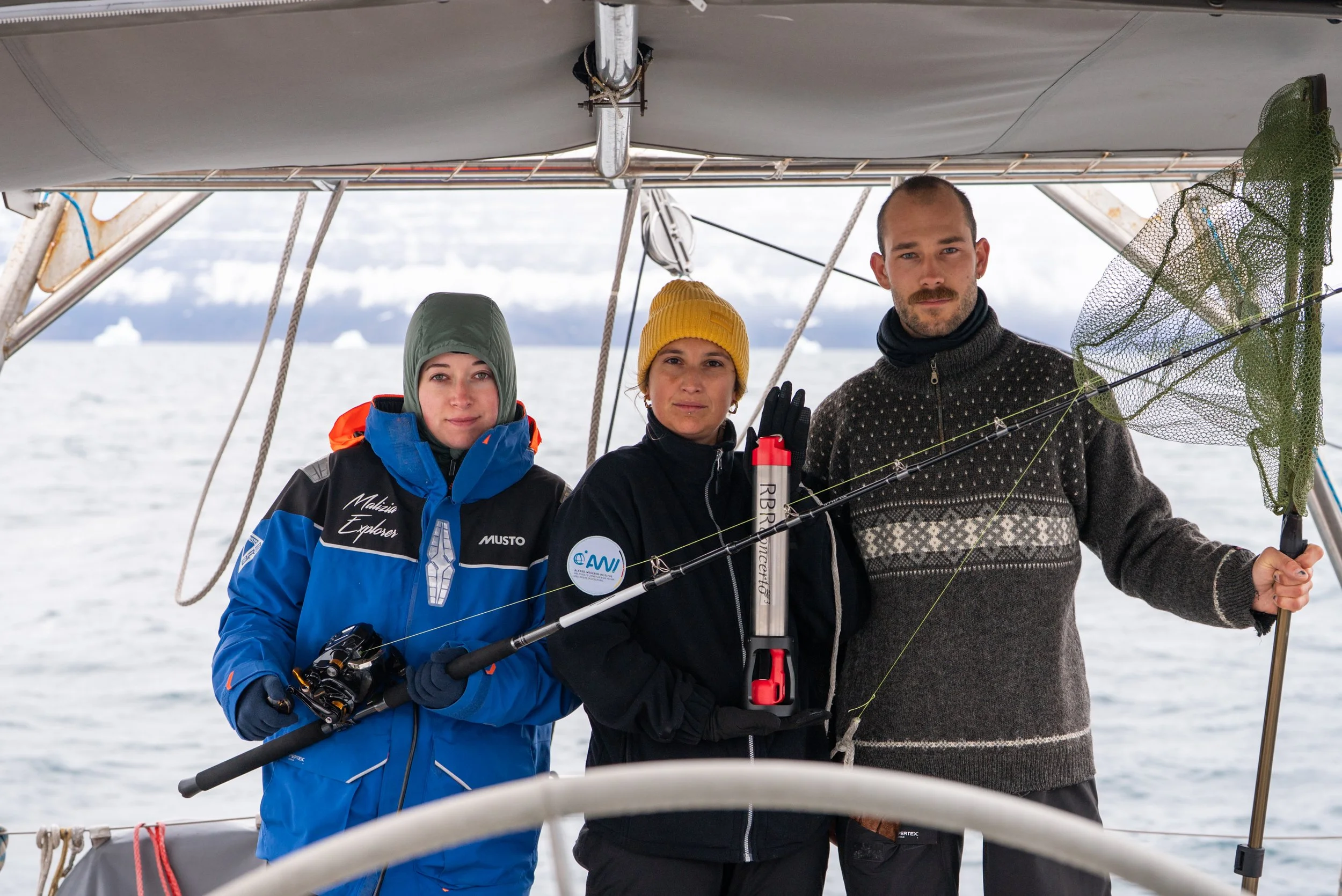
The team and equipment needed to study the different water columns (Mirjam Bourgett, Martina Zapponini and Nils Niebaum) © Flore Hartout / Team Malizia
You are a physicist working with climate models. Going even further spatially than our last question, how can observations and measurements collected in places like Greenland help improve the models we use to understand our changing climate?
We use our models to see into the future. This means we want to predict phenomena like sea level rise and ocean circulations which influence our life. One part of these models are ocean models. By comparing these models with observations we can validate the models and sometimes even give them more precise input values. The melt water rates of glaciers for example are usually approximated with parameterisations. Tuning these parameterisations can improve the modelled results.
Kangertittivaq is one of the most remote places on Earth. What are the challenges of carrying out research in such a remote environment, and what makes it worth the journey?
First of all, we have to bring everything we might need on the expedition because we cannot simply go to a store and buy new batteries for example. So in our case we brought a lot of extra batteries for our sensors. Also, we have to adapt our science plan to the weather conditions. Especially, on a sailboat we are more vulnerable to strong winds and waves. Sometimes we just had to wait until the storm passed. But it is definitely worth the preparations, the journey and the seasickness because we get the chance to see unimaginable beautiful landscapes, take measurements of which there are very few and thereby expand valuable time series. For me it also strengthened my passion to preserve the beautiful planet we live on and share the passion with others to maintain a planet worth living on.
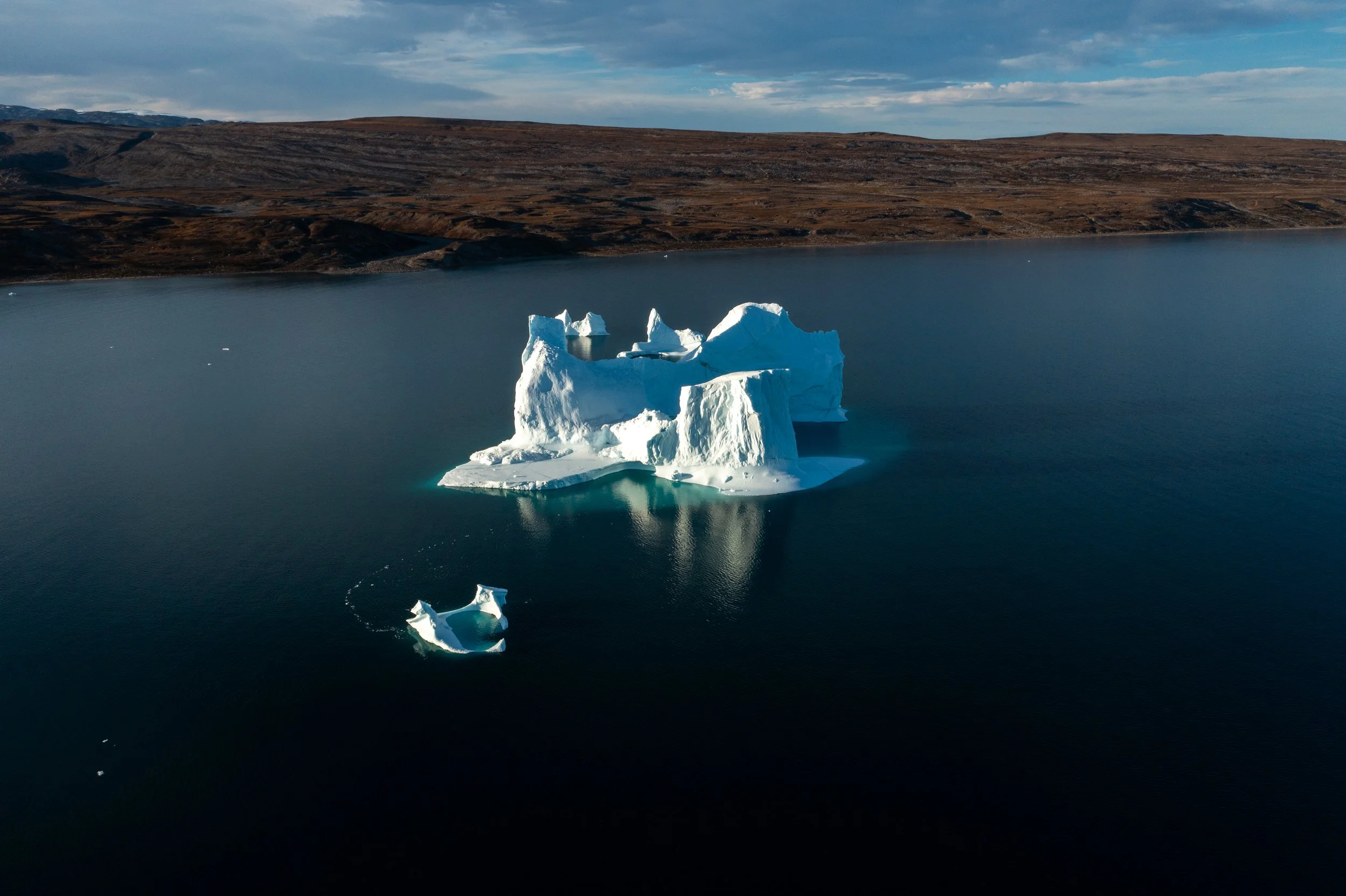
The icebergs and colours of the fjord © Flore Hartout / Team Malizia
You also work in education and outreach, speaking to young people about the ocean and climate through the “Klibee” education programme by Klimabildung e.V. Why is it important to you to share your work beyond the scientific community?
For me it is important to educate young and old people about the knowledge we gather in climate sciences to enable them to form their own opinions, make their own decisions and to be an active part of our society. Young people especially should be able to learn about the future they will live in and feel like they are in a safe environment, where they can discuss their fears, anger and hopes. It would be unfair to keep the information we gather for us and only communicate it to a small community who understands our scientific language. Therefore, we at Klimabildung e.V. develop and rethink our outreach formats steadily and change the communication strategy according to our audience.
After spending a month in such a remote part of Greenland, what is the one thing you will take away from the expedition?
There are still places or things such as icebergs which are untouched by humans and they are more beautiful than anything I have seen before.