
Serendipitous Science - International Collaboration for Science
Sometimes, science happens in unplanned moments. While stopping in the sheltered waters near Ukraine’s Research Station Vernadsky, the Malizia Explorer’s crew met with the researchers based there. What began as a practical pause quickly turned into discussions over graphs and data, uncovering shared scientific questions and common ground. From this chance encounter grew the foundations of a new collaboration, a reminder that in Antarctica, human connections are often as important as logistics.
The Vernadsky Research Base, officially known as the Academic Vernadsky Station (AVS), is located on Galindez Island in the Argentine Islands archipelago. Like around 70 research stations scattered across Antarctica, Vernadsky operates year-round, contributing to international scientific efforts in one of the most remote and environmentally significant regions on Earth. Research on the continent spans climate science, atmospheric physics, oceanography, glaciology, marine biology, and even astronomy, which are all fields that rely heavily on long-term observations in this relatively untouched environment.
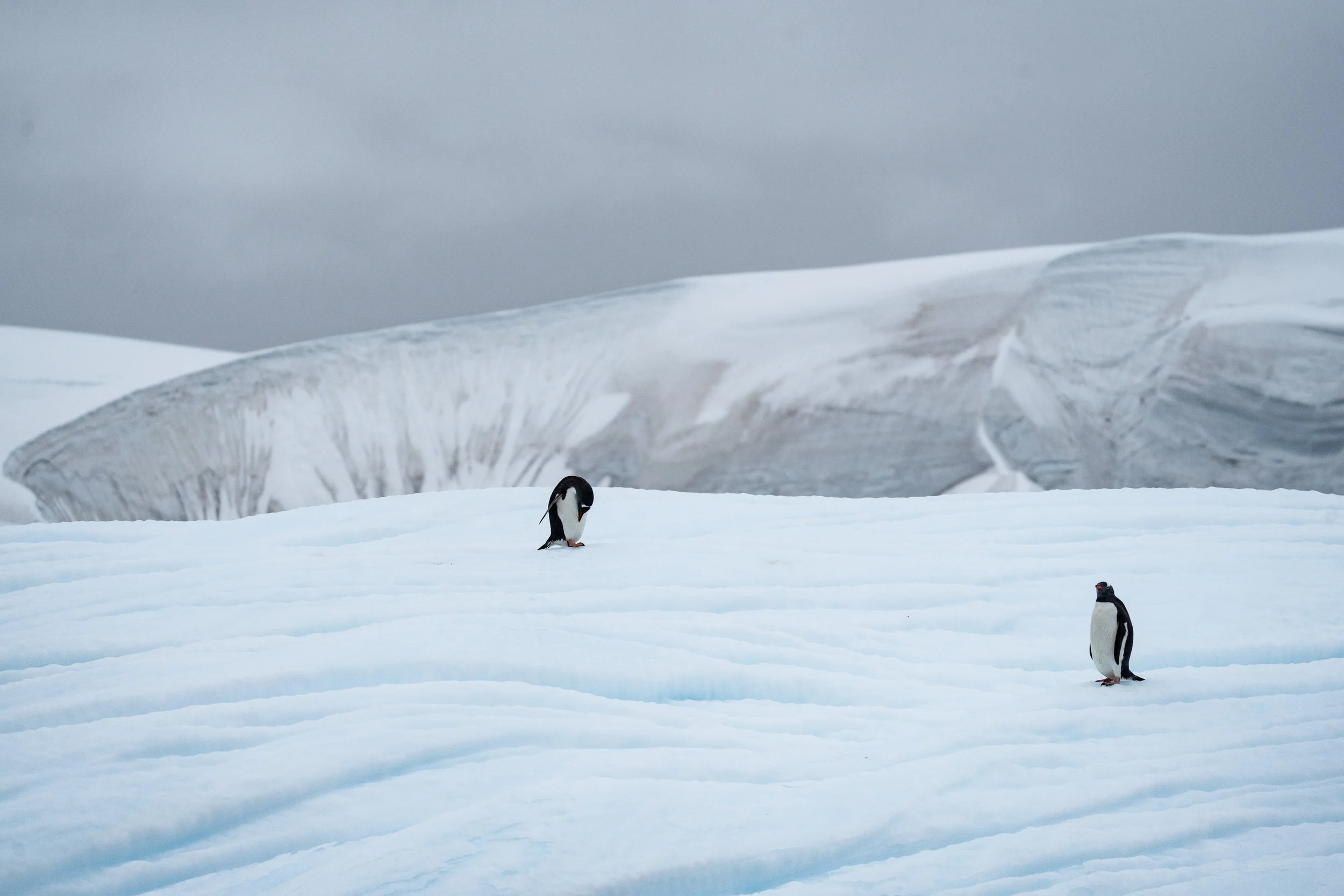
After navigating into the sheltered waters near the Vernadsky Research Station, the crew went ashore to visit the base, which is recognisable by its cluster of predominantly mint-green buildings perched against the stark Antarctic landscape, surrounded by a large colony of gentoo penguins.
What began as a visit and an exchange of experiences soon turned into something more, as informal conversations between scientists from both teams led to the emergence of a shared research interest! Researchers at Vernadsky regularly conduct CTD (Conductivity-Temperature-Depth) measurements near their scientific station, including repeated sections extending from a nearby glacier into the bay. These measurements form part of a long-term observational effort, with some stations sampled even during the Antarctic winter.
On Malizia Explorer’s side, Dr. Léa Olivier from the Alfred Wegener Institute explained her scientific research on their mission, which similarly involves CTD rosette casts with the aim of linking physical Ocean structure, biological activity and carbon fluxes across coastal-to-open-ocean gradients, closing key data gaps and improving the understanding of Ocean-climate interactions in the Western Antarctic Peninsula.
As discussions unfolded, it became clear that both teams were using comparable CTD instruments, and in the spirit of international collaboration, rather than letting the opportunity pass, the scientists realised they could do something scientifically valuable together - right then and there.
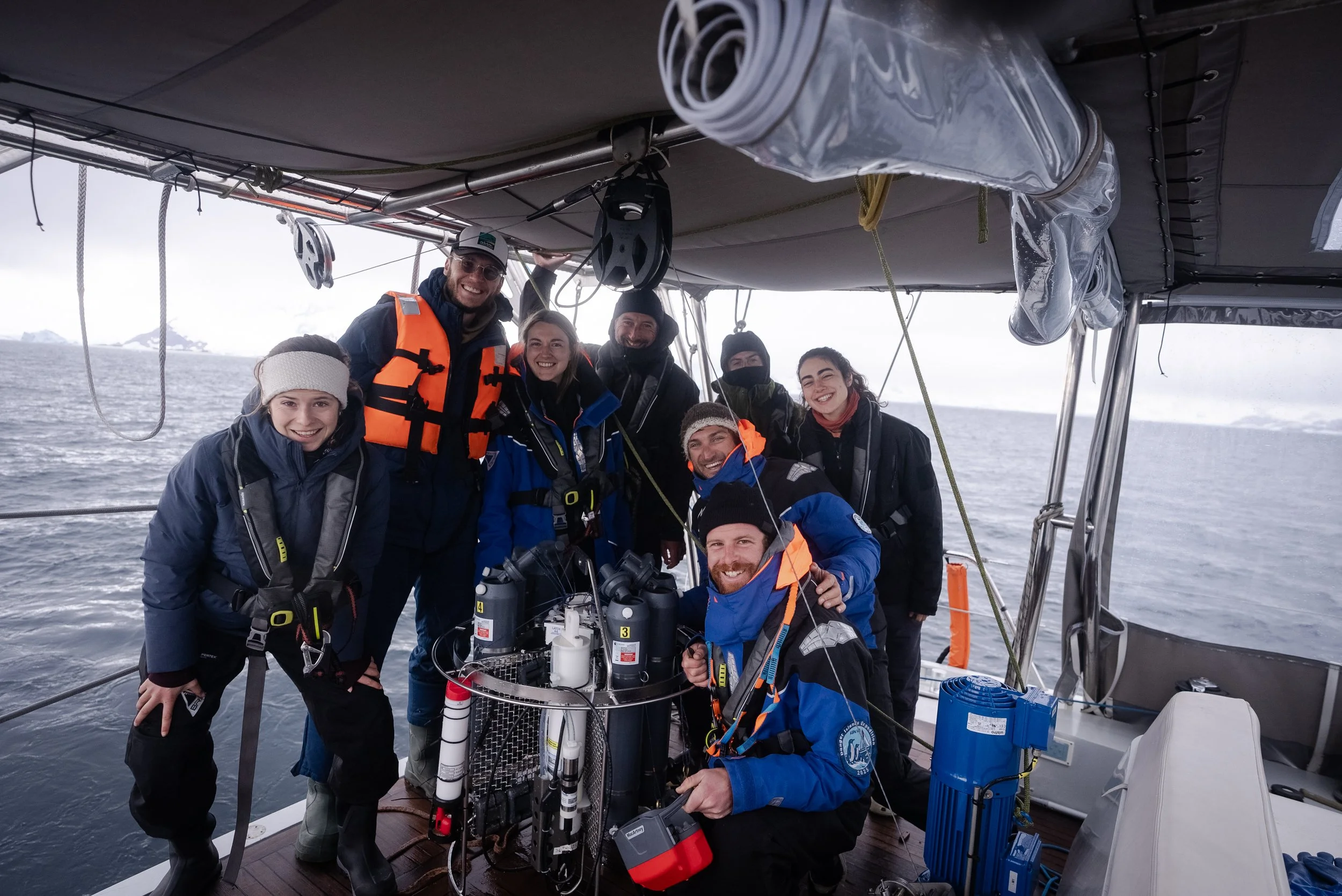
Therefore, on the final day before the Malizia Explorer departed the area, researchers from Vernadsky came aboard the vessel to conduct a joint CTD cast. For this, the Ukrainian team brought their compact CTD instrument, while the Malizia Explorer deployed its own rosette system. By attaching the Vernadsky CTD to the ship’s rosette, both instruments were lowered simultaneously at the same location, which would allow temperature and salinity measurements to be collected in parallel.
This kind of instrument intercomparison is a cornerstone of good observational science. Measuring the same body of water at the same time with different instruments allows researchers to compare data quality, understand potential biases, and strengthen confidence in long-term datasets. In this case, it also created an immediate scientific exchange: data were shared in both directions shortly after the cast, benefiting both teams.
While this CTD cast was a one-time operation, it laid the groundwork for a long term collaboration, data sharing, and joint scientific efforts, highlighting the importance of international cooperation in Antarctic research.
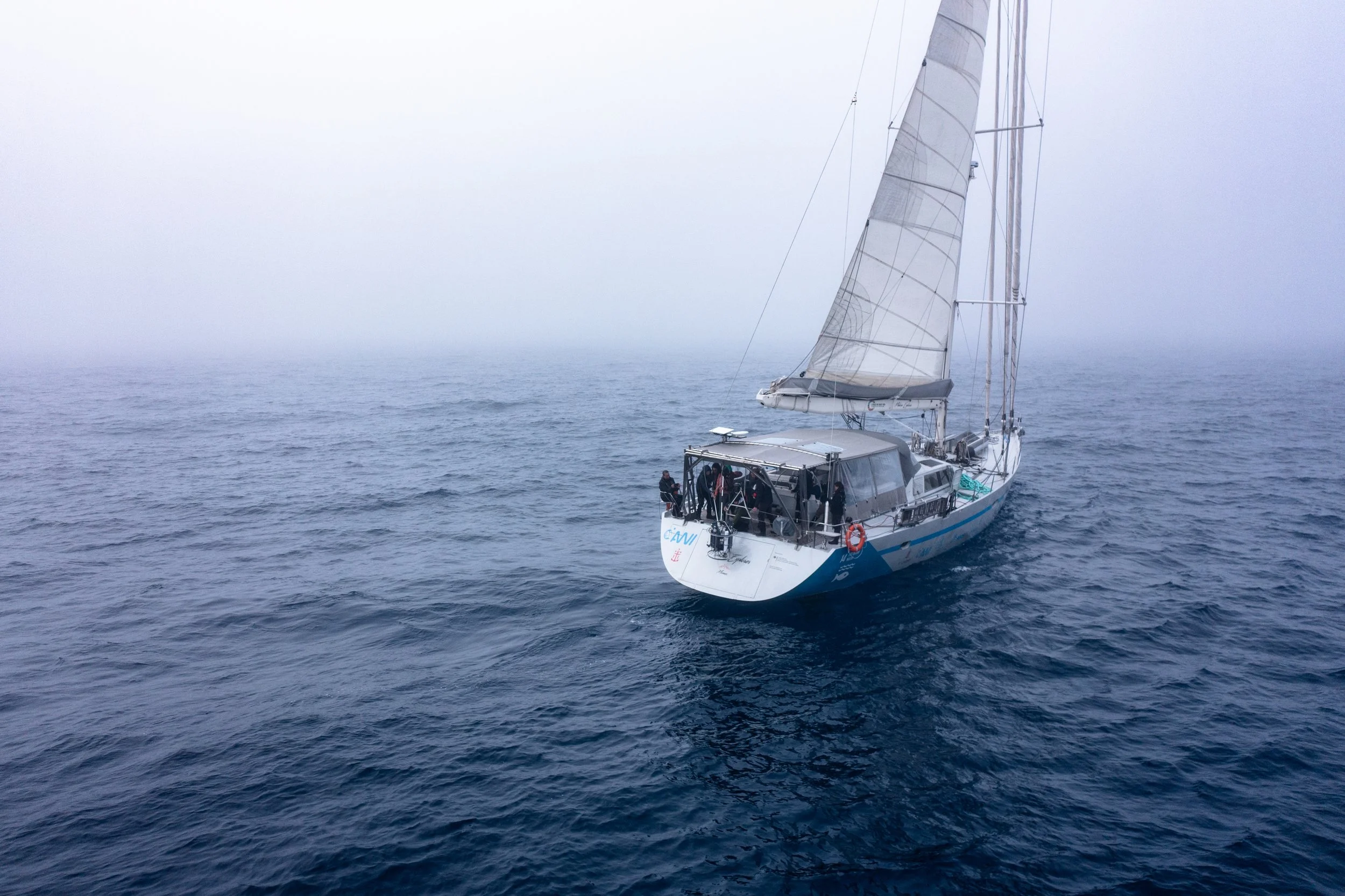
In a continent defined by extremes and isolation, this small moment of cooperation highlights how Antarctic science truly works: through openness, curiosity, and collaboration across borders. In fact it actually feels a little symbolic of what Antarctica is meant for, as defined in its core principles: freedom of science and cooperation, peaceful use and following the goal of environmental protection.
