
From Vision to Voyage: The First Year of the Malizia Explorer
As the year comes to a close, it feels natural to look back on what shaped the past twelve months. For the Malizia Explorer, that is quite a story.
The winter of 2025 within Team Malizia was dominated by the arrival of the IMOCA race boat Malizia Seaexplorer coming back from the Vendee Globe. While much of the spotlight was on this transition, a major new project was quietly taking shape in the background.
In Lorient, the sailing hub of France, what was perhaps the best (or worst) kept secret was waiting: the Malizia Explorer. As a former sailing vessel she was set to be transformed into a dedicated research and outreach platform, which necessitated an extensive refit! A fresh facade bearing the logos of scientific institutions and a bold “SCIENCE” emblazoned on the bow made it increasingly difficult to keep this ambitious idea under wraps.
And soon, we didn’t need to anymore.
After a small precautionary christening in Lorient, the Malizia Explorer set off on her maiden voyage in her new life, sailing south towards Nice, France. This first mission led her to the One Ocean Science Congress and the subsequent United Nations Ocean Conference, marking her debut not only as a scientific platform, but as a space for dialogue.
Alongside decision-makers, scientists, activists and Ocean advocates, the Malizia Explorer took her place among some of the world’s most renowned research vessels, which was a humbling experience for all who were onboard and had seen the Malizia Explorer in the boat yard just a few months prior.
The official christening in Monaco, led by Her Deepness Sylvia Earle, became one of the defining moments of the year for the team. Standing in front of the Oceanographic Museum, surrounded by partners, supporters, friends and allies, this celebration marked the true beginning of a summer defined by science.
June - Mediterranean
In June, the Malizia Explorer sailed into the Mediterranean for her first dedicated research mission. Off the coast of Dénia, Spain, she hosted scientists Simone and Viola Panigada from the Tethys Research Institute, alongside Spanish colleagues. The region is a key migration corridor for fin whales travelling toward Gibraltar and the Atlantic.
Through field studies, the team worked to better understand seasonal whale movements, aiming to identify critical migration routes and strengthen the case for mandatory ship speed limits to reduce deadly ship strikes.
July - Senegal
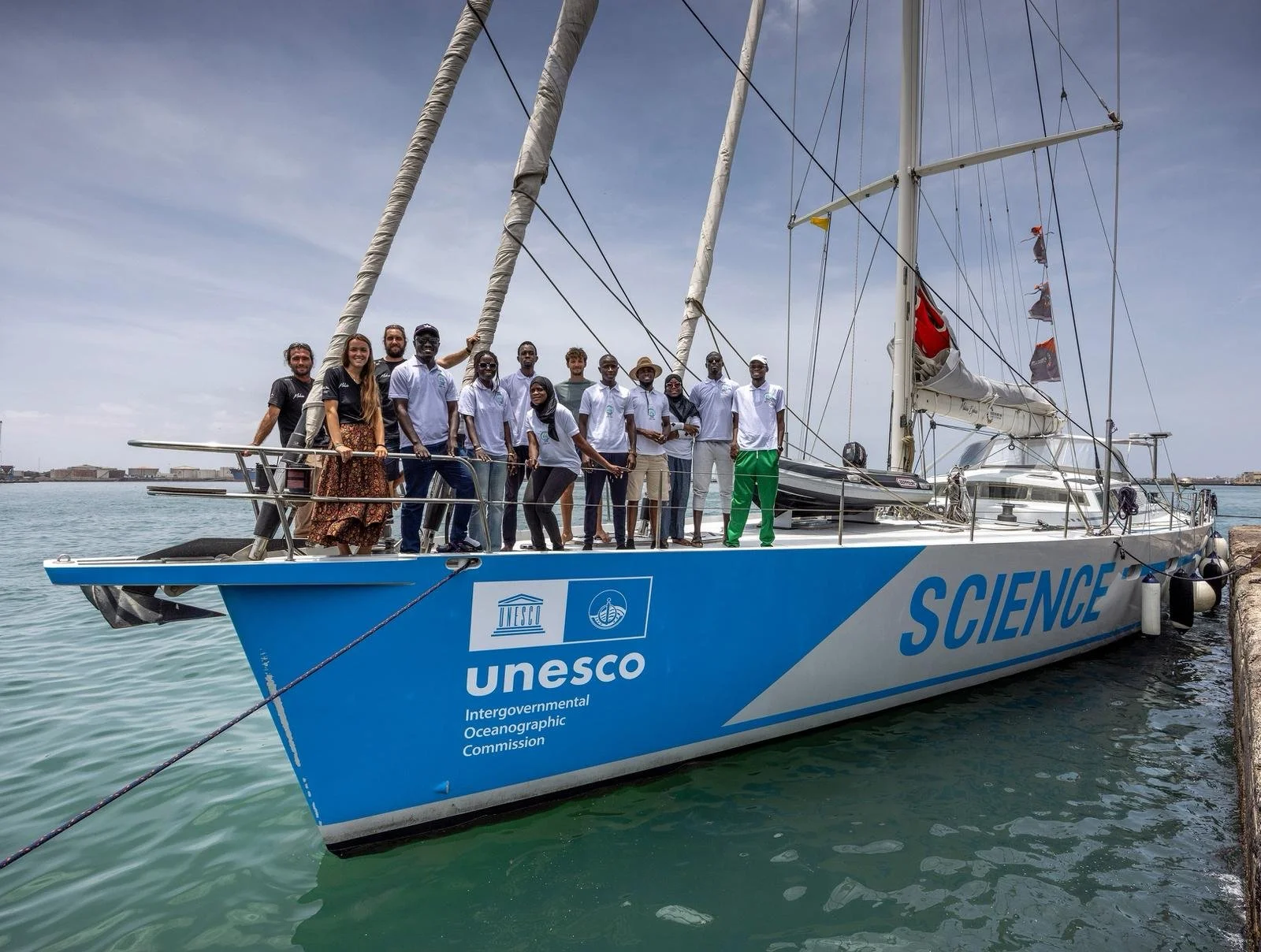
In July, the Malizia Explorer crossed to the west coast of Africa, stopping in Dakar, Senegal. In collaboration with ECOP Senegal (Early Career Ocean Professionals), she supported the country’s first-ever oceanographic training mission. Nine young researchers from four universities, two ministries and national research centers joined the expedition, gaining hands-on experience at sea.
This mission was a powerful step toward capacity building in the Global South, reinforcing the belief that Ocean science must be inclusive to be effective.
August - Cabo Verde
From Senegal, the journey continued to Cabo Verde. Working with Instituto do Mar (IMar) and the Atlantic Technical University (UTA), the Malizia Explorer supported a climate resilience mission off Santa Luzia Island. Scientists studied key bioindicators such as corals, seagrass and microalgae to better understand ecosystem responses to climate change.
The research contributes to long-term sustainable Ocean management while continuing to strengthen local scientific capacity.
September - Fernando de Noronha
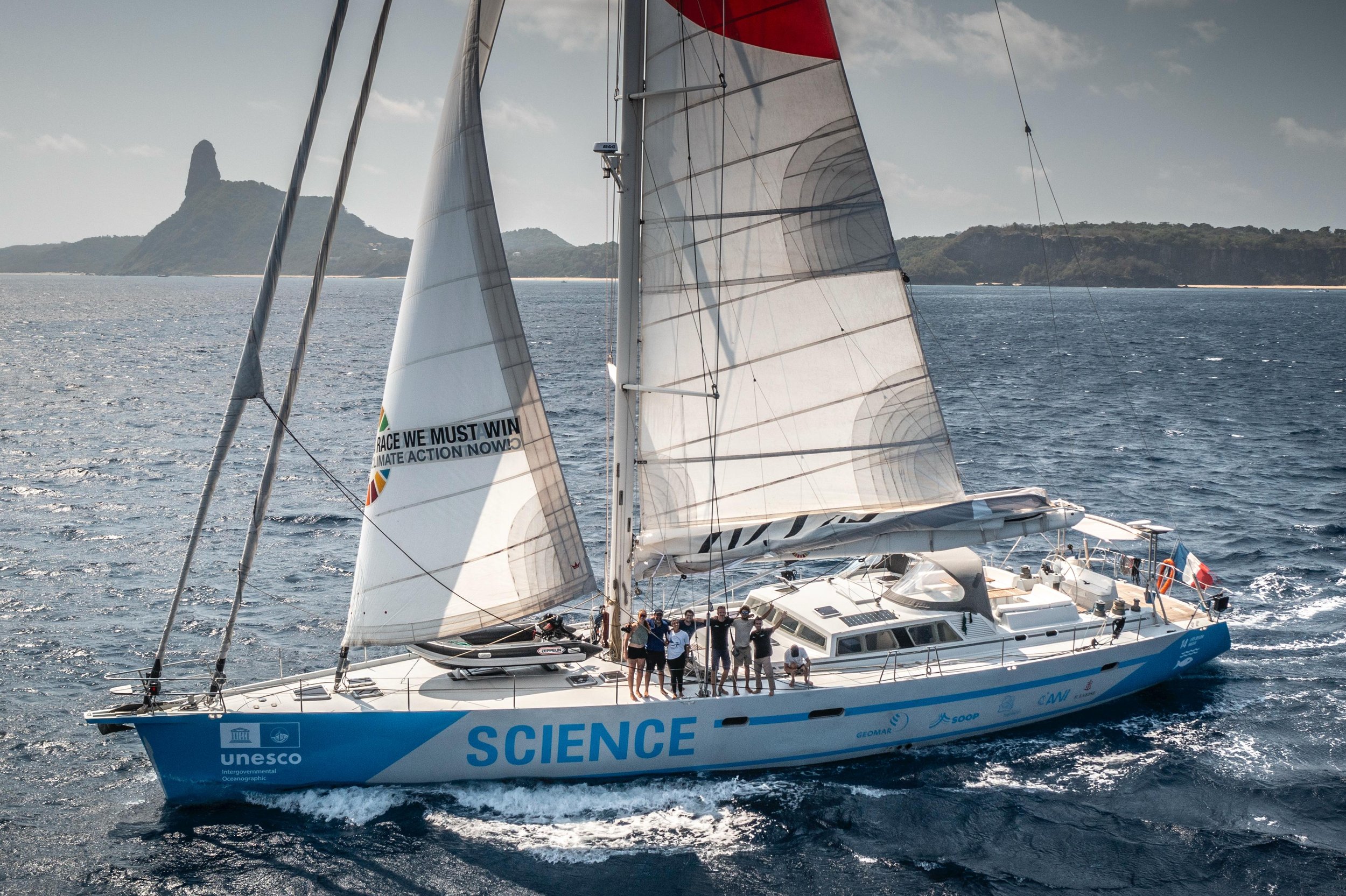
In September, the Malizia Explorer sailed to Fernando de Noronha in collaboration with the Blue Marine Foundation and Instituto Vida no Oceano. The mission aimed to support research for the creation of a new Marine Protected Area around nearby deep-sea seamounts, which are ecosystems rich in biodiversity but increasingly threatened by human activity.
Using BRUVs, acoustic receivers, plankton sampling, diving surveys and Team Malizia’s OceanPack, vital biodiversity data was collected. This work will help guide future protection measures for sharks, whales and other key species, supporting the long-term preservation of this unique region.
Autumn Refit - Uruguay
After an intense and science-filled summer, the focus shifted south. In Uruguay, the Malizia Explorer underwent a major refit, transforming her from a summer research platform into a vessel capable of operating in polar conditions. This preparation marked the final step toward the mission many had been waiting for.
Antarctica - The Edge of the World
On 19 November 2025, the Malizia Explorer departed Ushuaia, Argentina, bound for Antarctica. On board were 14 crew and scientists from ThINK Jena, the Alfred Wegener Institute and the German Environment Agency, heading toward the remote Danger Islands.
Recently designated as Antarctic Specially Protected Area (ASPA 180), the Danger Islands had never before been studied comprehensively. The mission aimed to establish a scientific baseline, collecting data on penguin colonies, biodiversity health, contamination and disease, to inform long-term conservation and management.
Beyond science, the mission carried global policy relevance, as the findings may support extending protection from land into surrounding marine areas, essential for Adélie penguins that spend most of their lives at sea. This integrated approach could help shape future Antarctic conservation efforts, demonstrating how science can directly inform international policy.
With the conclusion of this mission, the first year of the Malizia Explorer research vessel comes to a close. Looking back, it is hard not to feel a deep sense of pride in what has been achieved, and immense gratitude toward the many people who contributed their ideas, time and hard work to bring this ambitious project to life. What made this year truly remarkable was not only the places we visited, but the people we brought together: scientists, sailors, students, policymakers and advocates, united by a shared responsibility for the Ocean.

As a new year begins, this reminder of how far we have already come is almost as motivating as the glimpse into the projects that lie ahead. With new missions on the horizon, the Malizia Explorer moves into the future guided by the same belief that launched her: that understanding the Ocean is essential to protecting it, and that this work cannot wait.
