
Malizia Explorer Returns to Ushuaia
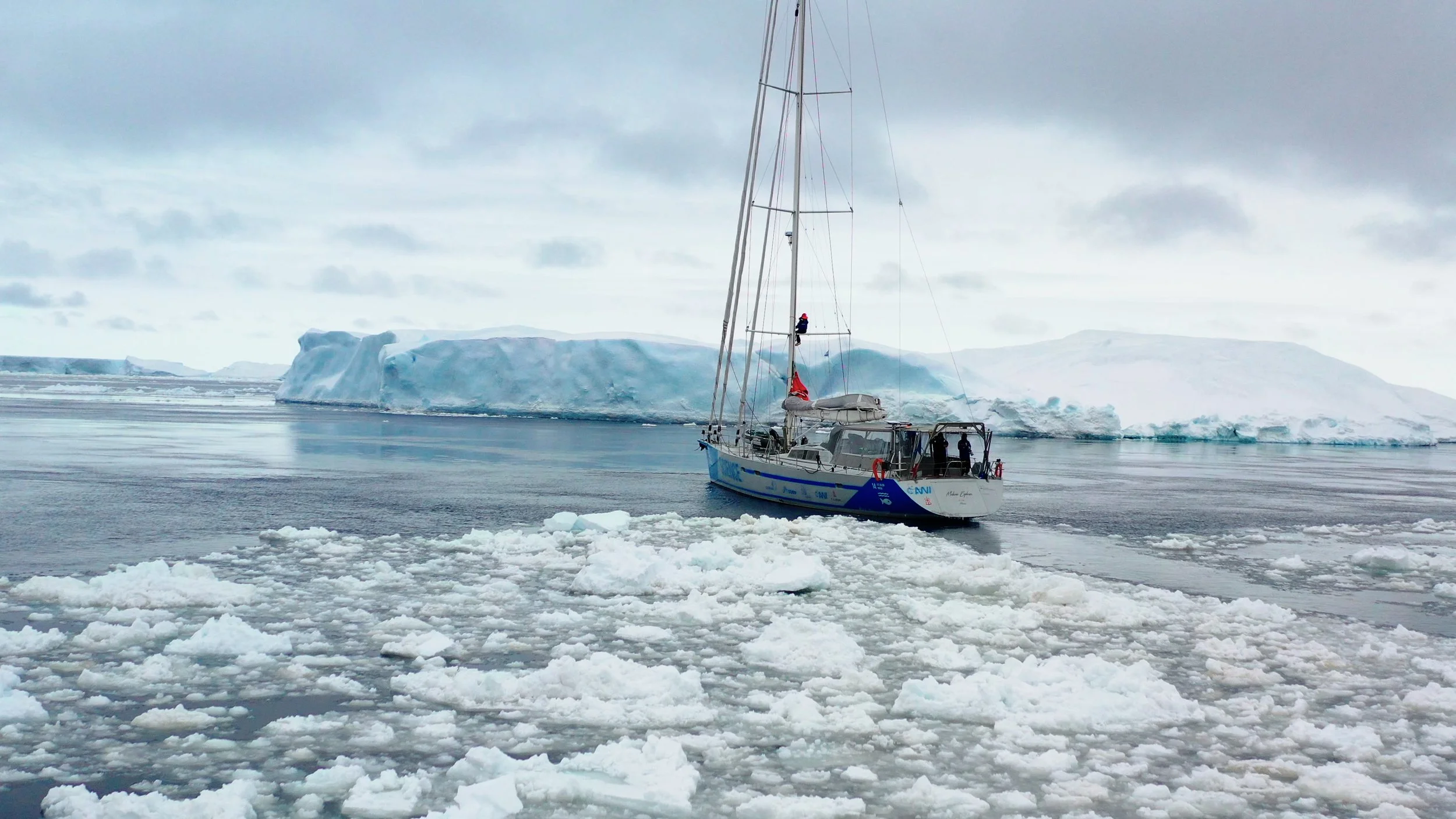
The Malizia Explorer research vessel has arrived in Ushuaia after a fast and favourable passage north. The crew made the informed decision to depart King George Island on Wednesday, where they had been waiting for a weather window to attempt a second landing on the Danger Islands. No such window ever materialised, and the route remained firmly closed by sea ice. Less than five days later, the vessel reached Tierra del Fuego with crew and scientists safe on shore.
The Danger Islands mission marked a series of significant firsts for the Malizia Explorer:
its first major voyage into extreme solitude, its first expedition to Antarctica, its first comprehensive scientific mission in such a remote and understudied region, and its first operation under notable public and political attention.
With scientists from ThINK Jena, the Alfred Wegener Institute, and the German Environment Agency on board, alongside media teams documenting the journey and a seasoned crew operating the vessel, the mission represented a high point in the vessel’s first year as a working scientific platform.
The expedition’s goals were twofold: to carry out the first detailed study of the Danger Islands, which are newly designated Antarctic Specially Protected Area (ASPA) managed by Germany, and to gather scientific data that may help extend protection measures from land to the surrounding marine environment.
From the start, the team faced complex logistical and environmental challenges. Although summer brings the first signs of sea-ice melt around the islands, the patterns of retreat and ice drift are inconsistent and often unpredictable, making access extremely difficult. Delaying the mission later into the season was not an option, as Adélie penguins, who are central to the research, are only present on land during their breeding season, which unfortunately aligns with the period of most difficult access.
Despite the uncertainty, the team managed one successful landing and used that opportunity to conduct a wide range of scientific work. This included a biodiversity survey, water and vegetation sampling, drone mapping, and extensive penguin research: over 160 individuals were sampled or fitted with tracking devices for later analysis. A full drone survey of the entire Danger Islands group was also completed, which is an achievement of major scientific value.
Life on Board and the Return North
“I think they were happy to have reached at least one island,” said sailor Marin Moreau. “Of course the scientists were hoping for more, but at least we could do something, which was not guaranteed in the first place. So the mood was quite good, even on the Drake Passage.”
Reflecting on the significance of the mission, Dr. Simeon Lisovski, ecologist at the Alfred Wegener Institute, highlighted the importance of the region’s biodiversity:
“We have a treasure in nature that we need to take care of, so that it really remains preserved for the future.”
On the journey back, the scientific teams immediately began reviewing incoming data, comparing preliminary results with models created before departure. “One scientist told me he has already collected 160 blood samples… I feel like we’ve become a kind of blood bank at sea,” one crew member joked, noting the sheer volume of biological samples collected, all serving important scientific aims.
Mixed Feelings on Returning to Land
Reflecting on the landscapes he had just left behind, Boris Hermann, sailor and Team Malizia founder Boris Herrmann explained: “The landscape looks incredible, like the surface of the moon… The water is crystal clear; you can see 10 to 15 meters down to the bottom. Penguins are waddling around and diving for food in the water. You can see all the way to the seabed. It’s also a huge adventure into a completely new, foreign world for me.”
Asked whether he was happy to be back on land or preferred to remain in Antarctica he replied: “Both. I have a divided heart.”
While some crew members felt a tinge of sadness at leaving the ice, most had found their sea legs by the end of the journey, as even the Force 9 winds (that is 75-88km/h wind or 41-47 knots!), 5 metre waves, and 45-degree heel at times no longer fazed them. Still, the return to solid ground brought its own relief.
“I am relieved to have solid ground under my feet, but also a little sad,” said Fritz Hertel of the German Environment Agency.
The crew spent the remainder of the day unloading the vessel, taking long-awaited showers, and celebrating with a barbecue at the famous local yacht club, laughing, sharing stories, and already reminiscing about the “end of the world” they had left behind only hours earlier.
