
Ushuaia to Antarctica
When preparing for an expedition to Antarctica, you tend to focus on the “being in Antarctica” part… the excitement of coming face to face with an environment so pristine, otherworldly, and estranged from anything you have ever experienced before. However, when it actually comes time to set off, you realize the gravity of the journey and the effort it takes to reach a place as remote as Antarctica.
In the days leading up to the departure of the second and final journey to Antarctica as part of this year’s Global Warning mission, the team was filled with excitement. Buzzing around the streets of Ushuaia, known as the “gateway to Antarctica,” looking for necessities for the month of February spent in Antarctica ahead, alongside a few fudgy chocolate bars to bunker into the small cupboards next to the cabin’s bunkbed. Passing touristy coat-patches labelled “Drake Survivor,” ornithology books, and empanadas, the days felt like a countdown. Somehow, at that moment, the thought of “leaving” felt synonymous with “arriving.”
Oh, what fools we were.
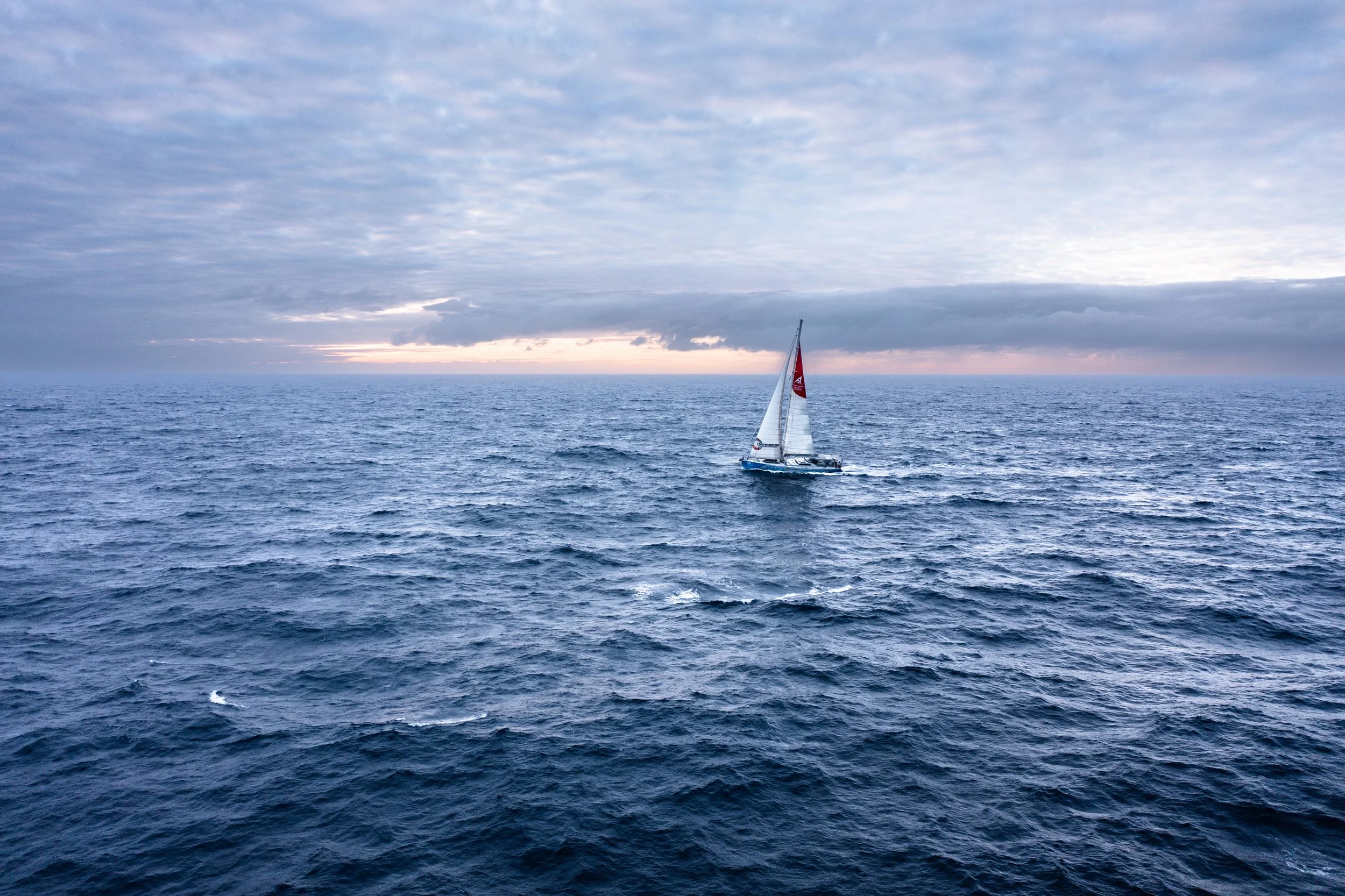
Having attempted the crossing just a week earlier, only to turn back to Ushuaia due to a medical issue, we thought we knew what awaited us. The Beagle Channel had been calm the first time, and life onboard had carried on almost as normal. Fingers tapped on laptops, jokes were shared around the table, food simmered on the stove, and the occasional cupboard was naively closed without its safety lock.
Fourteen hours into the second attempt, we reached the open Ocean - a very different reality from the Beagle Channel. On a research vessel like Malizia Explorer, the crew comes from many different backgrounds. Alongside highly skilled sailors are researchers, journalists, and cooks, some with extensive experience at sea, others with very little. It is here that the first personal “scientific finding” often occurs: am I prone to seasickness, or not?
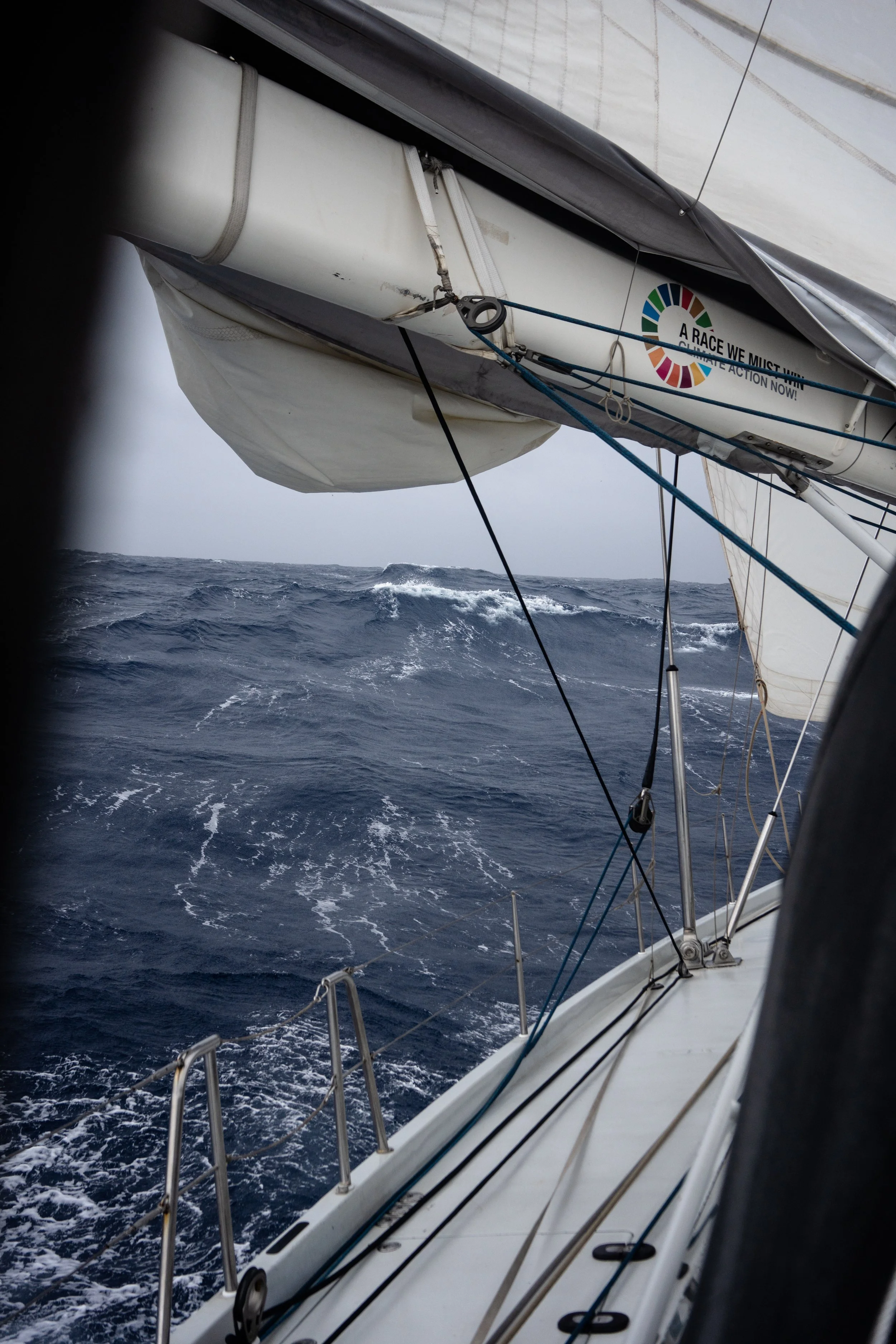
Within seconds of entering the open ocean, three members of the team were completely incapacitated, unable to do anything that required being upright. The saloon and dining area became a makeshift dormitory, rocking less than the bow. The carefully planned watch system - three hours on, nine hours off - turned into a game of chance, dependent on who could make it out of bed to join the sailors and the few iron-stomached souls unfazed by the Drake Passage.
And yet, the Drake brought so much beauty with it. The cold wind, the shifting light of sunset, and the quiet awareness that this was a route travelled by generations before us. While studying charts and digital weather forecasts, we often joked about explorers of the past, such as Shackleton at the start of the 20th century, and how different their world must have been. His book, that had stood alongside Drake Survivor badges and ornithology pamphlets in Ushuaia, had been picked up by many of us with hopes of long reading hours. In truth, reading inside boat akin to a washing machine proves difficult.
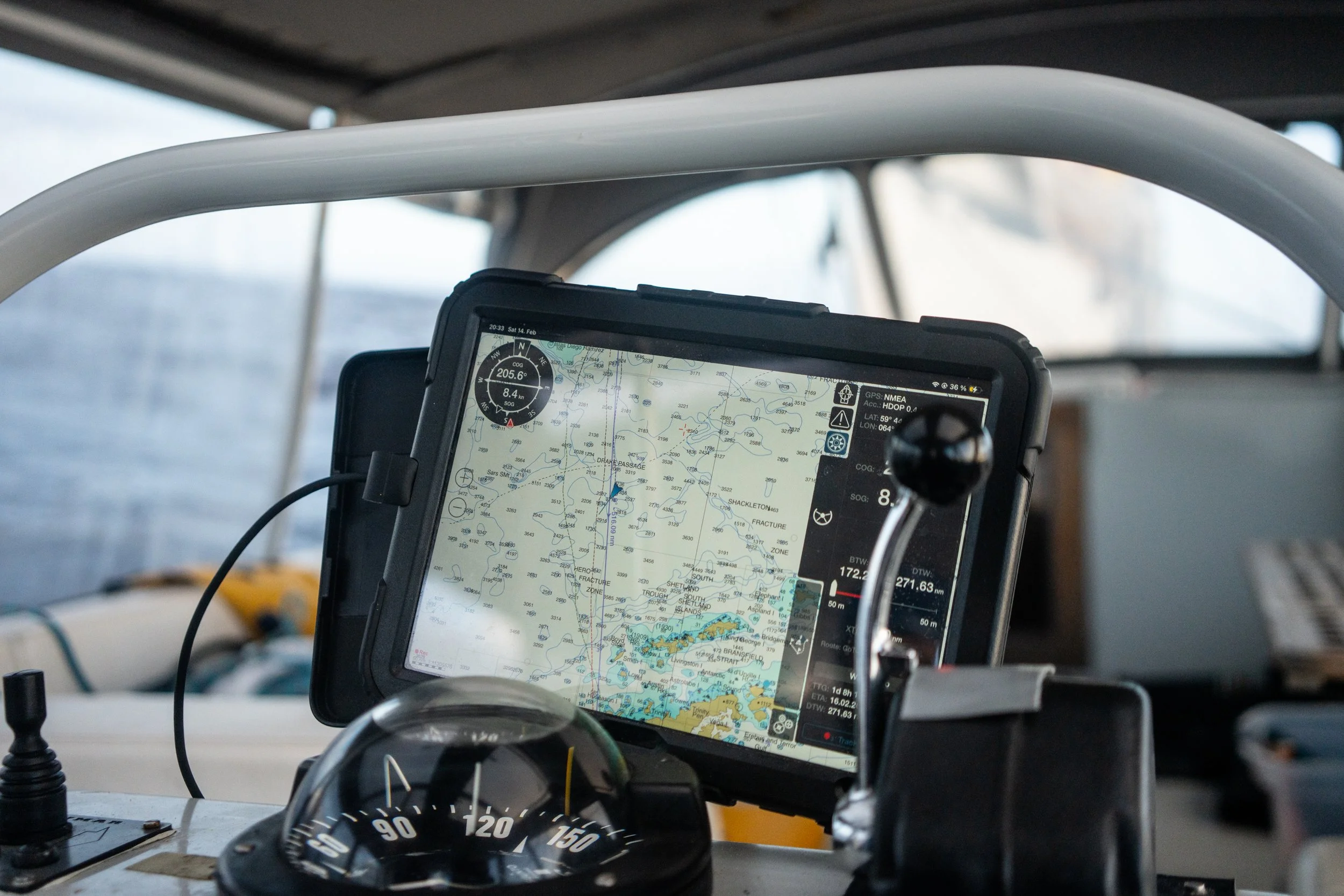
Instead, the horizon at sunset, the steady stream of seabirds, distant whales, and the pod of orcas we were fortunate enough to encounter became the highlights of the crossing - how could they not.
After three fast days sailing, by morning of Monday, the first iceberg was in sight. Not long after, mountains appeared in the distance, covered in snow, their tips emerging first above the clouds.
With calmer seas and mountains sheltering the water from rough winds, the bay in between lay still. Those who had felt the full force of the Drake Passage were instantly back on their feet and out on deck, taking in the beauty of this environment.
A place of a hundred different shades of white and blue, natural shows unfolding before our eyes. Penguins on icebergs, hesitant to jump until one falls and the others feel safe enough to follow. Whales diving into the icy shallows and spouting air on their way back up.
Arriving in Antarctica felt almost as though the journey itself had vanished. Some worlds demand effort than others, before they reveal themselves.
Personal Entry from crew member Remy Johannsen (Team Malizia), 17.02.2026