Malizia Explorer Research Vessel Now Equipped With Key Scientific Instrument For Ocean Research
Launched by Boris Herrmann's Team Malizia earlier this year, the Malizia Explorer research vessel has been equipped with a brand-new scientific instrument: a CTD Rosette provided by the Alfred Wegener Institute for Polar and Marine Research (AWI). This key scientific instrument enables a new range of oceanographic research capabilities onboard, expanding the research vessel's mission to provide a platform for scientists to better understand the Ocean and its role in climate change.
Piriapolis, Uruguay, 1st of November 2025 Since her christening in June, the Malizia Explorer research vessel conducted scientific projects in the mediterranean sea and Cape Verde region before crossing the Atlantic Ocean towards Uruguay. There, she underwent a refit from September to October to make her fully suitable for her first polar mission in Antarctica. The installation of the CTD (Conductivity Temperature Depth) Rosette represents a major step forward in the vessel’s transformation into a dedicated science and communications platform.
The ongoing collaboration with AWI started several years ago, working together on the data collected by the autonomous onboard laboratory (Ocean Pack) during Team Malizia’s offshore racing campaigns. The new CTD-System significantly expands the possibilities for scientific data collection and thus marks the next step in the partnership, enabling deeper and more comprehensive scientific research, spanning various scientific disciplines from physics to biology and biogeochemistry.
The CTD-System, funded through the MUSE Helmholtz infrastructure, remains the property of the AWI but is meant to be shared and used by various institutions, throughout the Helmholtz group, but essentially globally. This collaborative, open-access approach reinforces Team Malizia’s and AWI’s shared commitment to advancing Ocean science through cooperation and shared data.
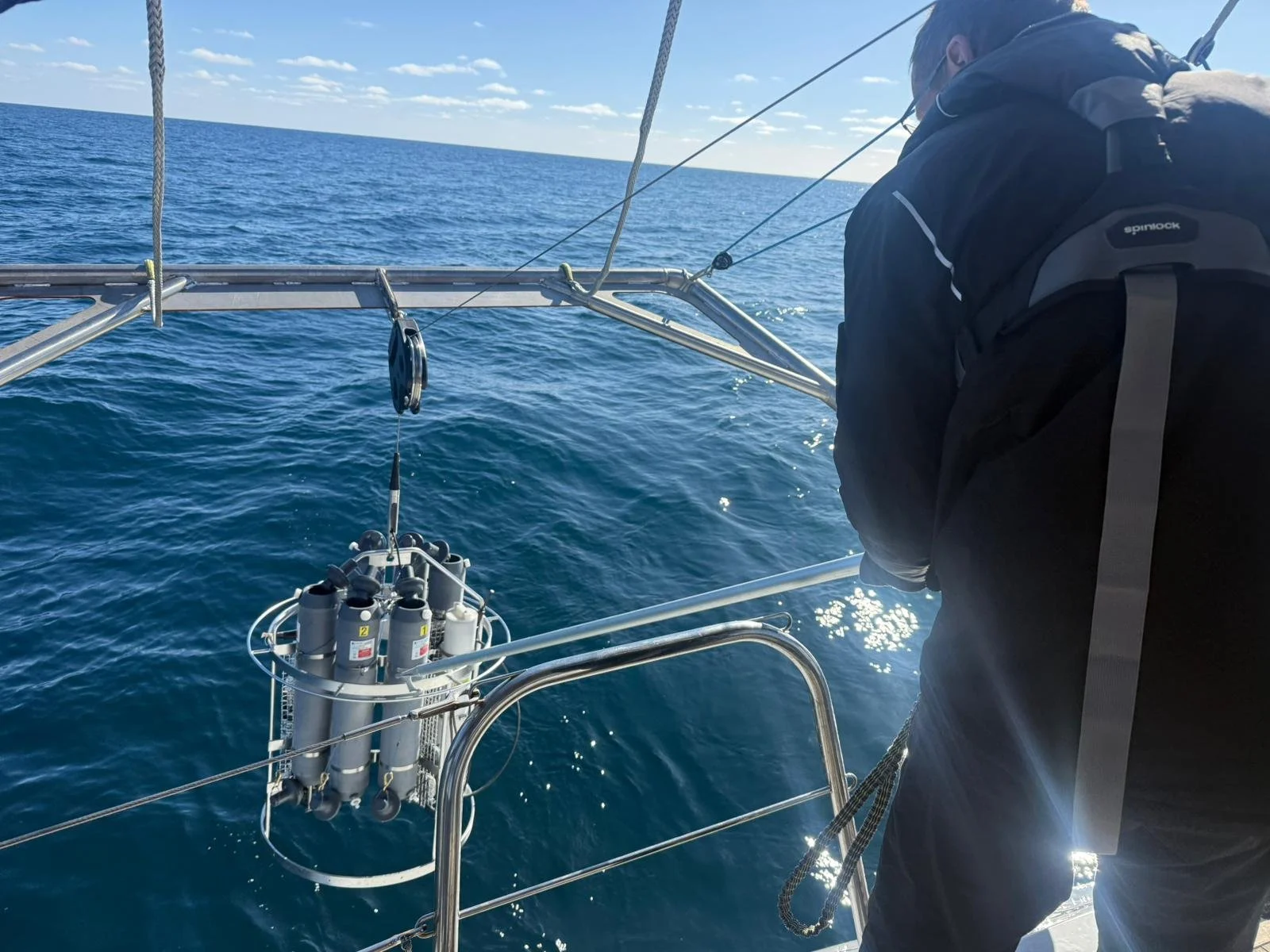
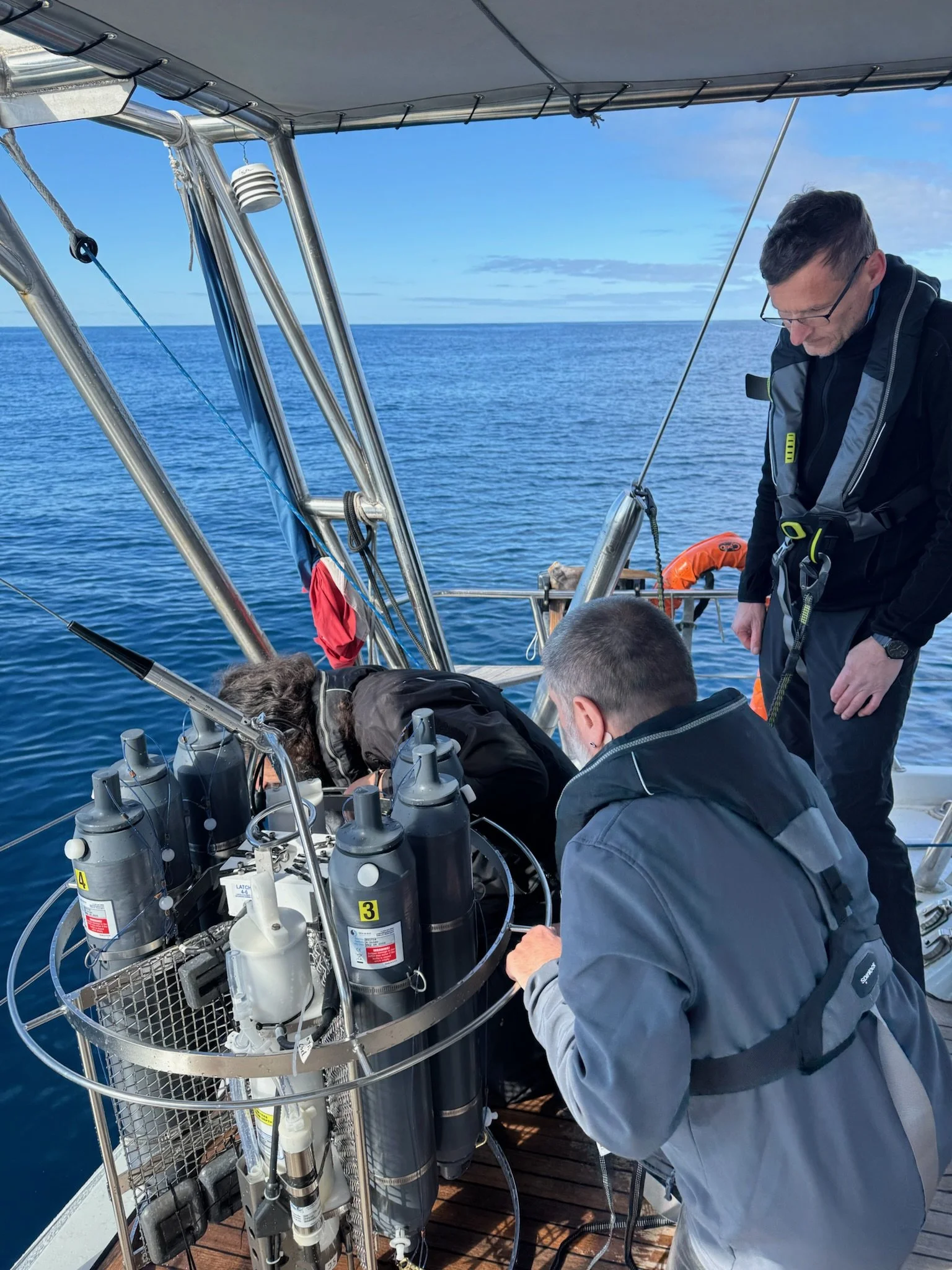
The CTD-system comprises sensors and a rosette equipped with six Niskin bottles for water sampling. This system can be lowered as deep as 400 m by a mechanical winch from the aft of the ship. The CTD sensors transmit real-time data on salinity, temperature and depth throughout the water column allowing scientists to study seawater properties at various depths and locations. The rosette can simultaneously collect water samples for seawater analysis, by closing the bottles at chosen depths. Scientists can then filter or analyse the water, preserve it and send it to their laboratories to then infer parameters such as carbon content, DNA or pollutants.
In the future, the system can be expanded with additional sensors for the analysis of chemical, biological and optical properties of seawater as well as an Underwater Vision Profiler (UVP), which uses light pulses to capture high-resolution images of marine particles (such as plankton and phytoplankton) and marine snow. Combined with artificial intelligence, the UVP can provide new insights into deep-sea ecosystems.
The Malizia Explorer crew is delighted to welcome such an important scientific instrument onboard the science and communications vessel. With an upcoming Antarctic mission set to begin in mid-November 2025, the crew is looking forward to putting the CTD rosette to the test. This new device significantly expands the scope of scientific exploration aboard the vessel, enabling measurements and observations from the surface down to depths of 400 meters.